Boring The Holes
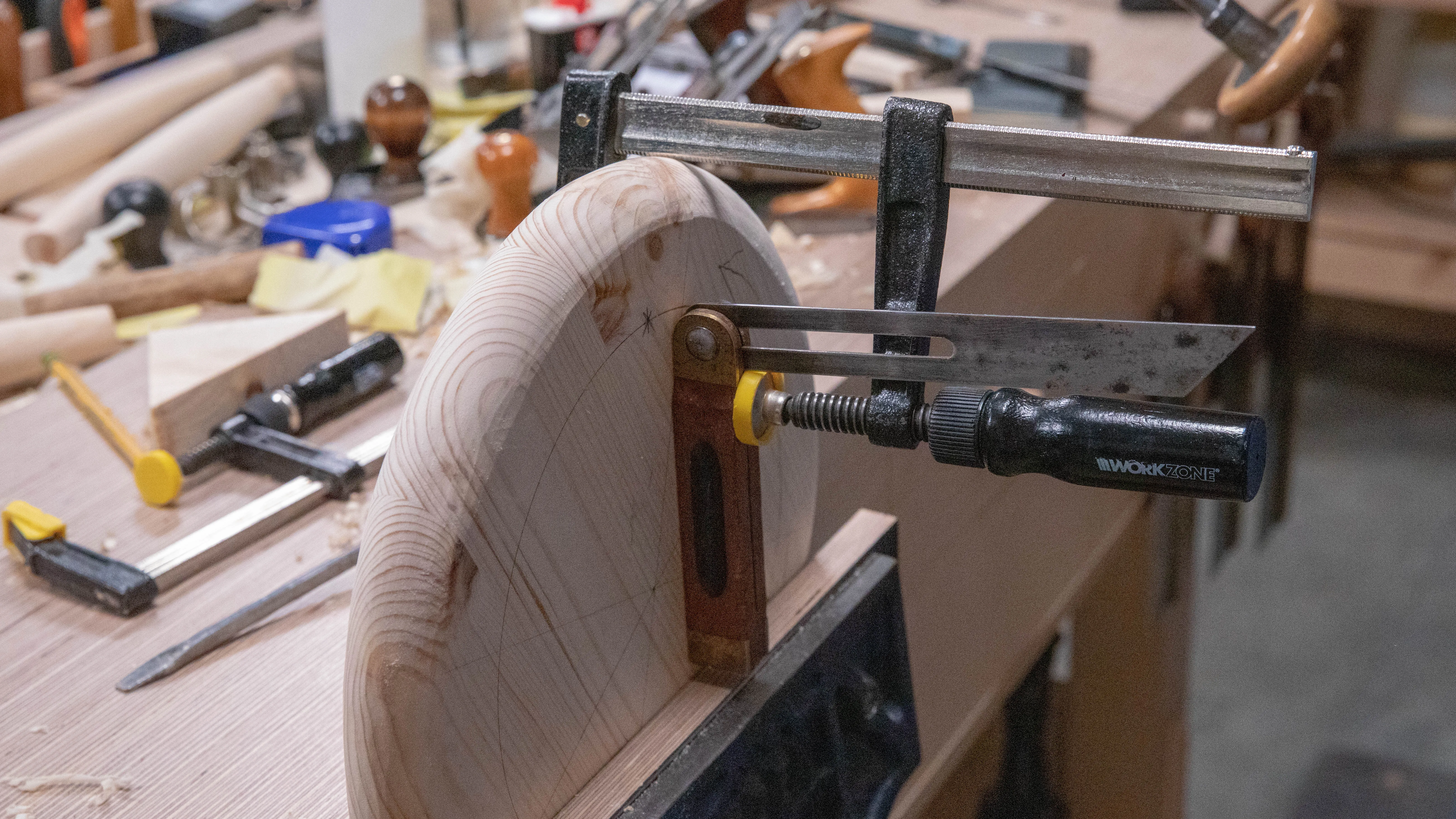
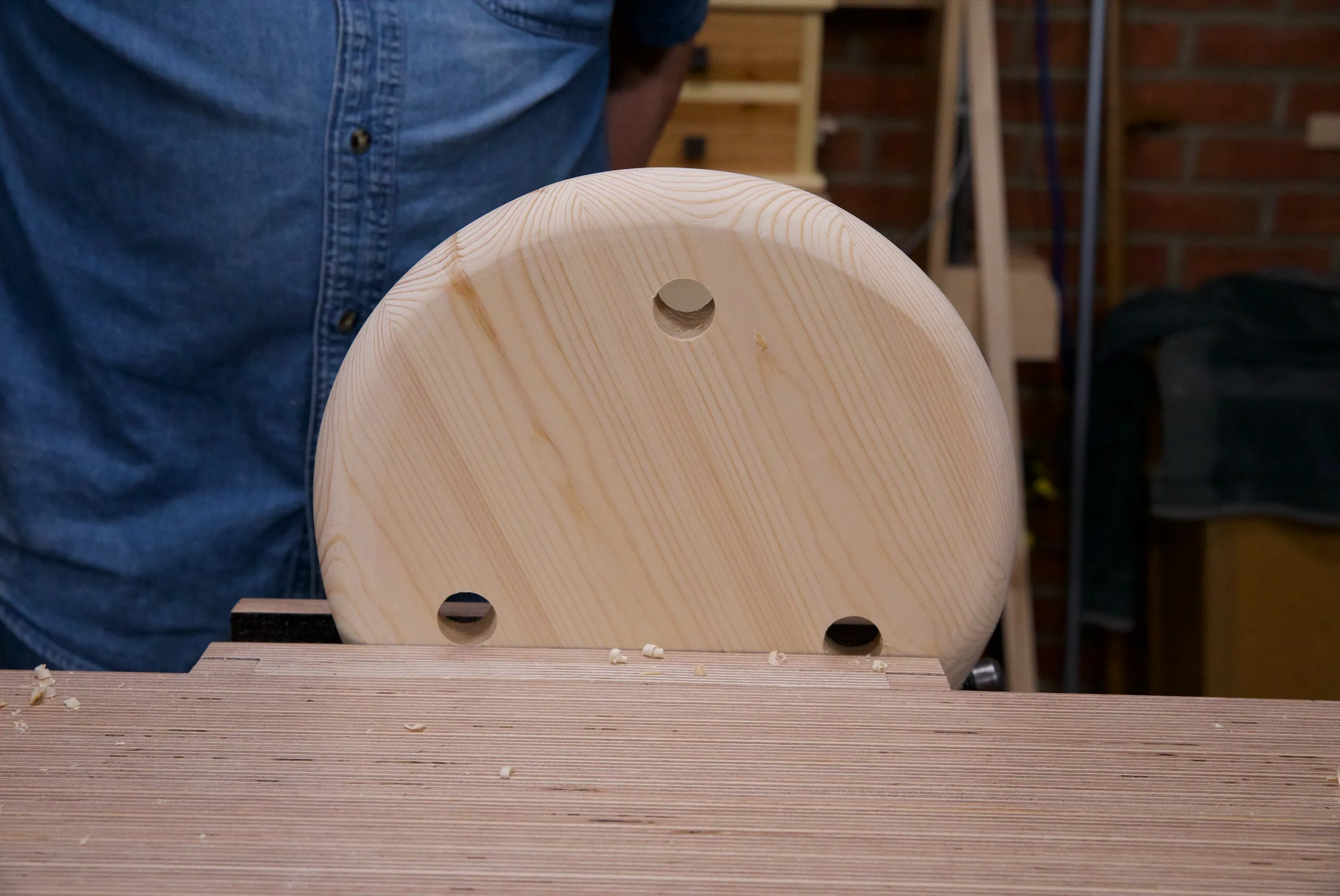
Place your seat in the vise so that the first of the leg markings is vertically in line with the centre of the seat (you can use a square with the stock against your vise to check). This is to ensure that the hole (and leg) will be splayed from the centre of the seat and not at a skew.
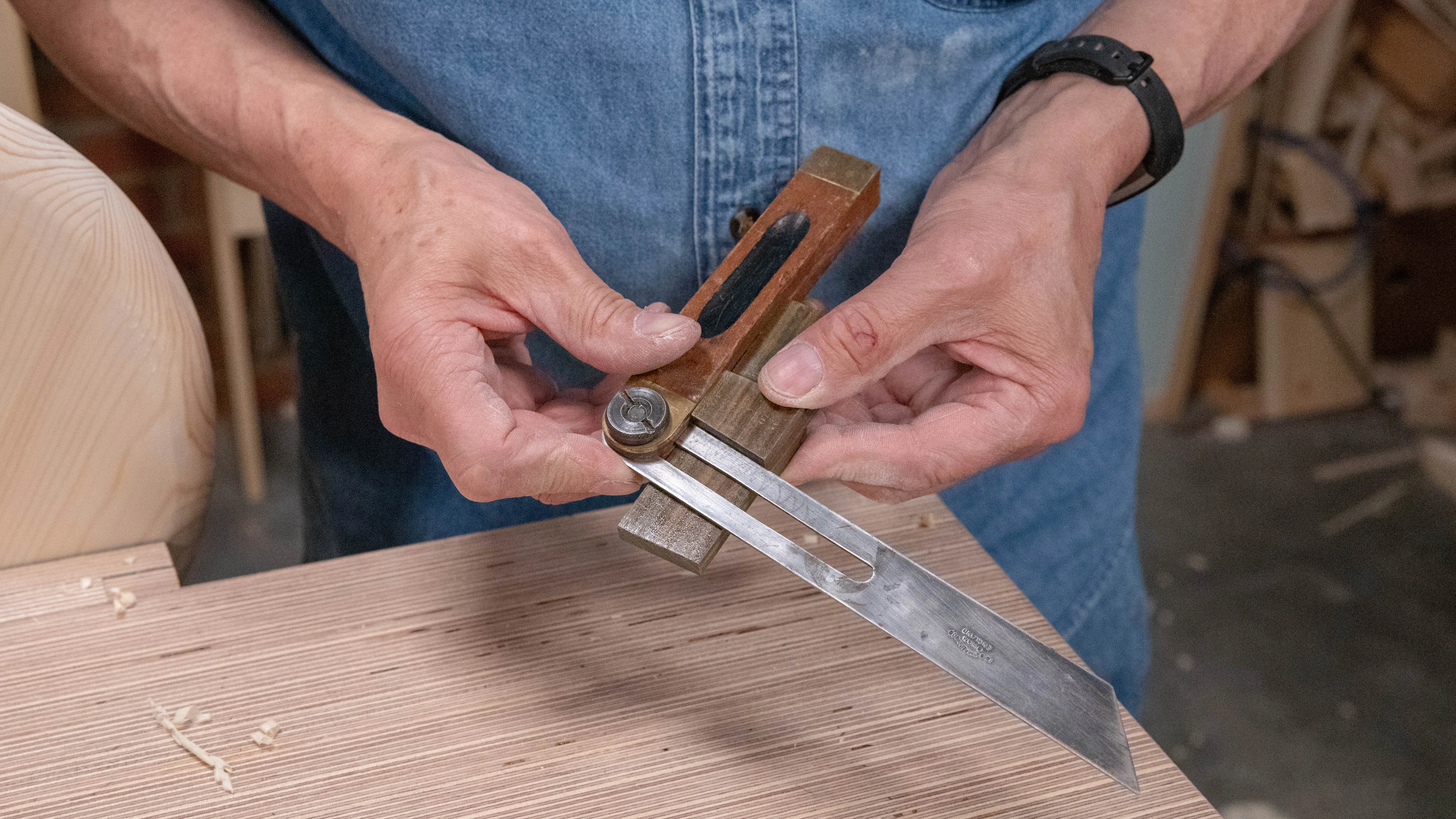
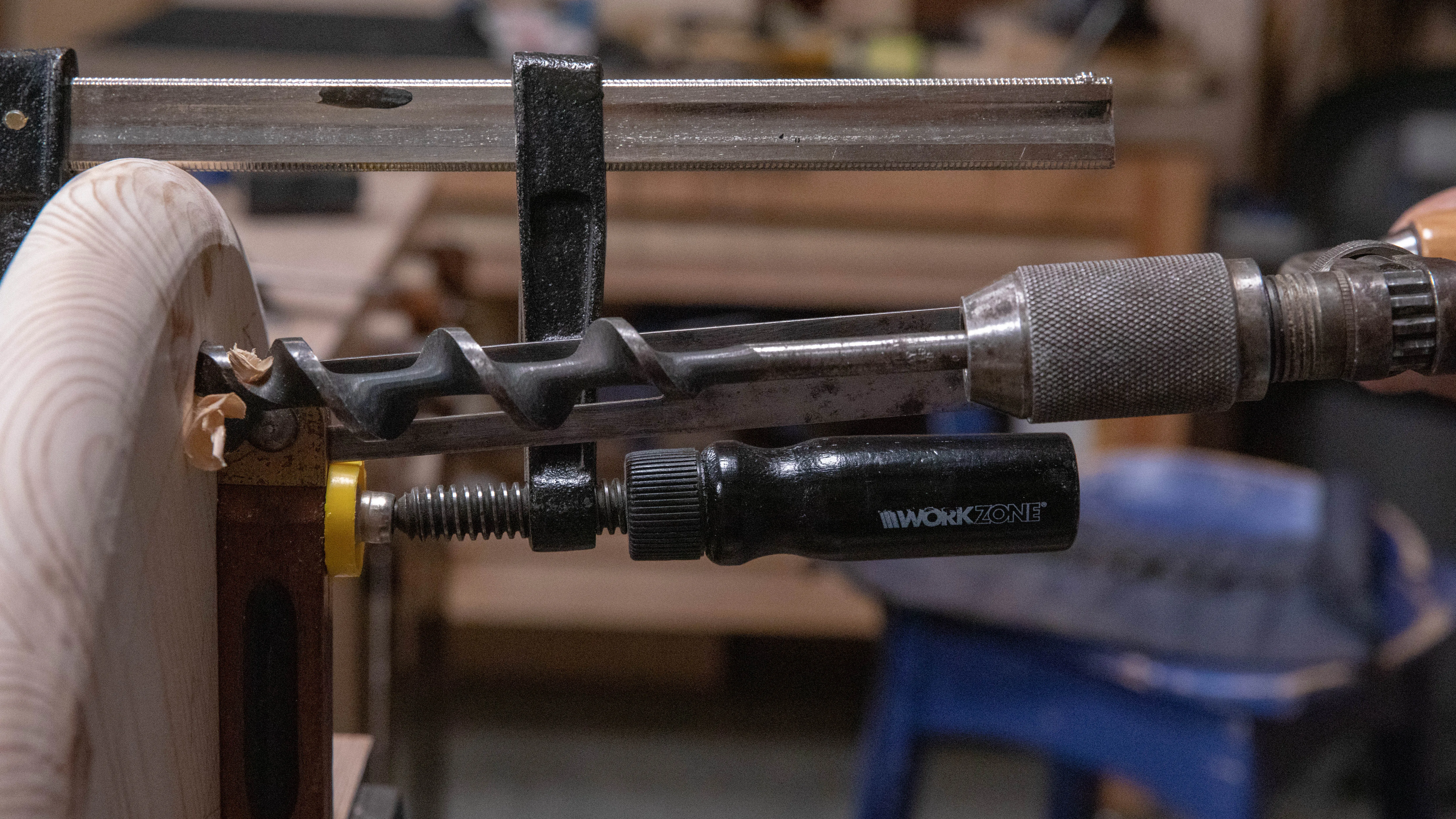
Set a sliding bevel to a 1:7 pitch, you can use the angle from a dovetail template as reference. (If you don’t have one, see how to make a dovetail template here). Clamp the sliding bevel to the inside face of the seat. This will serve as a guide when boring your leg holes.
Note: The exact splay of the legs isn’t critical, but you do want the legs coming out far enough to create a wide base. Anything else would make the stool unstable as it can easily tip over.
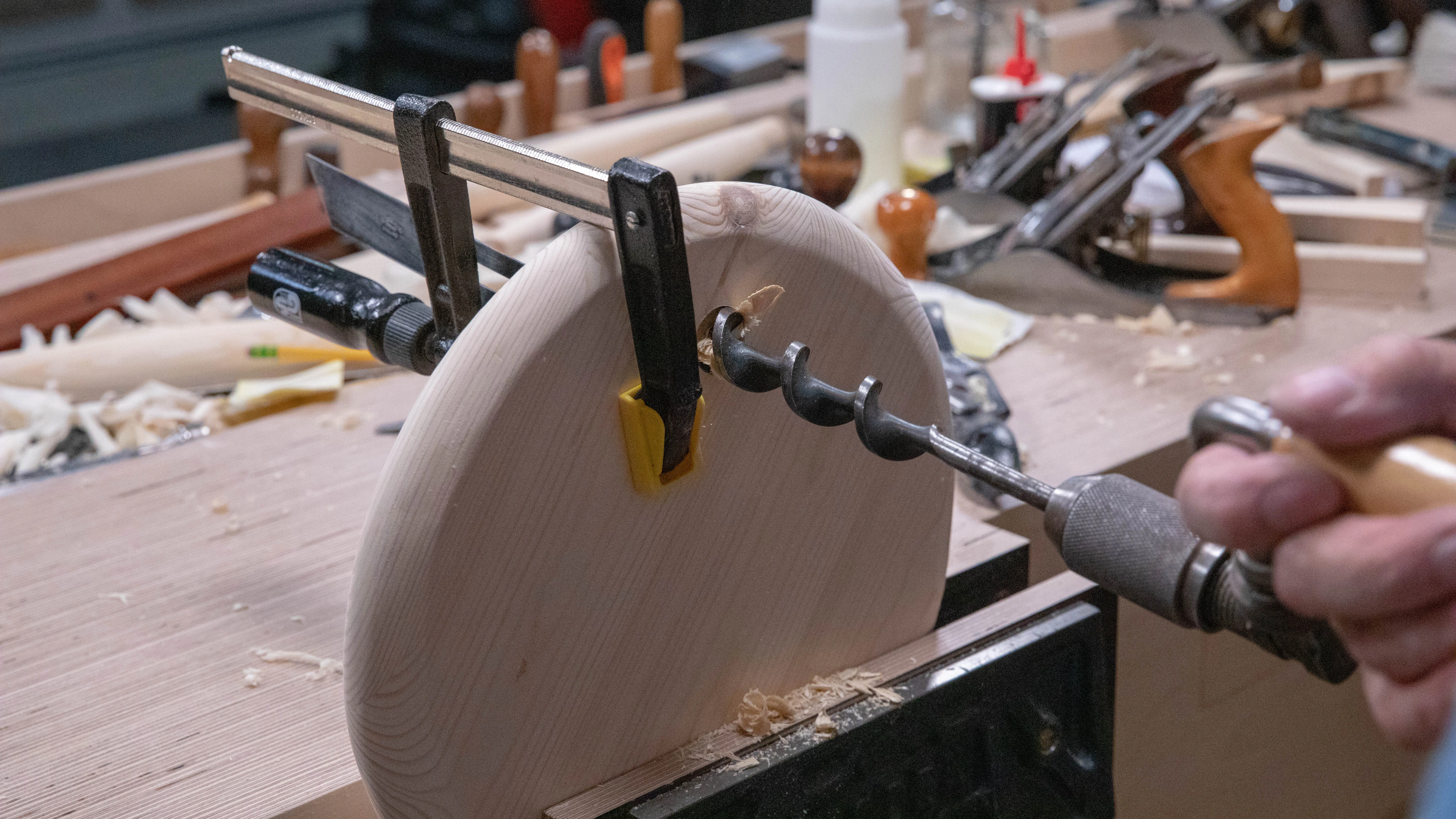
Use a brace with a 1” (25mm) bit to bore your holes for the legs. Start the pointed snail on the exact leg hole markings; you may have to give it a light tap for the snail to bite. Begin to bore, checking yourself constantly that you’re keeping to the correct angle according to the sliding bevel. Once the pointed snail starts to appear through the other side, back out with the bit and flip the seat around in the vise. Place the pointed snail into the new hole and come down with the other end of your brace to approximately match the angle you were boring at. You can now continue to bore through from this side. Repeat for the other two holes, making sure each one is placed in the vise with the leg mark vertically inline with the centre point.
Sign in to track your progress