Woodworking in Small Spaces
Paul’s studio and workshop is the size of a single car garage, this is because we did a survey a few years ago asking what space you work in. Most people came back letting us know it was a double o...
Paul’s studio and workshop is the size of a single car garage, this is because we did a survey a few years ago asking what space you work in. Most people came back letting us know it was a double or single garage, but there were also people working in sheds and spare rooms too. To ensure our studio reflected that of a real workshop, we wanted to ensure the spacing was the same so whatever project Paul was building, you had the option to build too. However, it is possible to do woodworking in a small space, you just have to work smart.
Project Size
Consider the project you want to make and measure up to see if it can be comfortably made in your work space. If not, many of our projects on Common Woodworking and Woodworking Masterclasses are scalable. The cut lists can be amended to suit your requirements so resize to a more manageable scale.
As a beginner to woodworking, we recommend starting out with smaller projects before tackling the larger ones, this is because it requires less wood and usually less time.
Glue Up
If you’re making a project that won’t fit in your workspace once fully constructed, consider working piece-by-piece then taking the parts elsewhere for a dry fit and then glue up (if required) in the location you intend for the project to stay.
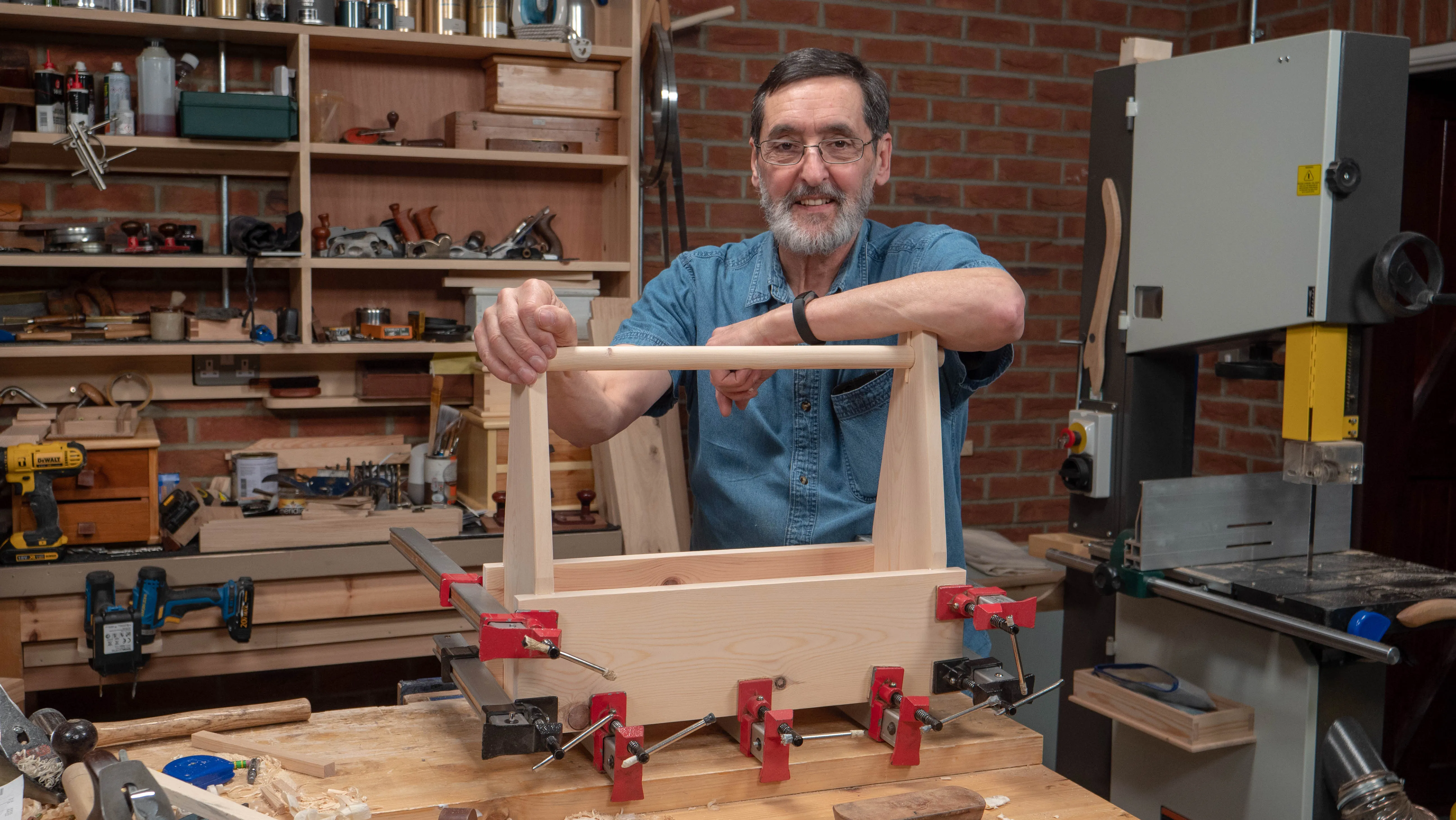
Paul often advises you use clamps orientated the same way, this is to minimise the footprint of your project. If the clamp direction was alternated, this would extend the footprint of your project which wouldn’t be favourable in a smaller space.
Workbench
Wondered how to do woodworking without a workbench? Paul demonstrated how you can do this by making our chopping board project without a workbench, using a Workmate®. These foldable work stations can be stored in small spaces, great if you don’t have a space dedicated to just woodworking.
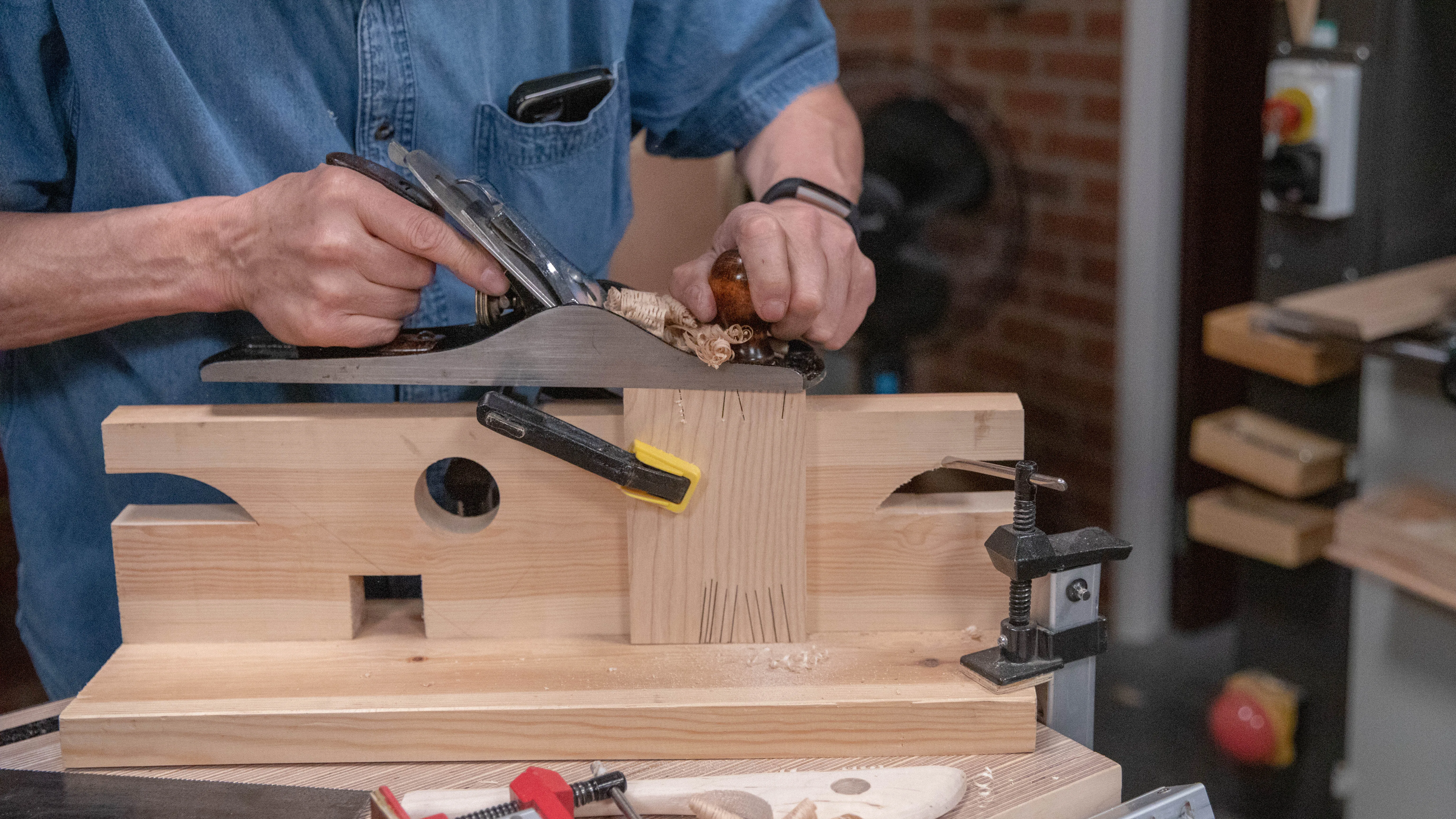
If you have a table to work on but don’t have a vise, Paul has demonstrated how you can make a jig which can be held in place using clamps. You can see more photographs of this in our blog ‘Woodworking without a Workbench’.
Tools
It is possible to make some projects with a minimal tool collection, some tools come as a combination, such as a combination gauge (a marking gauge and a mortise gauge in one).
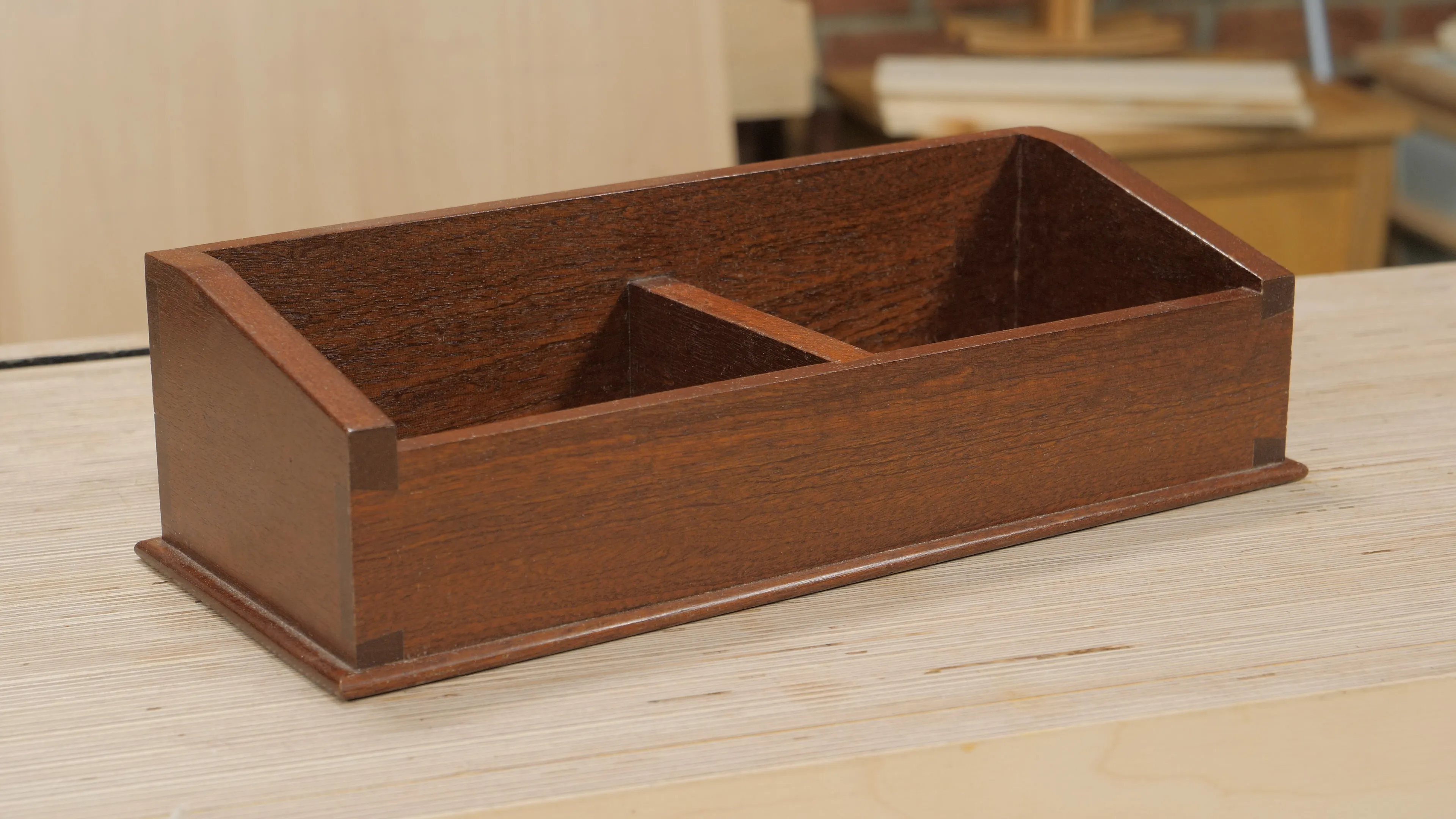
It is important to keep organised if you have a limited area, using shelving or a trunk/tote to store your tools will help keep yourself organised. Our free tool tote project is great for beginner but is also a handy storage solution. On Woodworking Masterclasses the dovetail caddy is another example of a useful beginner project which can help out with organisation too.
We’d love to hear more about the spaces in which you do woodworking, let us know in the comments below!