The Swing Brace Guide
A traditional woodworking brace is used to bore holes from ¼” in diameter and up, in increments of 1/16” to 1 ½”, which are often too big for a hand drill. They can create cleaner work than power t...
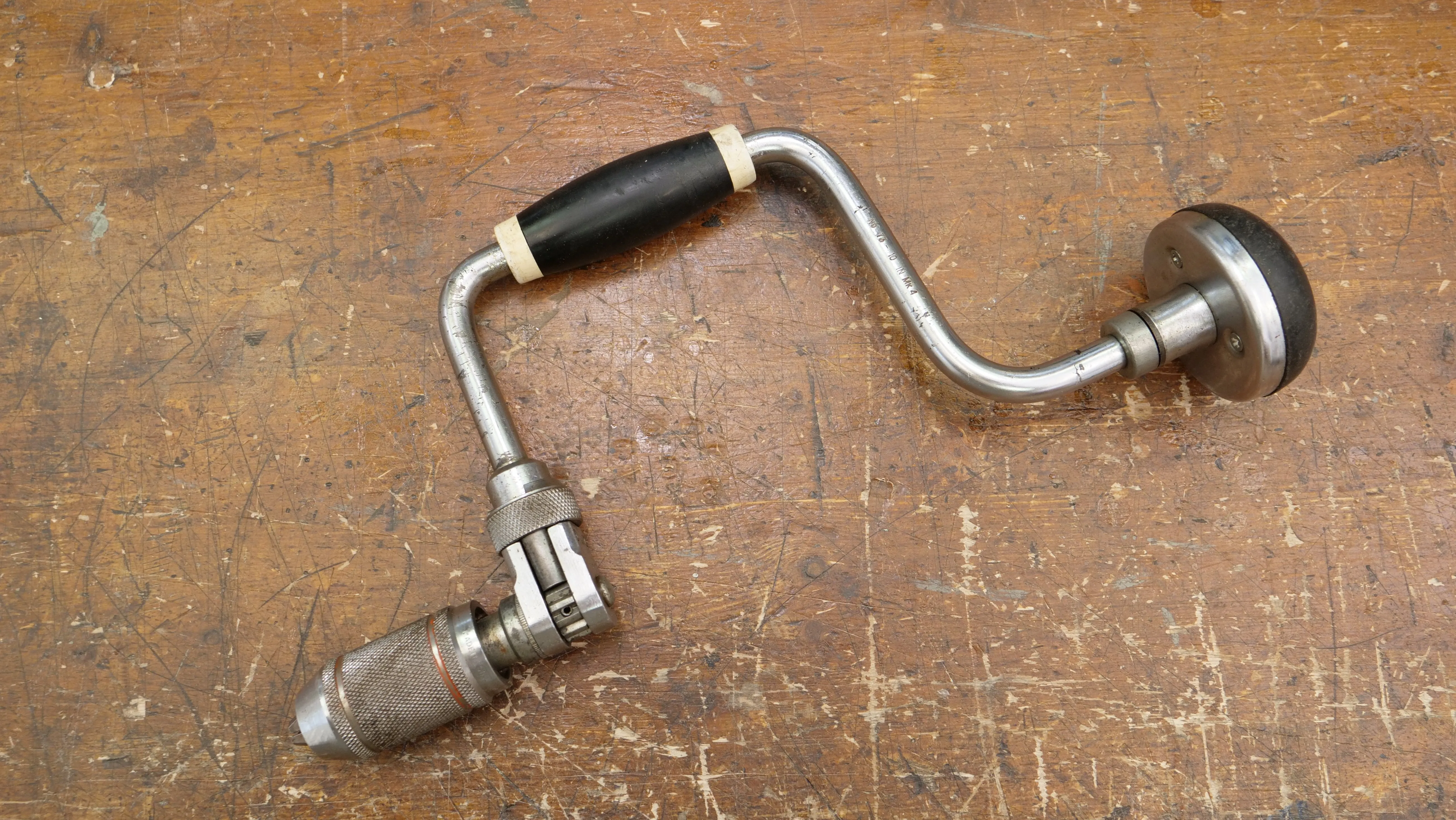
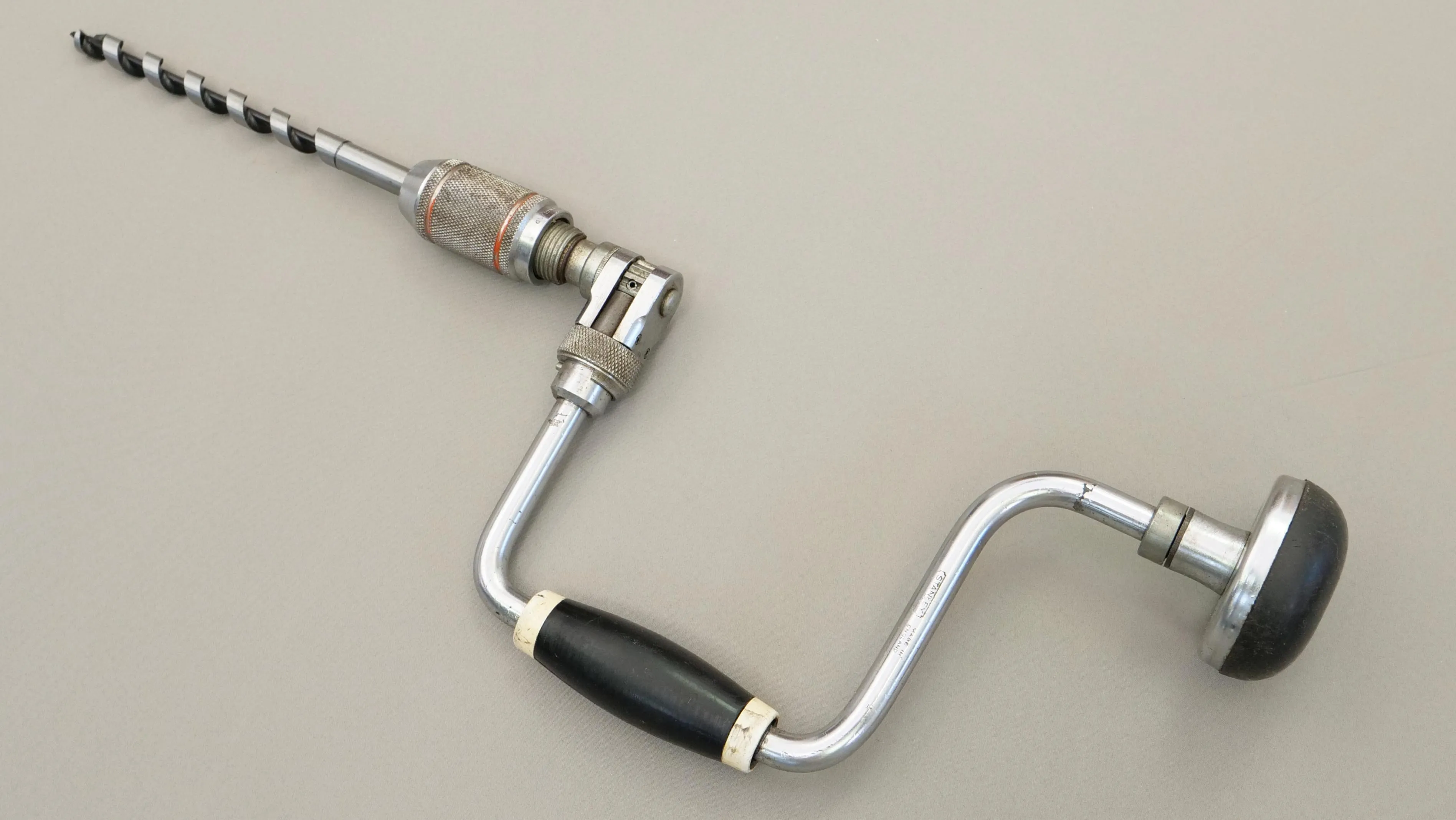
A traditional woodworking brace is used to bore holes from ¼” in diameter and up, in increments of 1/16” to 1 ½”, which are often too big for a hand drill. They can create cleaner work than power tool versions because they operate by a screw thread and cutting edges, instead of power and speed. The cutting edges can be newly sharpened with a small file when dull. The brace can bore holes more slowly than electric drills. The spiral bits are designed with a screw-type tip (pointed snail) that pulls the bit into the wood as the handle of the brace is rotated. This makes them a safer alternative to high-speed high-powered drills.
Some braces have a ratchet which allows you to use the tool where space is limited. For example, if you were boring a hole near a wall and could not turn the handle the full circle, you could engage the ratchet and just use the half radius to continue boring. You can switch the direction of cut and withdraw the bit using the ratchet too. This gives you more versatility and enables you to still use the brace in restrictive areas.
Uses
The brace performs the same tasks as an electric drill, mainly to bore holes in wood. The bits can be interchanged to create different sized holes. Unlike the electric drill, the brace is fully dependent on human power. This is an advantage as it always runs on your renewable energy.
Terminology
Other names
Parts of a Swing Brace
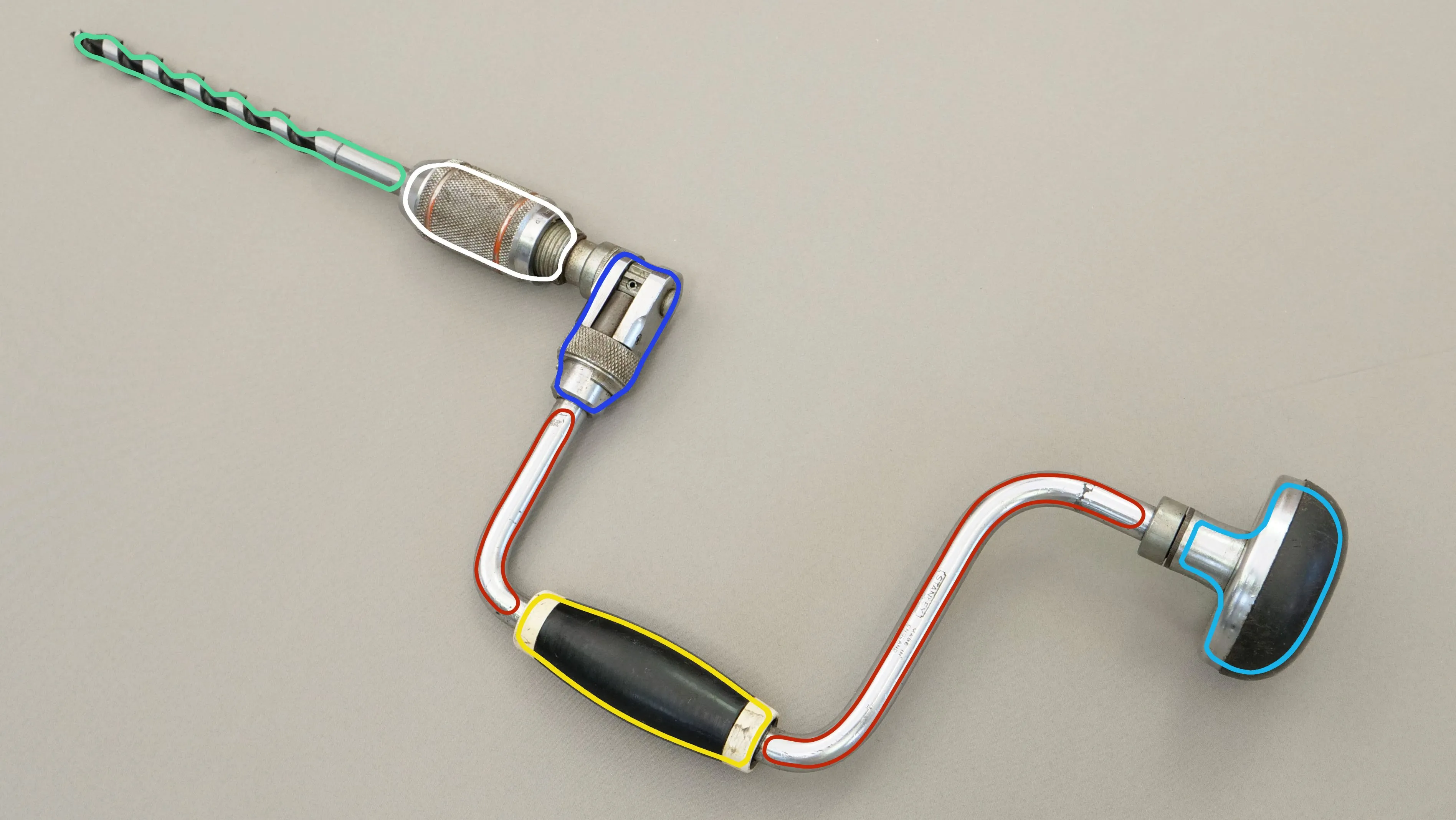
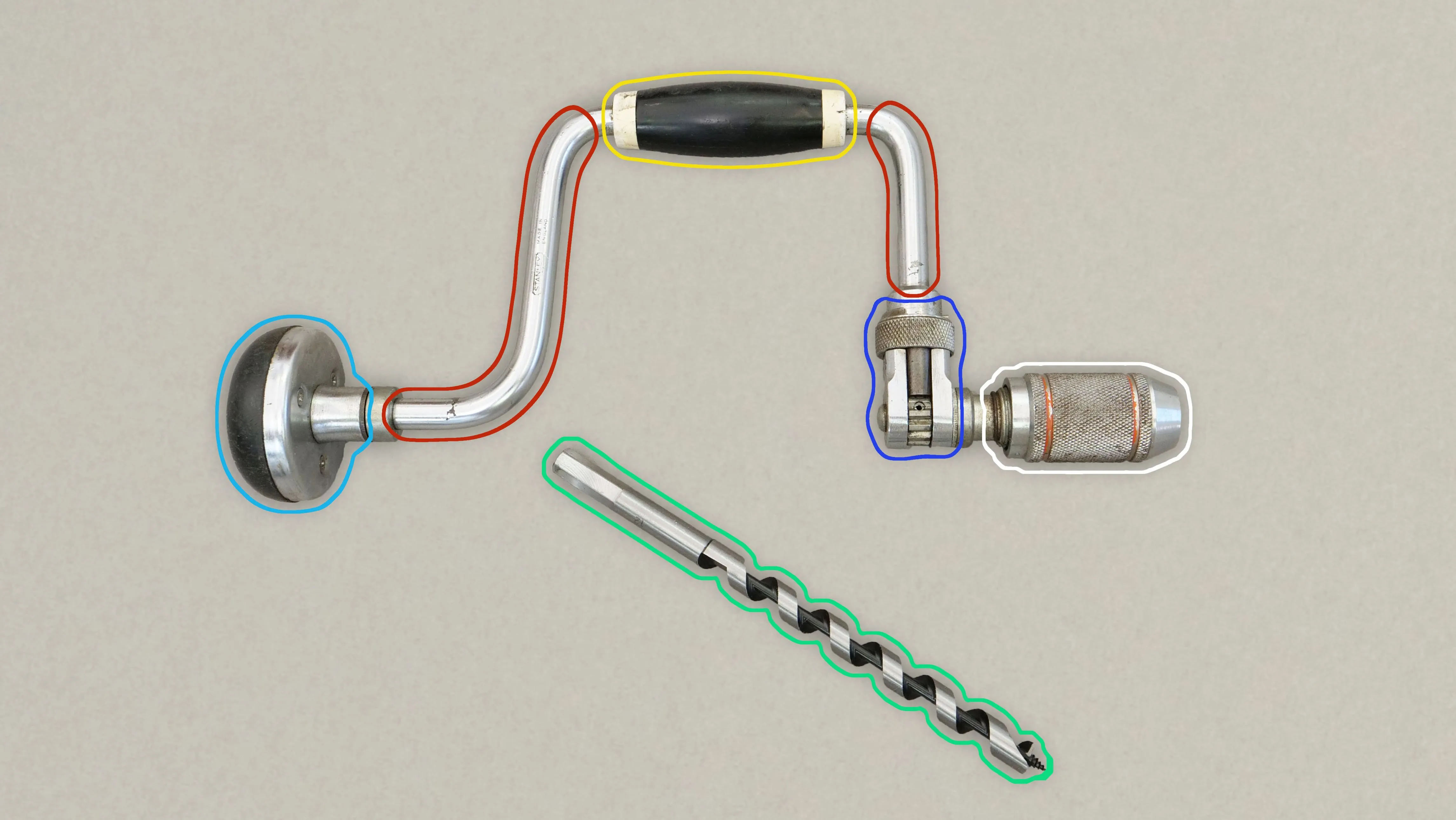
● Bit
◎ Chuck
● Frame
● Handle
● Pad
● Ratchet Mechanism
Relevant Guides
Further Reading
To read more on this we recommend the following from Paul’s blog:
Questions Answered on Brace and Bits