Saw Files
Saw files can also be known as triangular files or three-square files. They often have single cut teeth across the full width of each facet of the file and can come in many different variations inc...
Saw files can also be known as triangular files or three-square files. They often have single cut teeth across the full width of each facet of the file and can come in many different variations including:
Paul finds that 3 main sizes cover most saws:
When choosing a saw file, consider the type of saw, the number of teeth (TPI) and the size of the teeth. Filing the teeth removes a layer of steel which restores the sharp cutting edge. When sharpening a ripcut saw, the teeth are sharpened to a chisel tip. When sharpening a crosscut saw, the inside of each tooth is sharpened to create two bevels, resulting in a three-sided tip point. The saw file can be used for both tooth patterns.
Terminology
Facet- Another word for face
Fleam cut- Another name for ‘crosscut’
Gullett- The ‘V’ shape in between the teeth which the file sits in when sharpening
Types of Saw File
| PPI | Length | Type | Saw |
|---|---|---|---|
| 6-7 | 7” | Slim Taper | Handsaws |
| 8-11 | 6” | X Slim Taper | Handsaws |
| Tenon saws | |||
| 12-16 | 6” | XX Slim Taper | Tenon saws |
Dovetail saws Gent Saws | | 16+ | 5” | XX Slim Taper | Dovetail saws Gent saws |
If you are struggling to keep the angle consistent when using a saw file, you can use a strip of wood with marked angles on as a guide. If you find you have set your saw too aggressively, you can file them back to an upright position and start again. Ensure you are using the same length stroke, the same hand pressure and the same number of strokes per tooth to get an even pattern.
When buying a saw file it is important to ensure it is tapered and that the width of the file is double the height of the saw teeth. Paul recommends Bahco saw files, as they are long lasting and well made. Saw files technically have 6 faces, not 3. This allows for the creation of a cutting face that reaches into the bottom of the gullet. Each corner is not a point, they are small flat surfaces which have teeth on. This makes the cut more effective. You can buy saw files for less than £10 each and usually can sharpen most saws with a 4”, 5” and 6”.
You should never use a saw file without a handle as the tang can puncture the skin if used incorrectly and cause serious hand/arm injury. You can get two types of handle, one for a double ended saw file which has slots which allowing the file to wedge into the handle, or a handle for a single ended file which is shaped to house the tang. You can get file handles which are made from wood or from plastic. Paul prefers using the wooden handles. You can also make your own saw file handle following Paul’s blog.
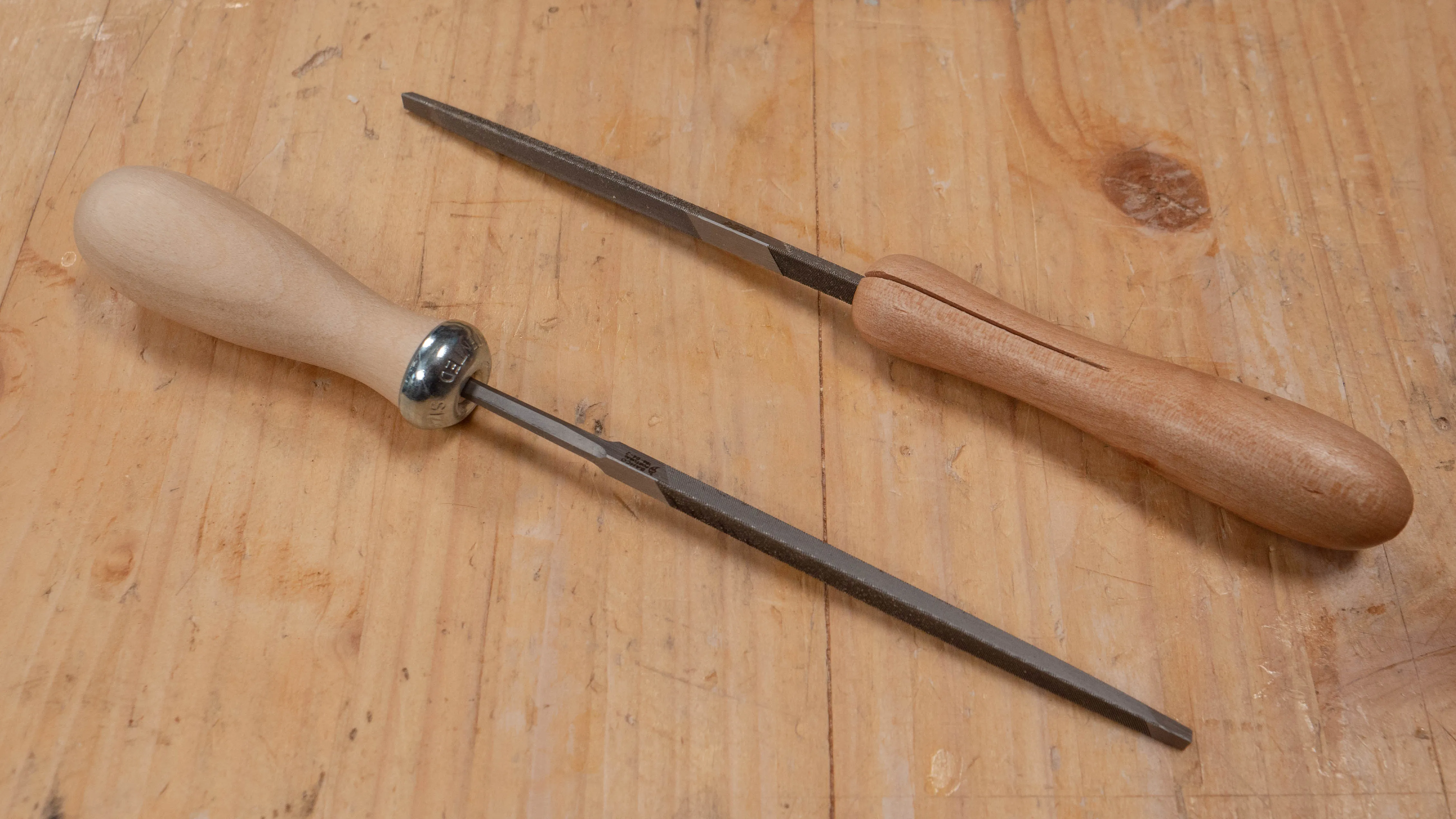
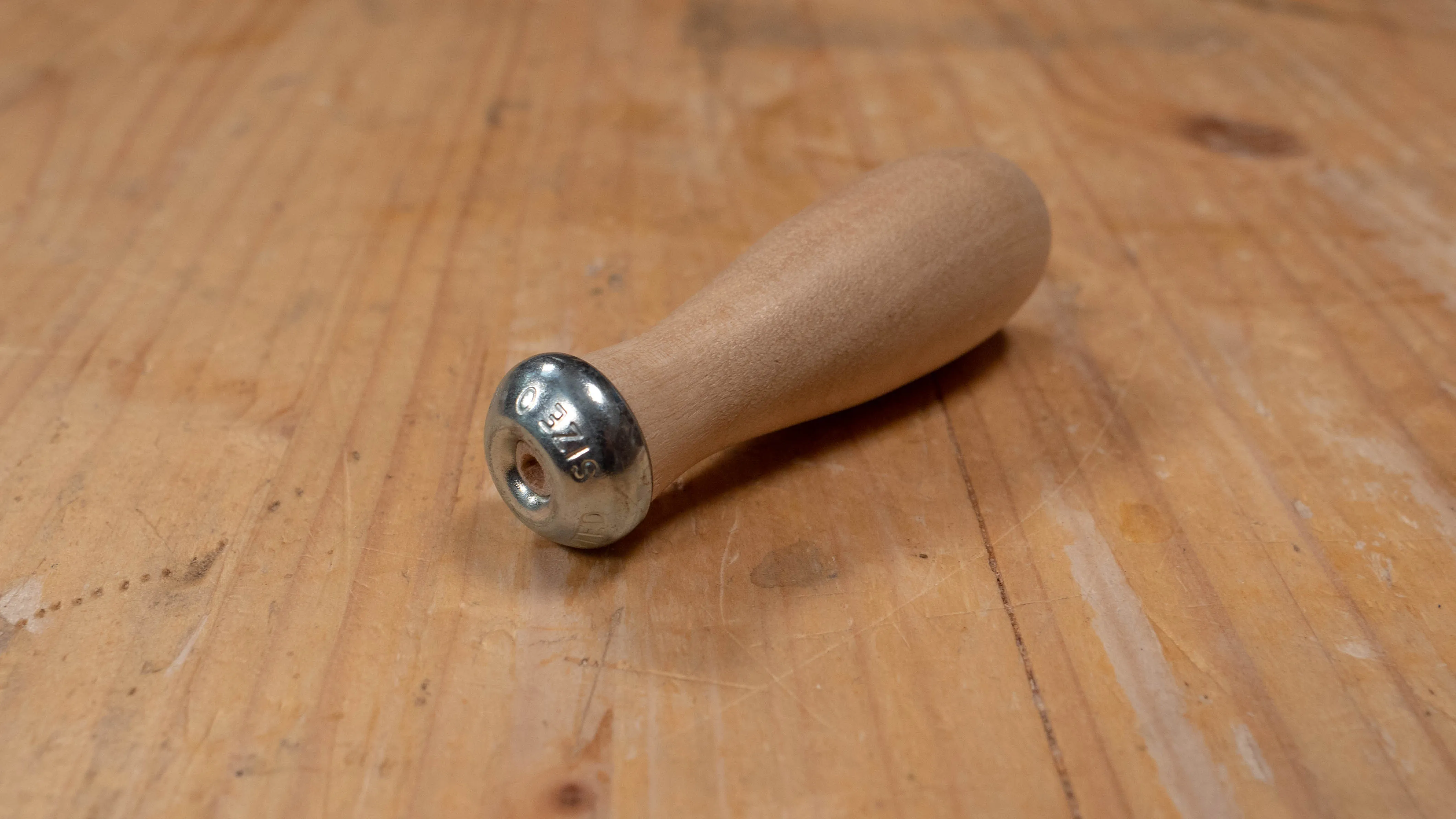
You shouldn’t have to pay more than £3 for a saw file handle. We have purchased this one from eBay for £2.64 free delivery which fits our 4”, 5” and 6” saw files.
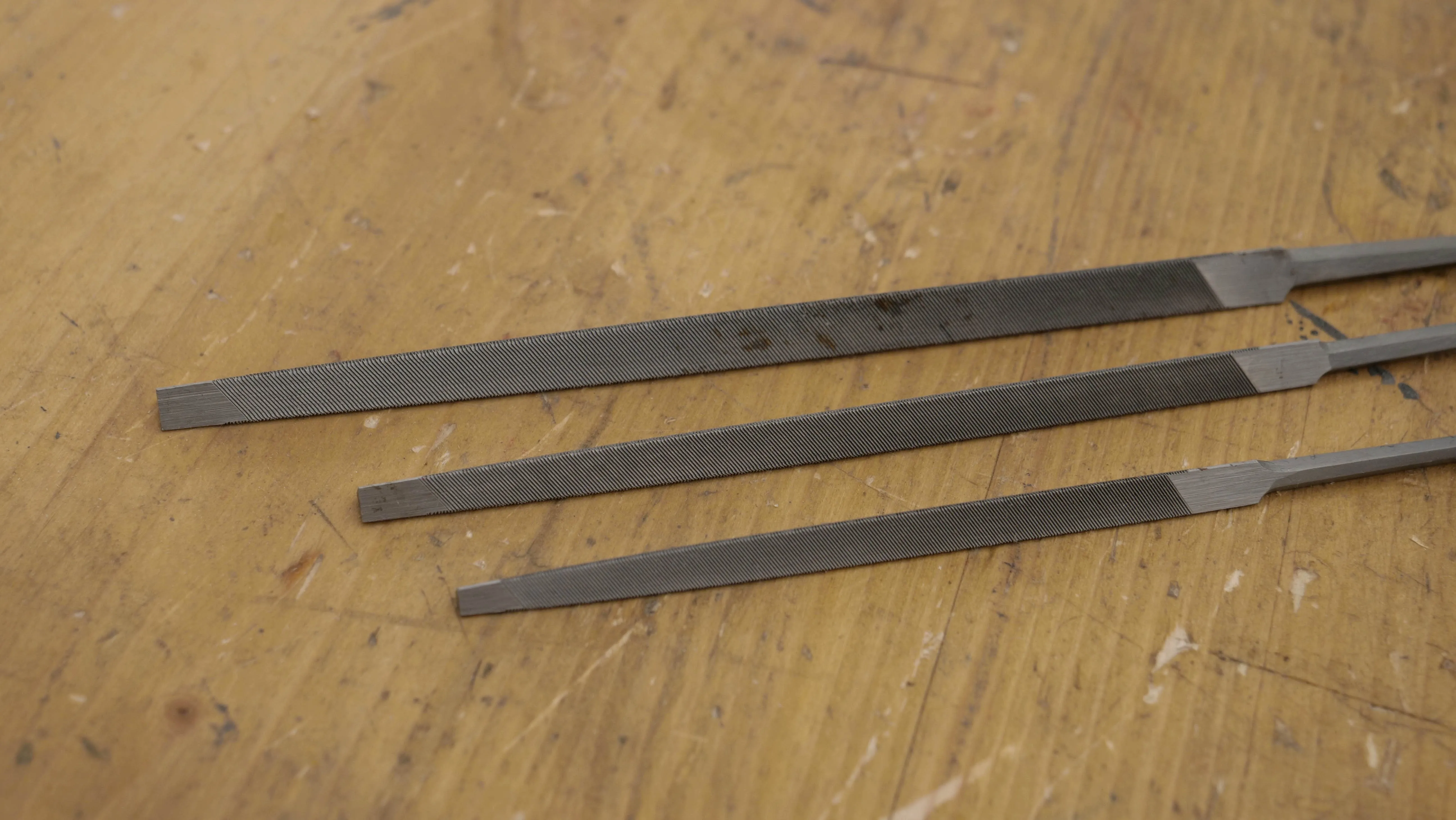
We purchased these Bahco Saw Files from Amazon UK in February 2018 for £5.88 each:
Further Reading
To read more on saw files, we recommend the following from Paul’s blog:
Saw Files- Lasting Qualities
Saw Files Saved Edges And Recycling Files
Saw Files Revisited- Bahco Raises The Bar
Bahco Saw Files Beat the Best of the Rest in Real Bench- Testing
Assorted Saw Files