
The Plane Guide
There are many different types of tools under the term plane. These tools all have a blade fixed at an angle inside a metal or wooden body; some of them include:
- Bench planes
- Spokeshaves
- Plough Planes
- Router Planes
Over time, the term bench plane has been shortened to be known as ‘plane’. It is, however, important to remember that this is also an umbrella term for many different planes. In this guide, we will be talking about the bench plane, which is the most common type.
Overview
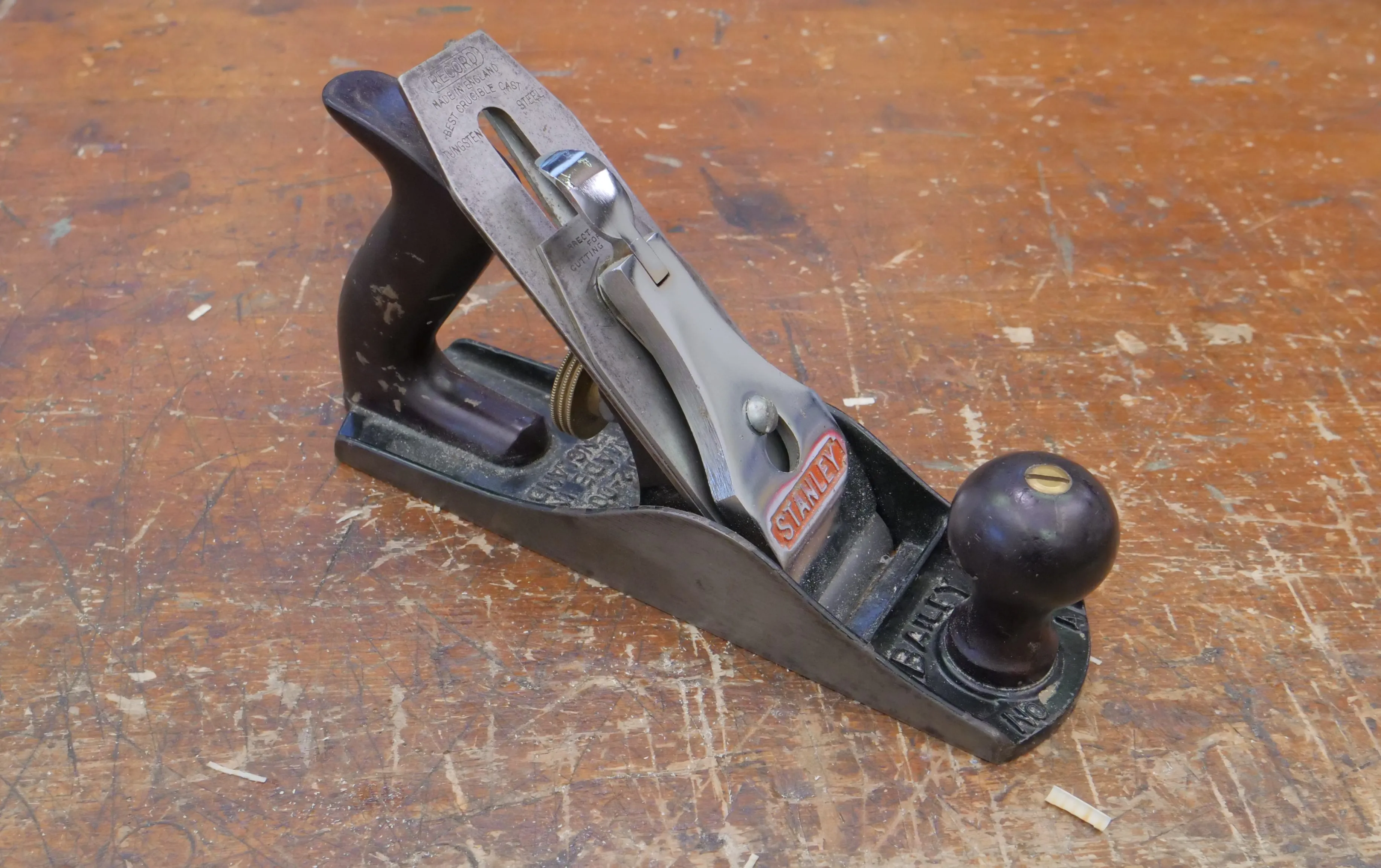
The bench plane is one of the most iconic and recognisable woodworking hand tools. It is used for truing, straightening, trimming and smoothing wood. The body can be made of wood or cast metal. But, the wooden planes are mostly considered vintage, are harder to find and can therefore be more expensive. The metal ones are more widely available and work just as well.
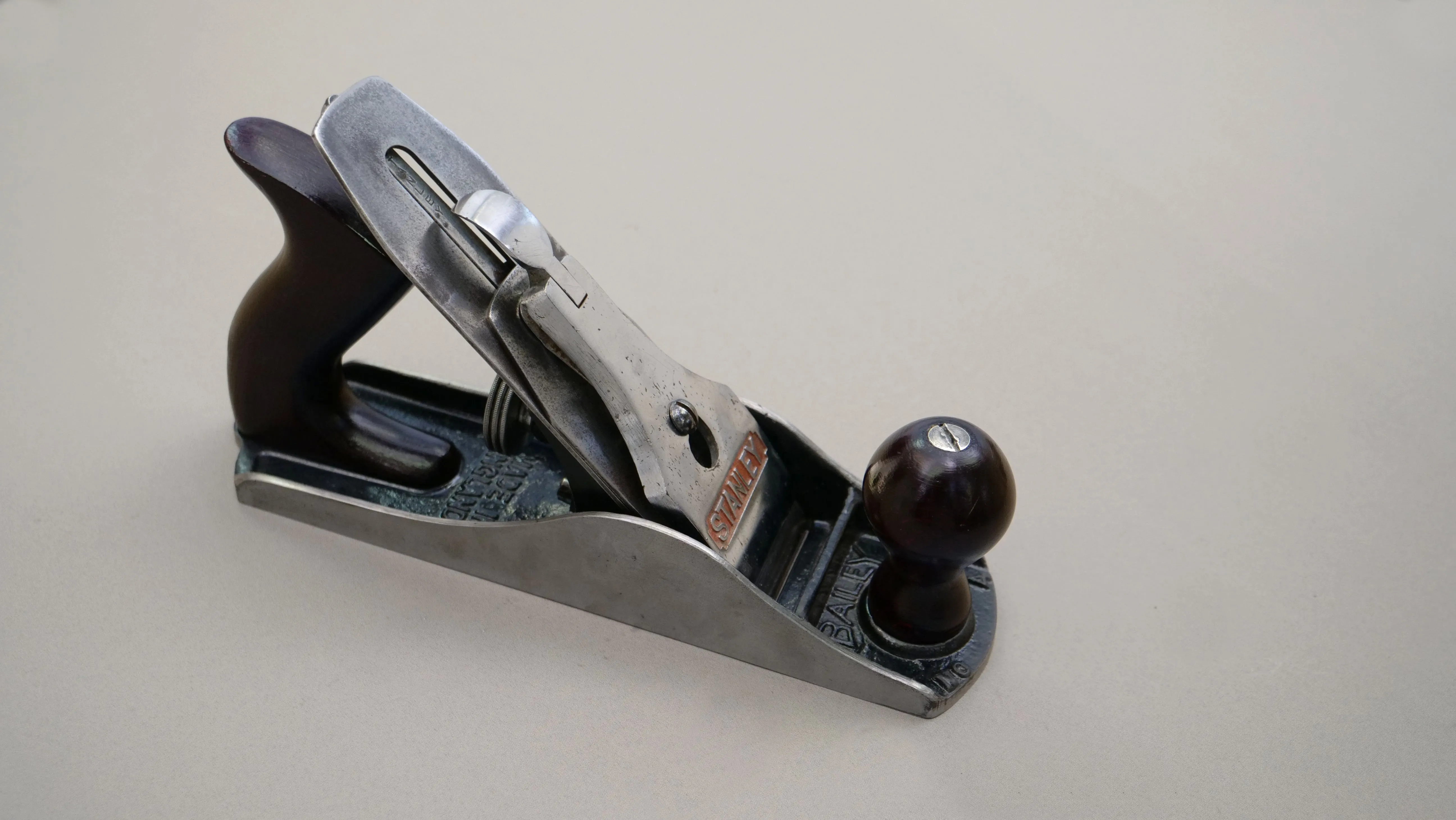
The most common of all the metal-cast planes are known as bailey-pattern planes. The size of these planes range from #1-8, with #1 being the shortest and #8 being the longest. Planes #1 and #2 are not commonly used, as they are too small for most practical work. More often, you will see the #3-4 1/2 being used. These are referred to generally as smooth or smoothing planes. The #5 and #5½ are referred to as Jack planes. These are used for levelling and trimming in the same way as the smoothing planes, but have the advantage of a longer sole. The #6, #7 and #8 planes are called jointer planes and are much less commonly used.
Uses
The bench plane is used for levelling and smoothing wood to a high finish. The pushing motion allows the blade to cut the surface as much or as little as you need, as controlled by adjusting the the depth of cut of the blade.
Terminology
- Cap iron - A separate steel plate installed against the main cutting blade by a setscrew. The cap iron deflects the shavings up and into the mouth of the plane as planing cuts are made
- Frog - This angled section of metal is less obvious when the plane is fully assembled. It holds the blade assembly at a fixed angle and houses all of the adjustment mechanisms of the plane. It can be moved back and forth to adjust the mouth opening, but this rarely needs doing
- Handle or Tote - The wooden or plastic part that you hold at the rear of the plane
- Knob - The wooden or plastic part at the front of the plane that you hold
- Lever cap - This sits on top of the whole blade assembly and locks it in place
- Mouth - This is the opening in the sole of the plane through which the blade protrudes
- Sole - This is the long flat surface forming the underside of the plane
Parts of a Plane
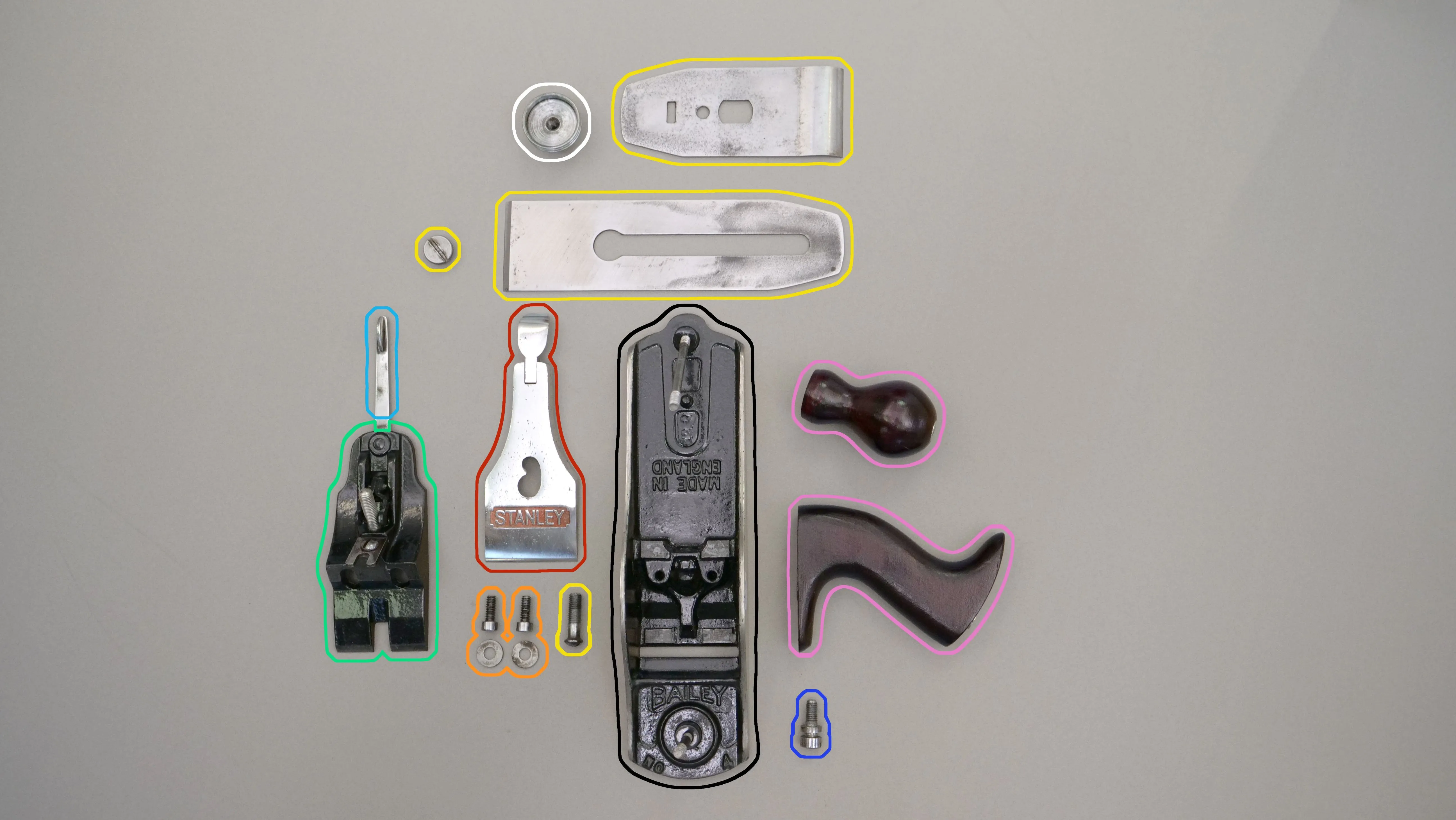
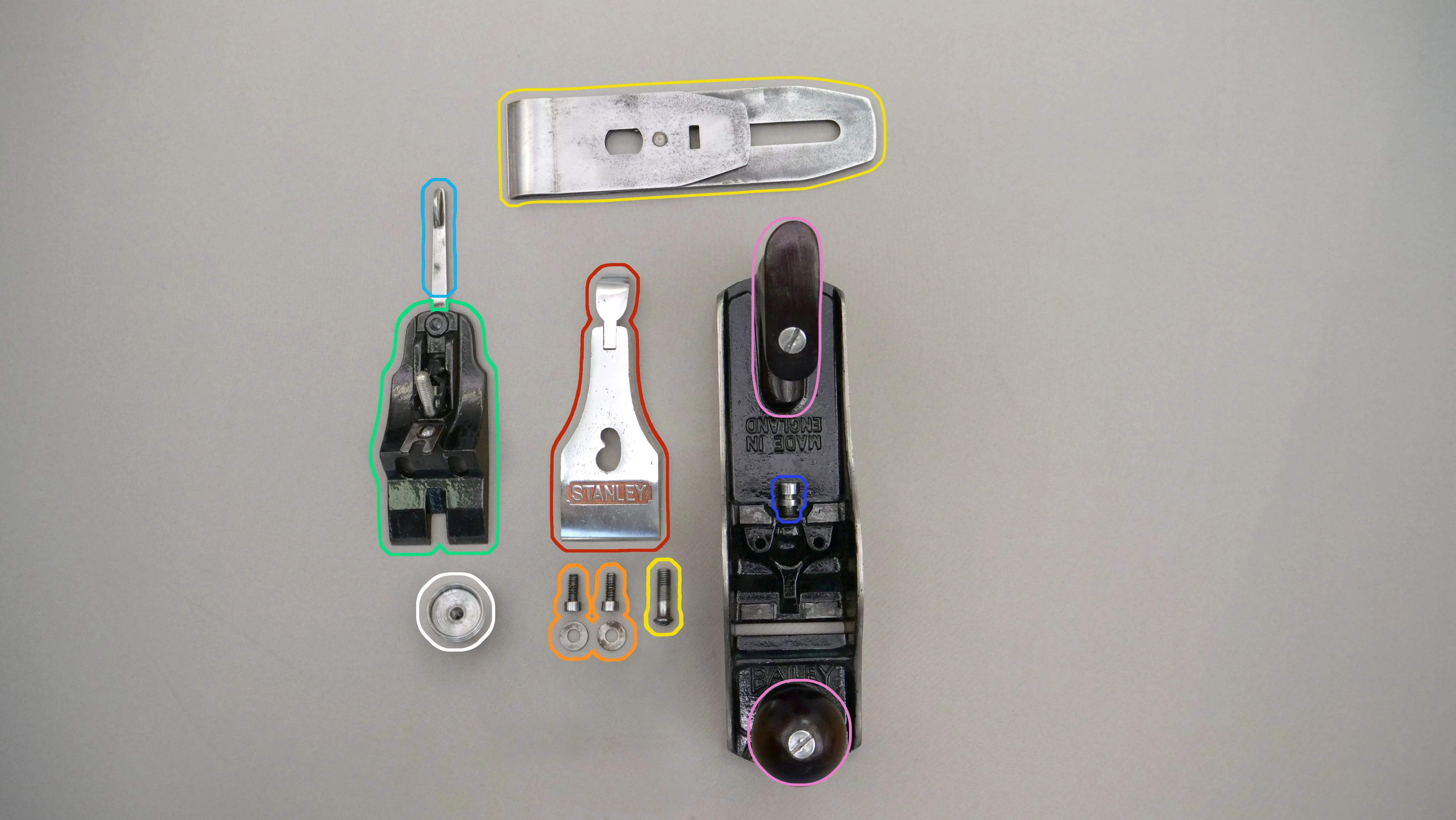
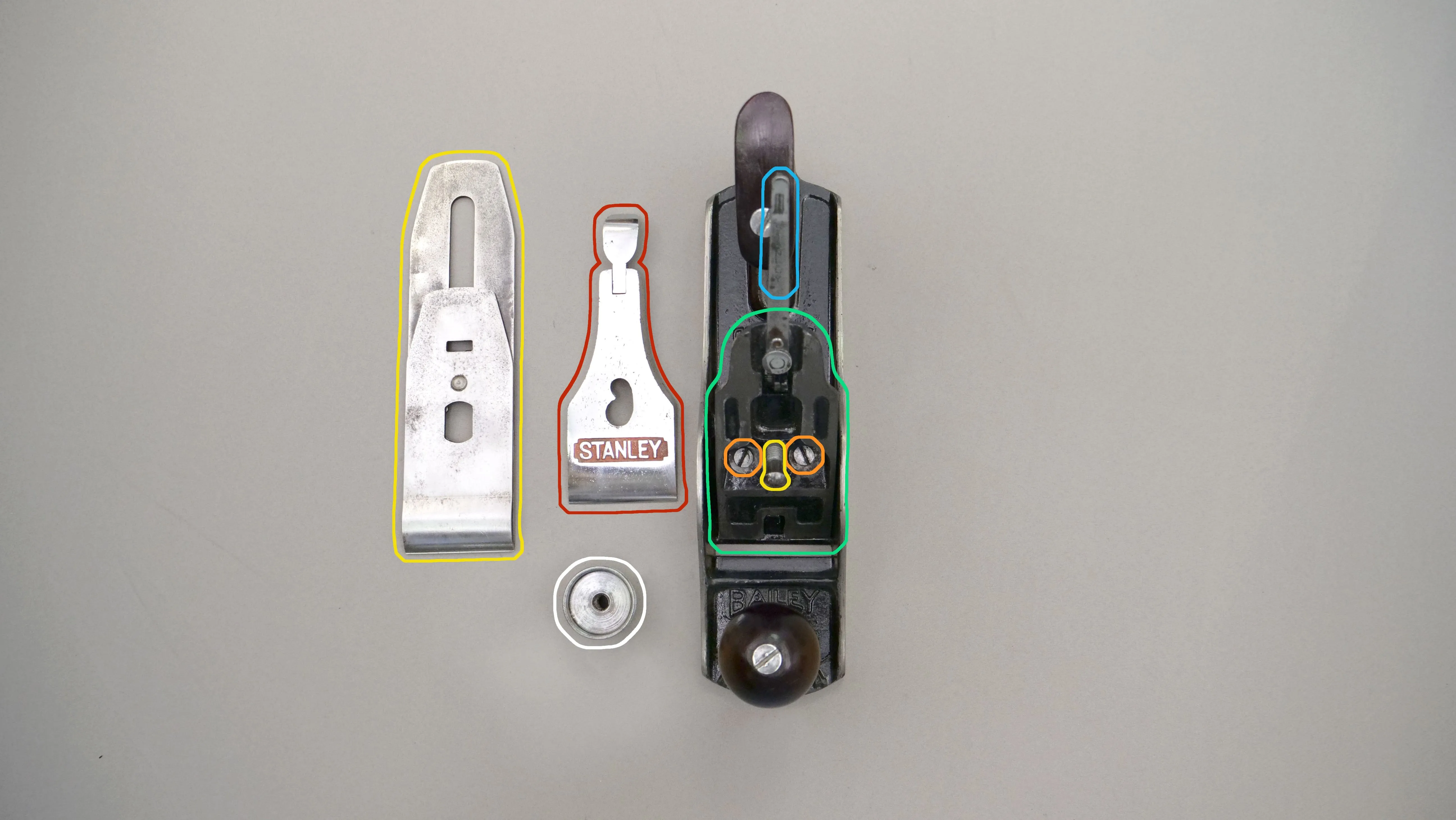
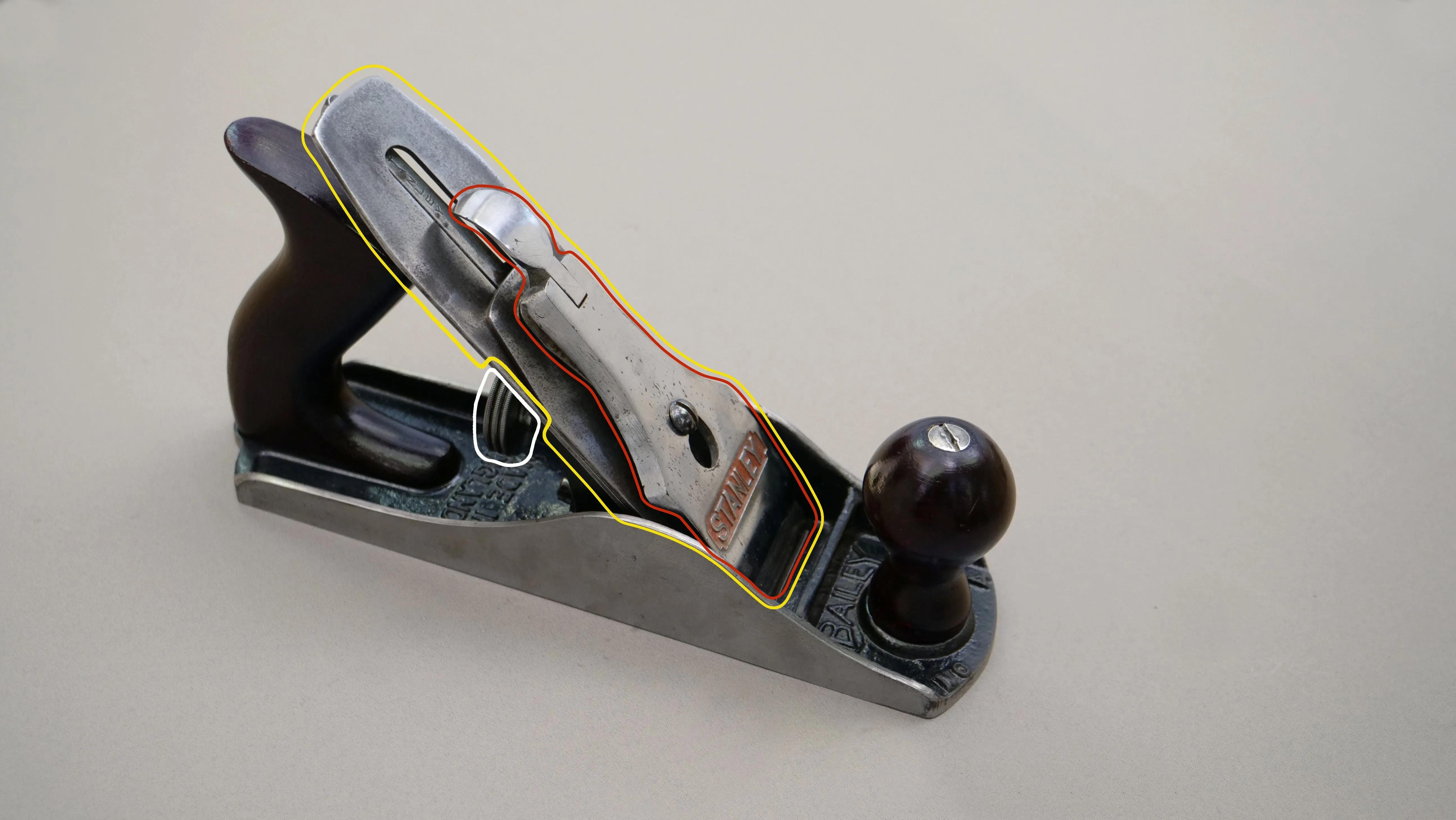
● Sole
● Handles (Front Knob and Back Tote)
● Cutting Iron Assembly (Cap Iron, Cutting Iron and Screw) and Setscrew
◎ Depth Adjustment Wheel
● Lever Cap
● Frog
● Lateral Adjustment Lever
● Frog Setscrews
● Frog Adjustment Screws
Further Reading
To read more on this we recommend the following from Paul’s blog:
Which Plane- Bevel Up First or Bevel Down?