Cutting The Housing Dados
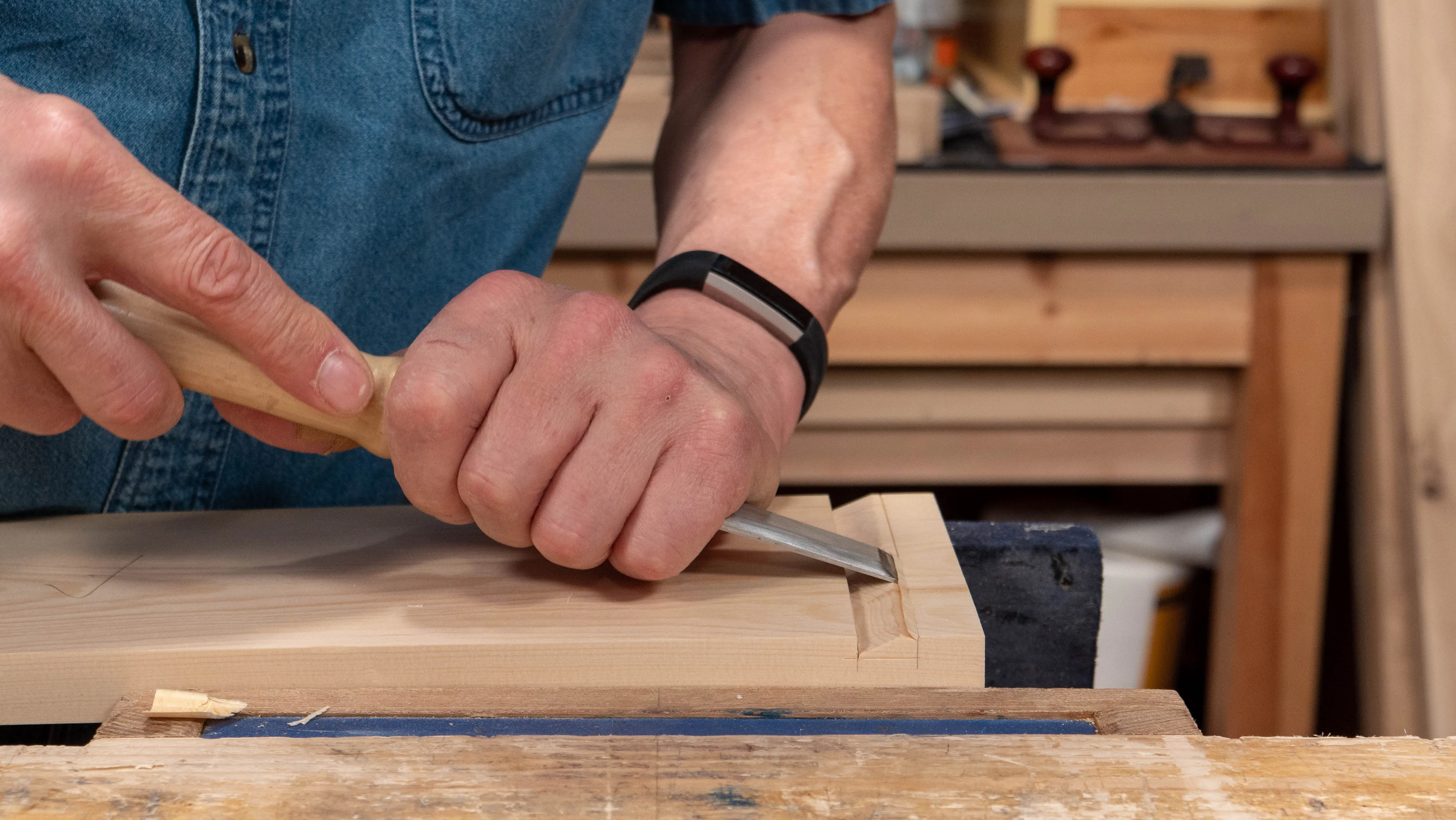
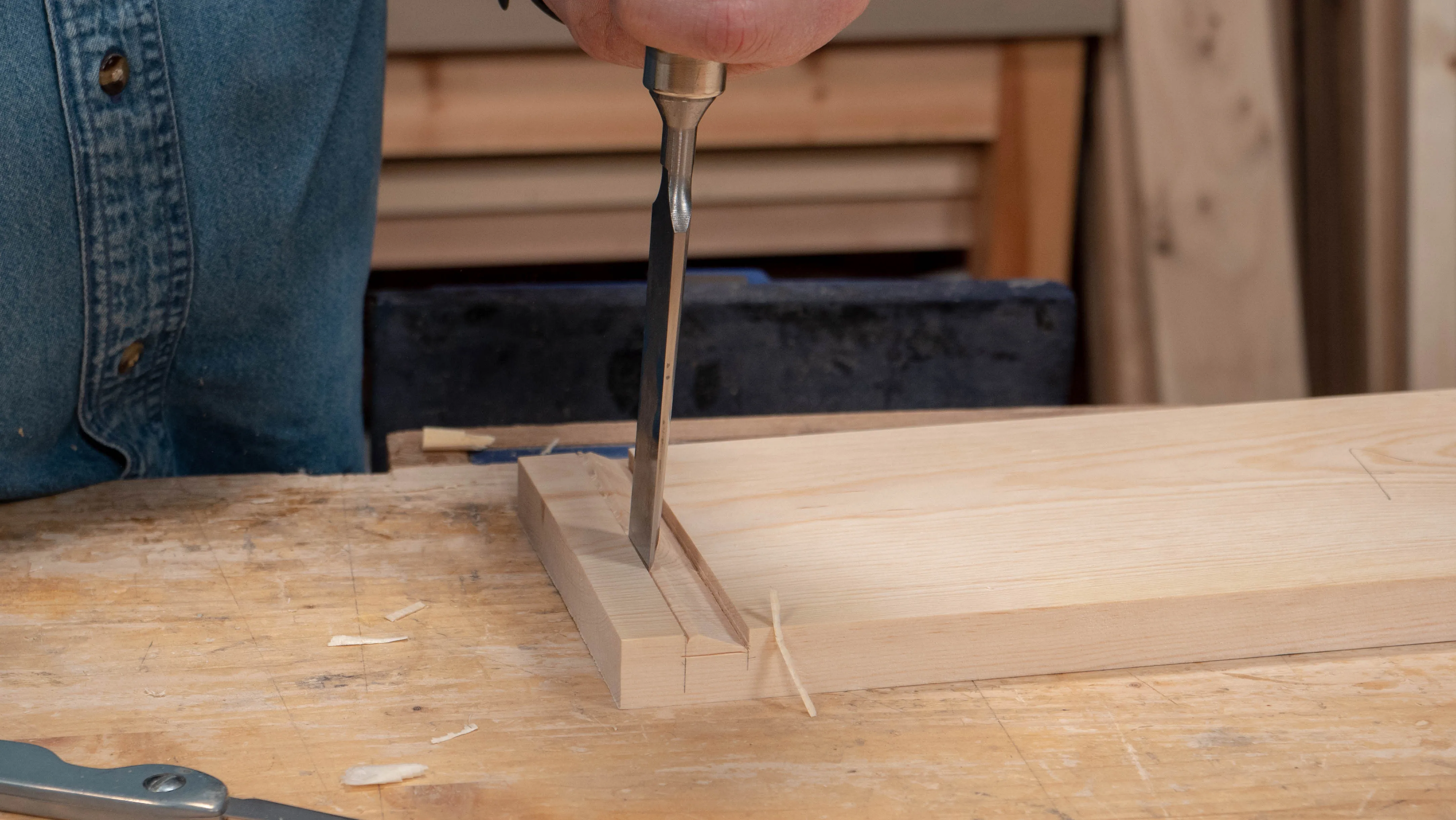
Start with the first wall. Create a definite knifewall on the inside wall, and then secure the panel in the vise so you can pare into the cut with a sharp, wide chisel. Proceed as with all housing dados, chopping vertically on the bench and then back in the vise for paring into the wall, clearing the way for subsequent chisel chops. For a more comprehensive explanation, see our ‘How to Cut a Housing Dado’ guide.
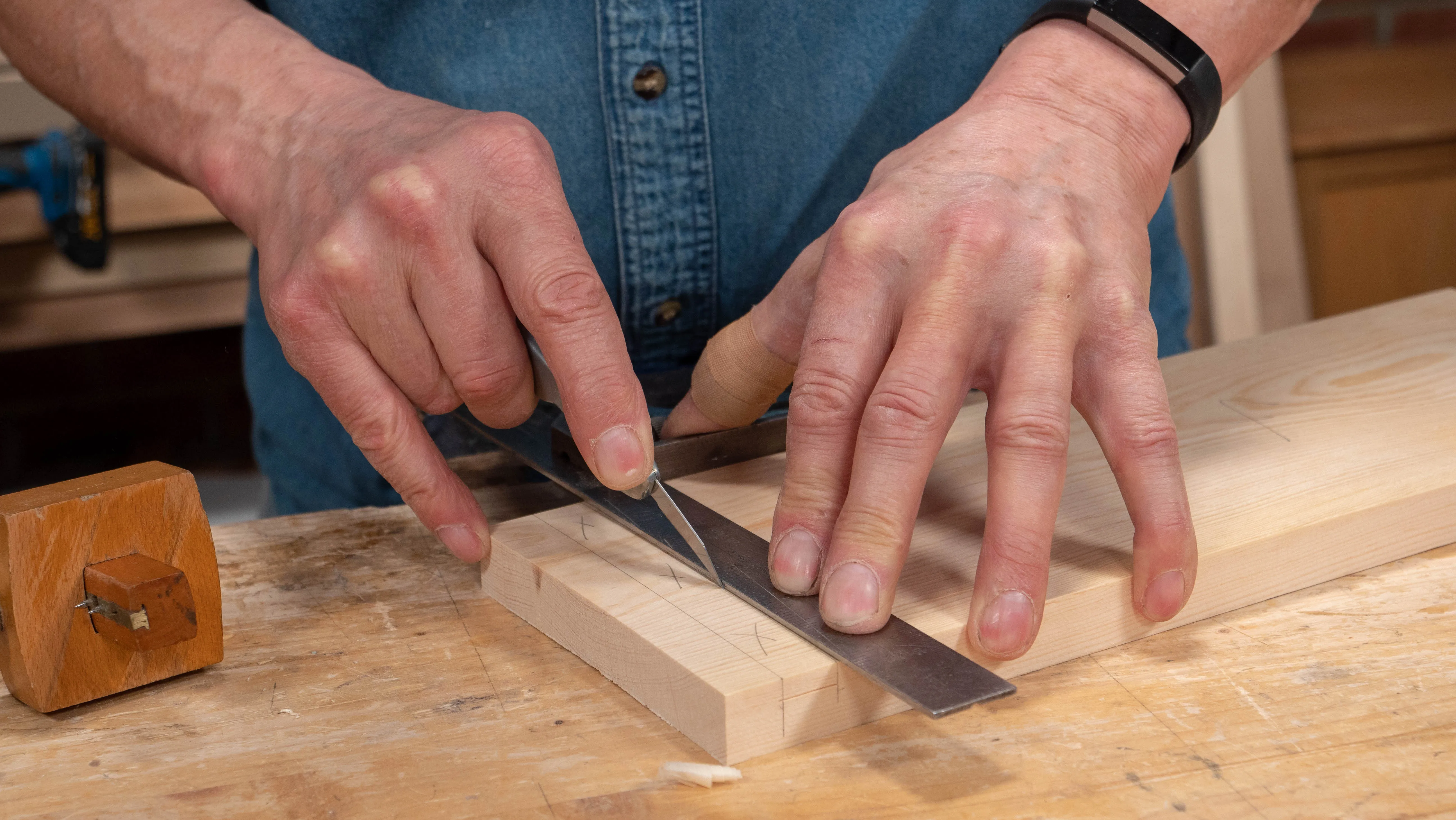
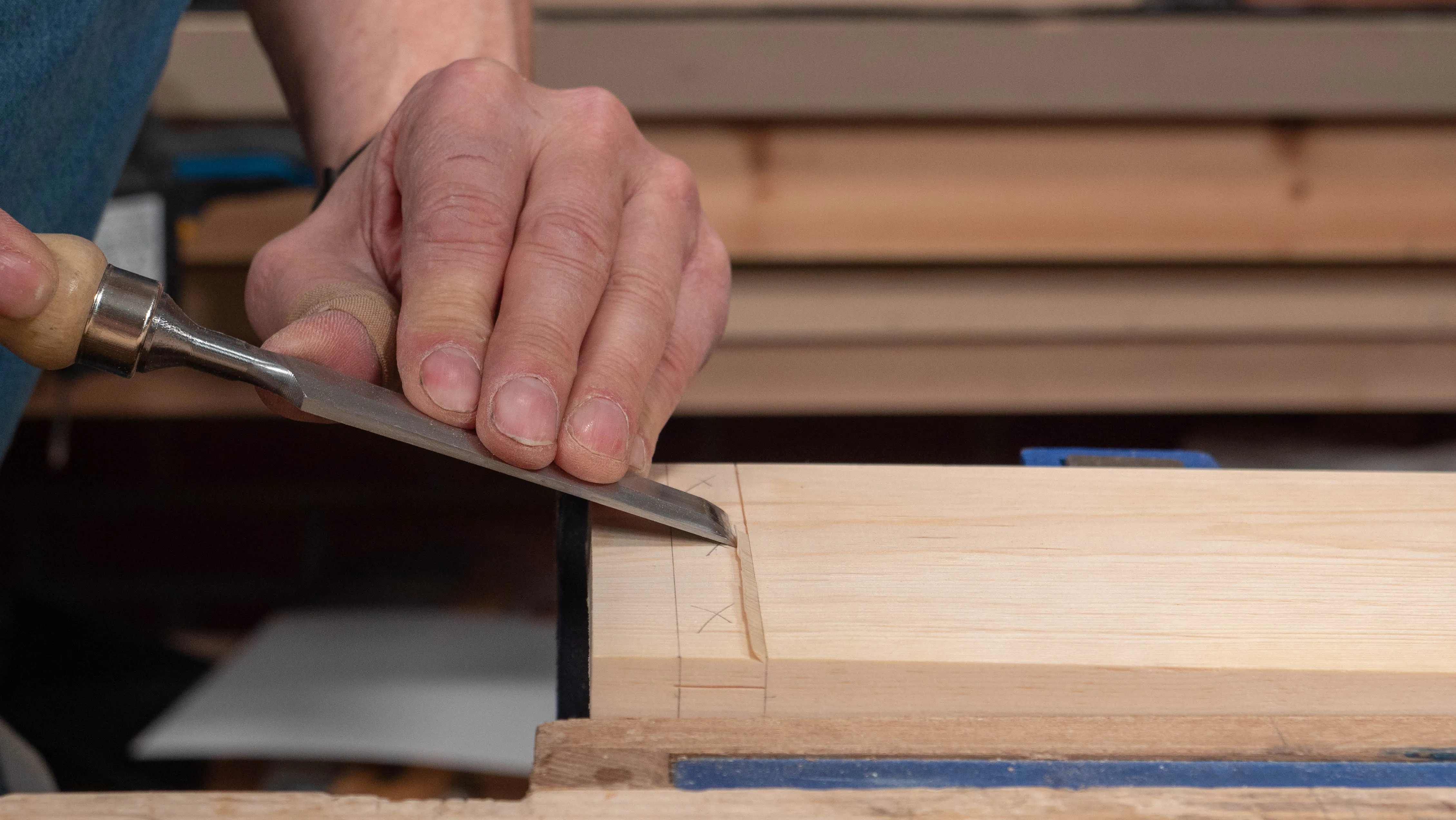
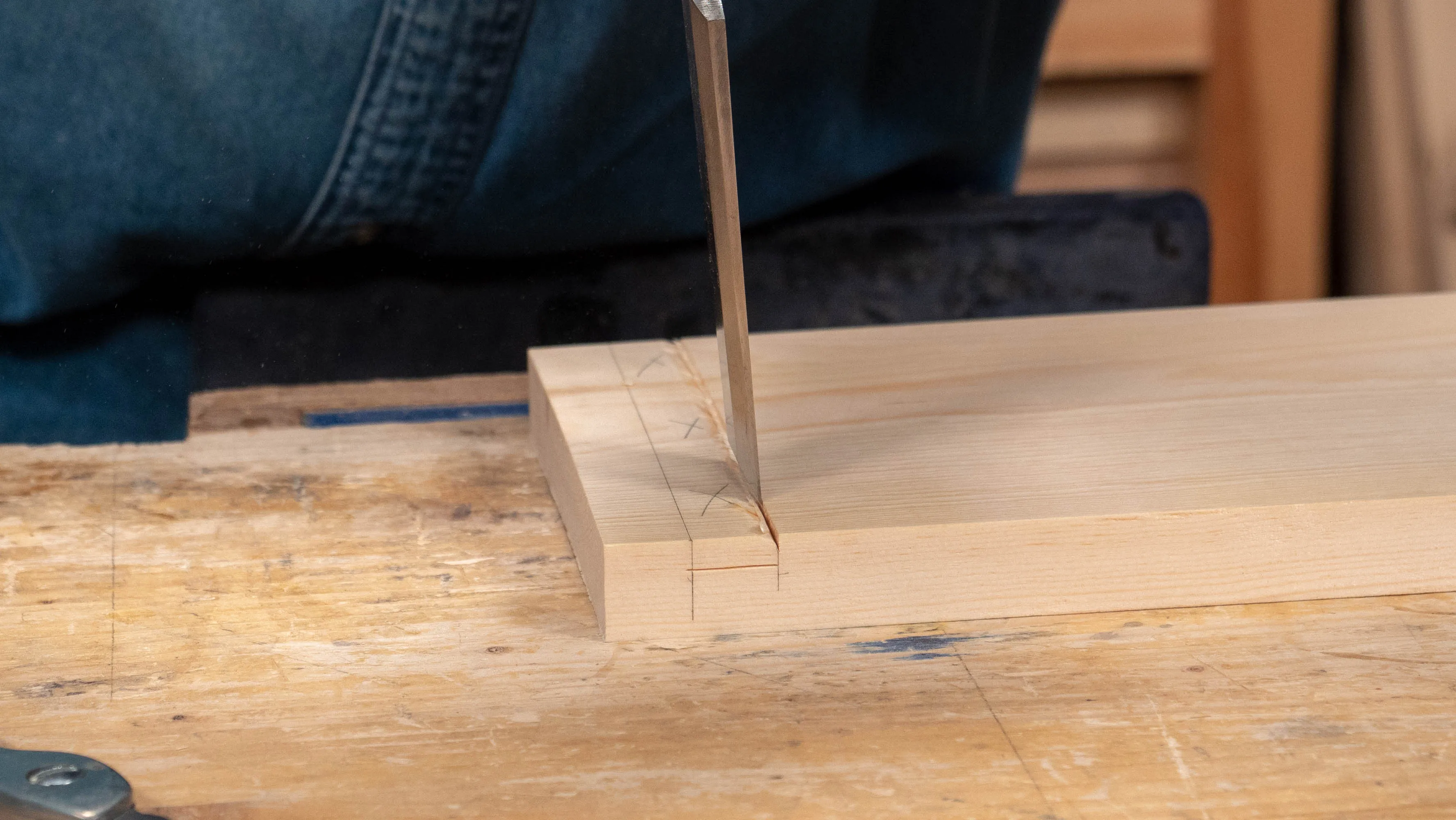
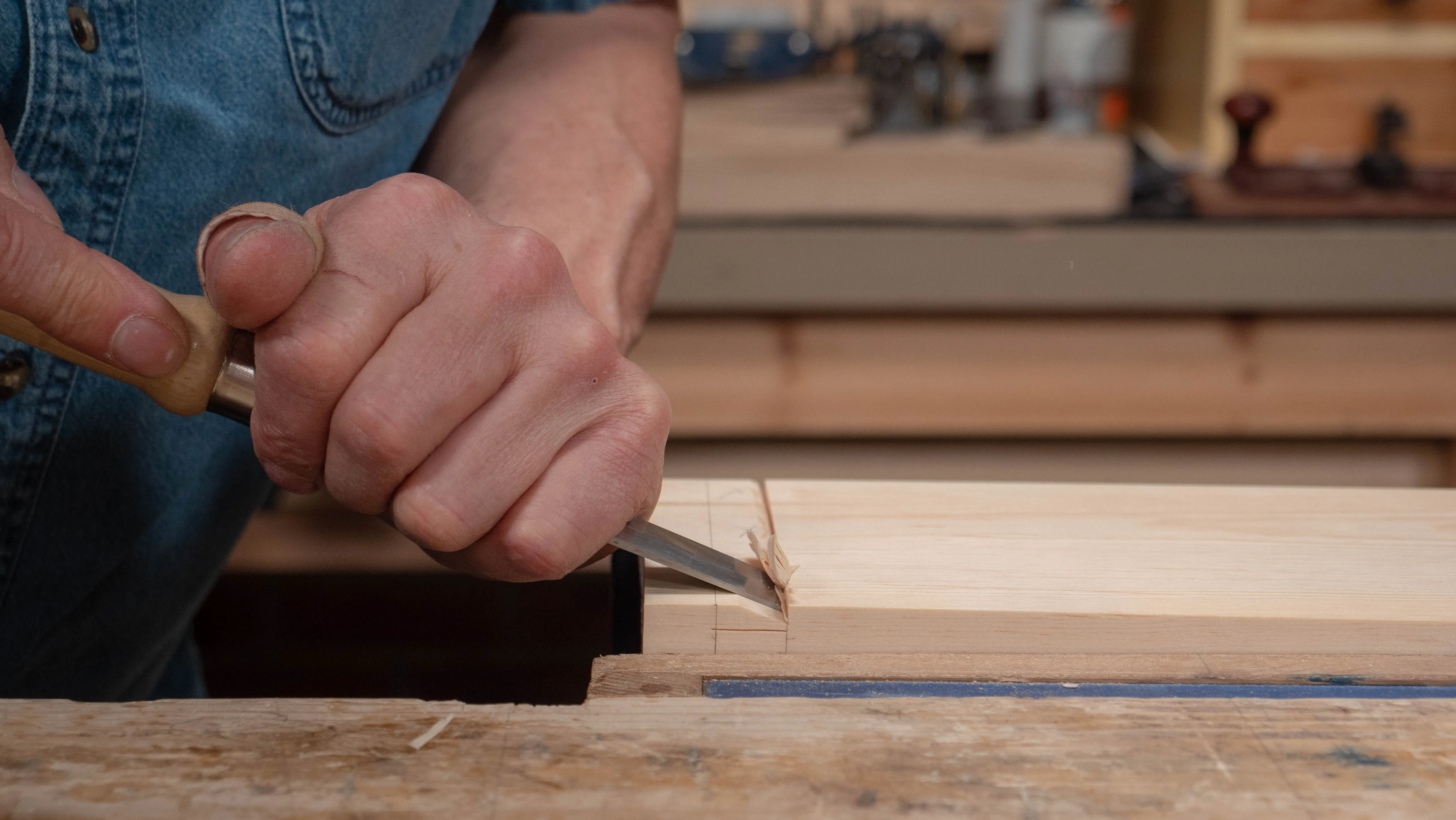
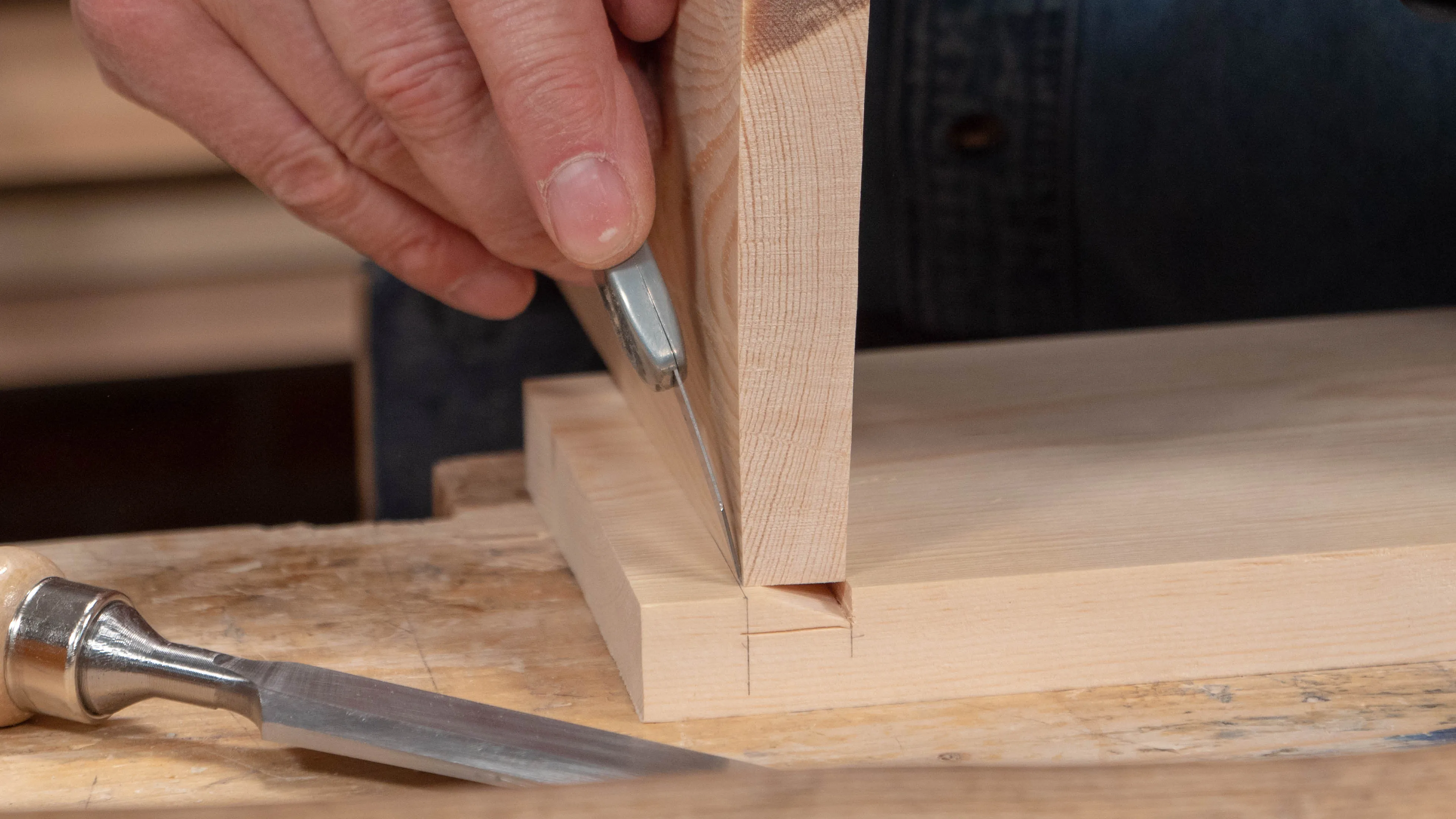
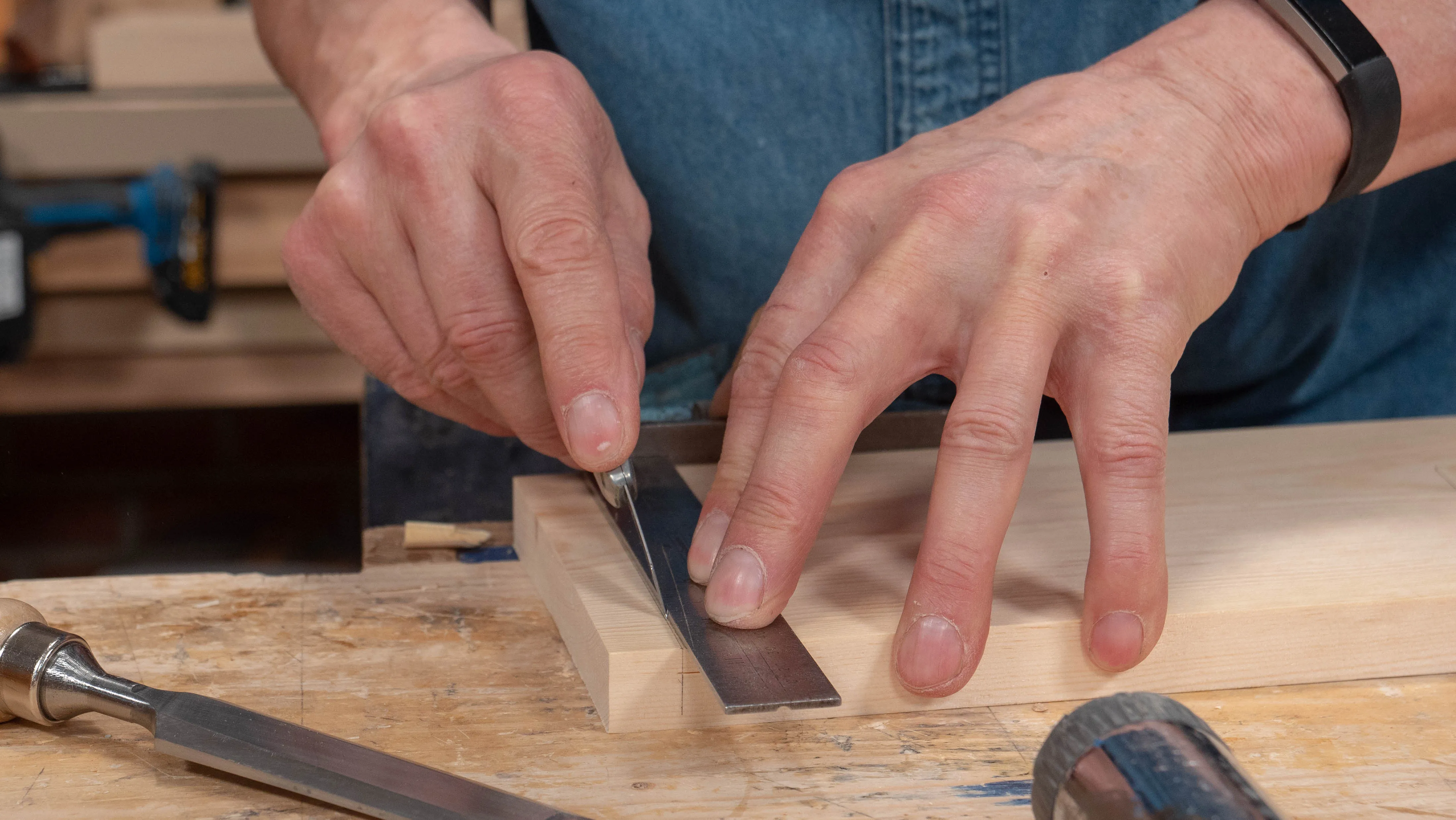
Once you have cut the first wall to the final depth, take the exact board you will be recessing and butt it up tight against the first wall so you can mark the second wall. Ensure you are applying enough pressure to close off any gaps, and then make a small knife nick tight against the other side of the board, almost as if to reach underneath it. You can then make your second knifewall, using the nick as a reference for your square.
Note: If you were to position your square ‘properly’ (so that the bruising goes on the waste wood), it would be very awkward to grip the square securely enough to create your knifewall. Therefore, place the square on the ‘wrong’ side of the knife nick and create a very shallow knifewall instead. You can then deepen it the knifewall freehand, tilting your knife the other way, or simply create a relief with a chisel and begin to chop, again lightly at first.
Proceed to chop down to depth using the same techniques as for the first wall. To take out the ridge in the middle, use the widest chisel that will fit comfortably in the recess and work your way down by paring across with a double handed grip. Then finish off by levelling with your router.
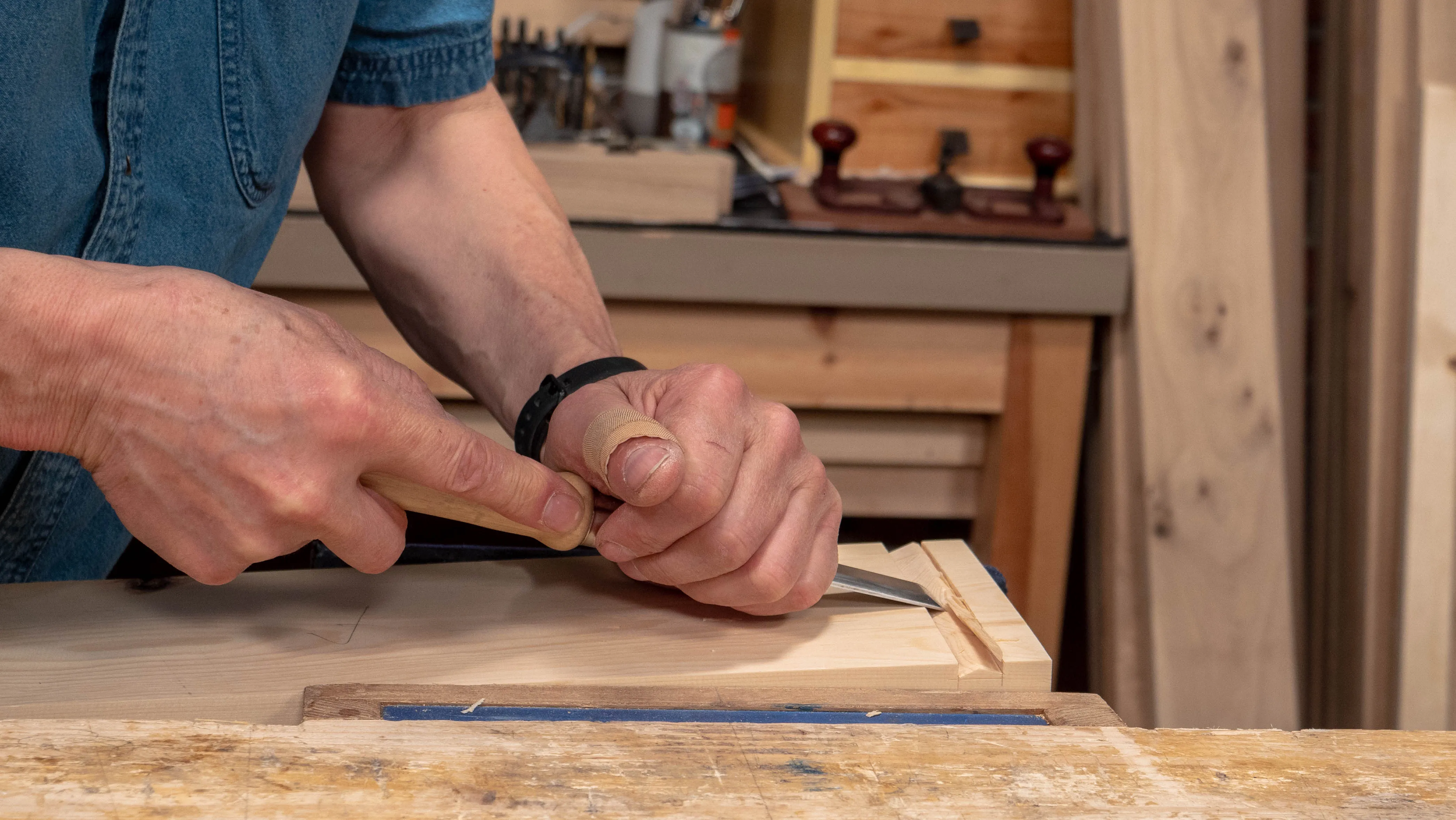
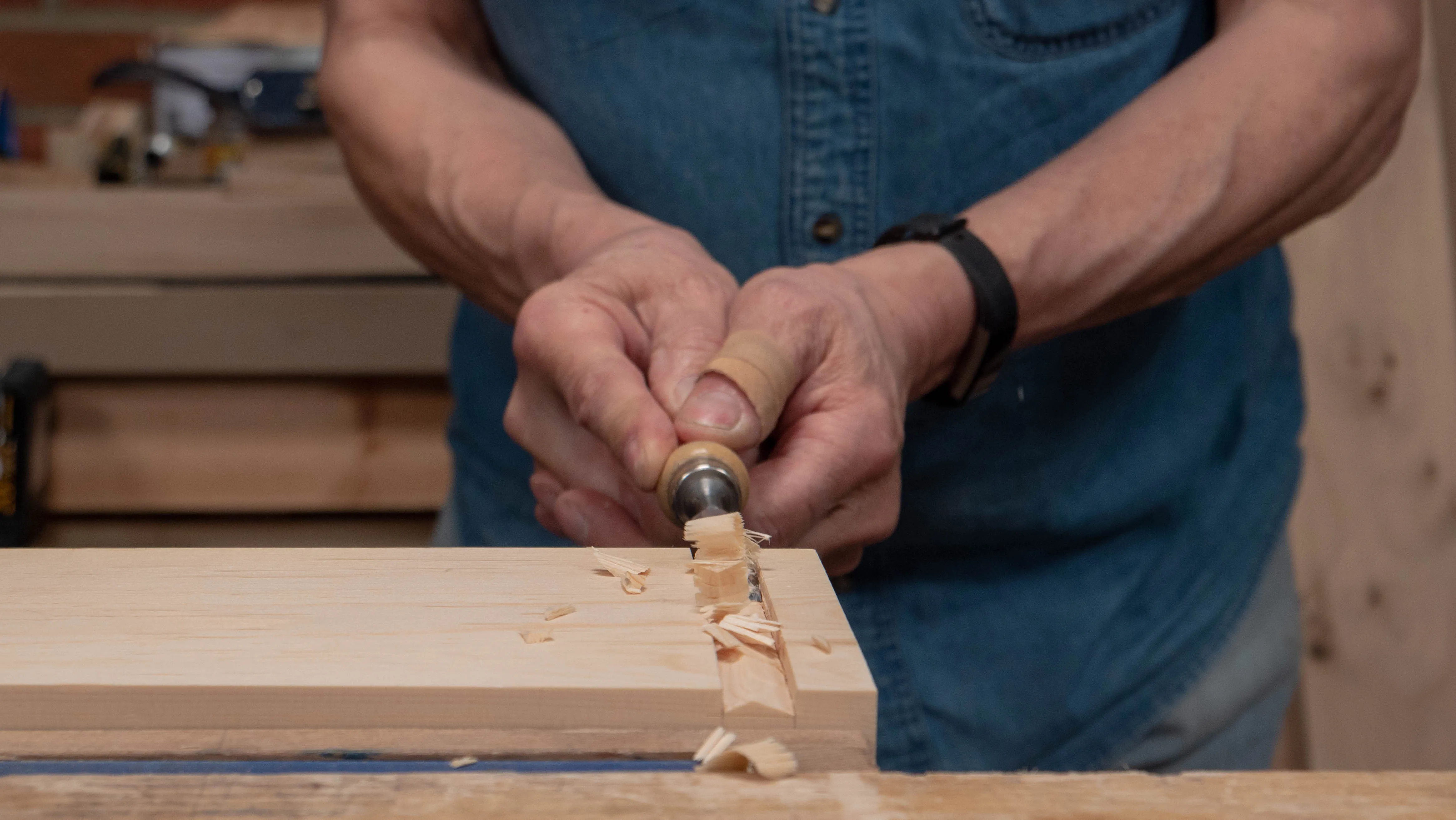
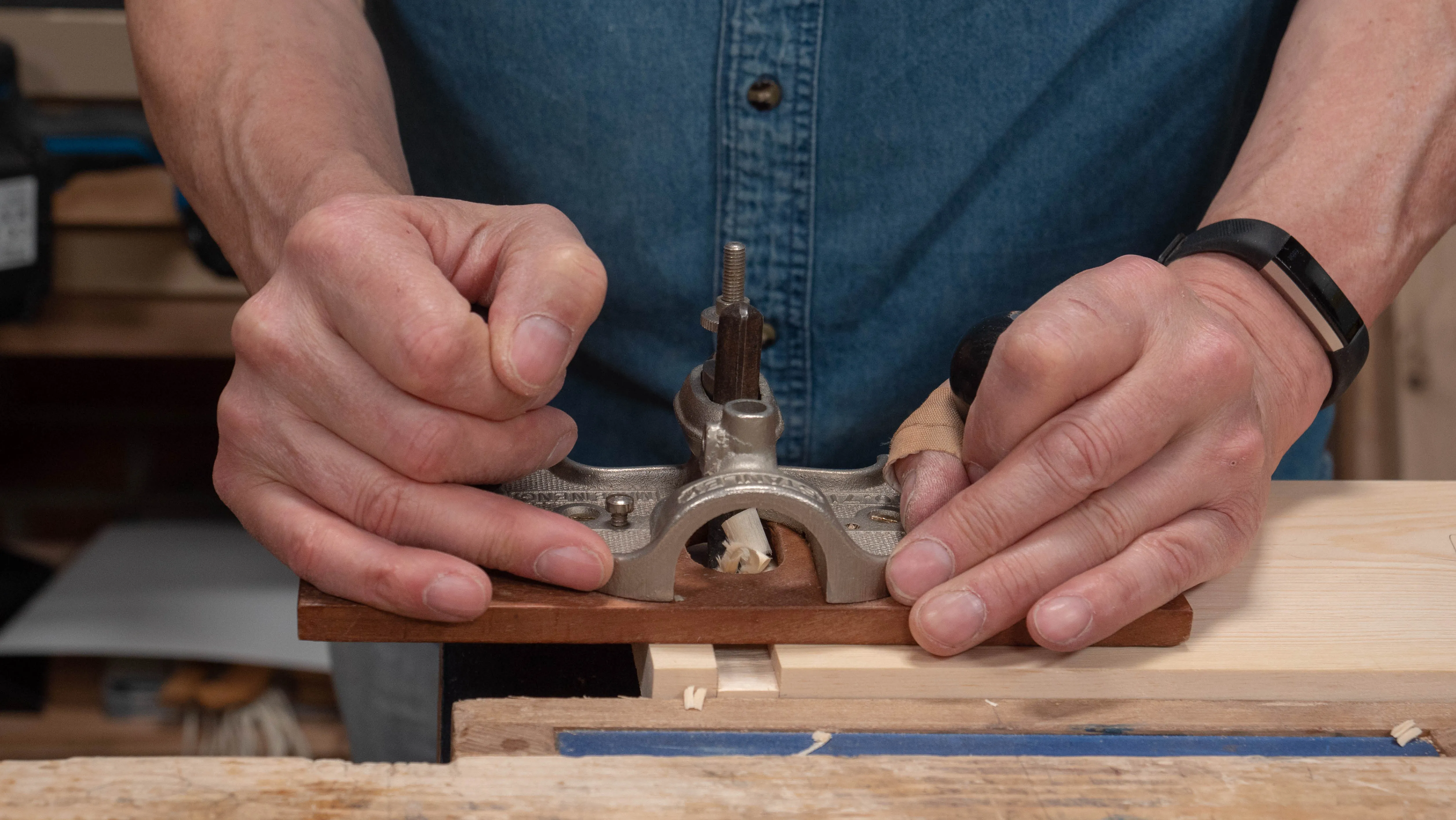
Repeat these steps for the other five housing dados (two for each of the side pieces and one for the bottom of each end piece).
Fit each part to its corresponding recess. Only the bottom piece is housed from the ends (the most common configuration for housing dado joints). If you find that they are a little tight, you can take some very light shavings off and test again.
The other four recesses, however, house the long grain edge of the end pieces, which are much more prone to fracturing if the fit is a little tight and you use too much force with the chisel hammer. Therefore, be especially sensitive and take off a little at a time if you find this is the case.
Sign in to track your progress