Alternative method: Sawing Down the Wall
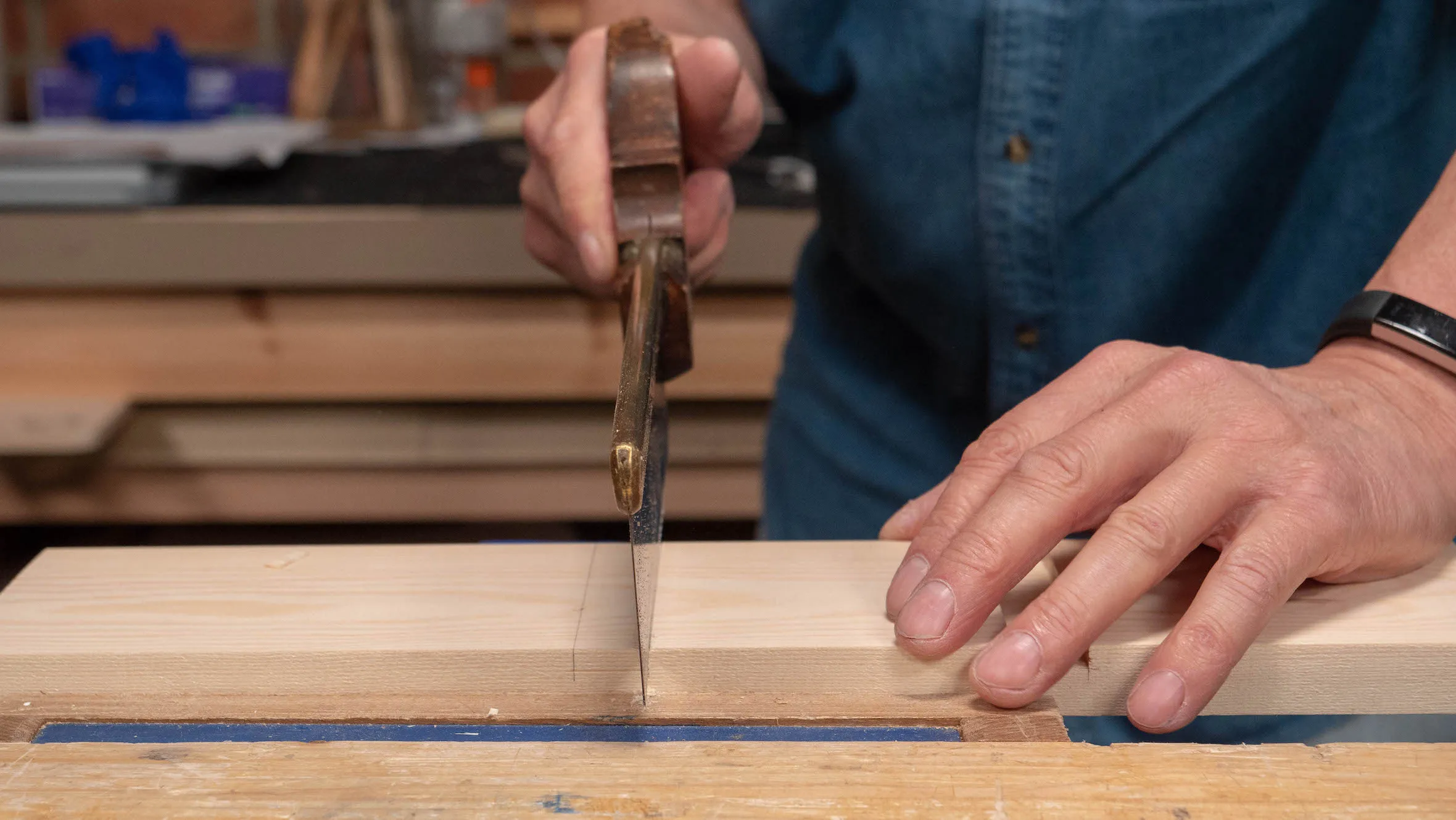
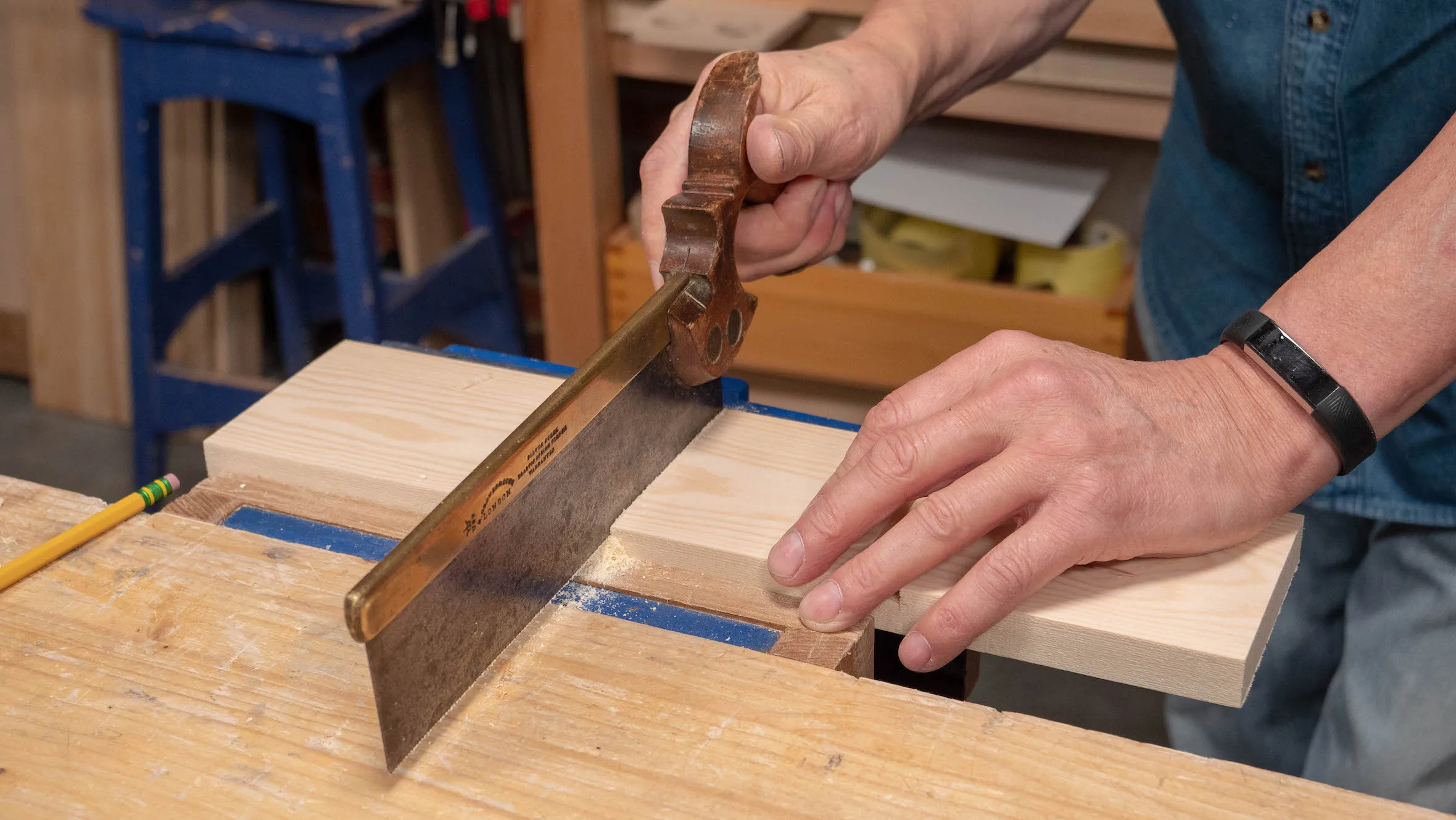
It is also possible to cut down the walls using a tenon saw, instead of chopping with a chisel. To do so, create a step down as before, but then clamp the board in the vice, making sure it is protruding enough above the surface. Next, take a newly sharpened tenon saw and begin to gently rub the surface on the corner furthest from you. Make sure your saw is in the step down and you’re not shearing the knifewall with the sides of your teeth. Use the first few inches of your saw at first, and once you’ve established a clean saw kerf, start taking longer strokes. Also, begin to drop your saw to engage the teeth along the whole width of your board. Do take care not to cut into your knifewall as this will only cause problems. Instead, angle your saw slightly outwards, as you can always clean up the wall later with a sharp chisel.
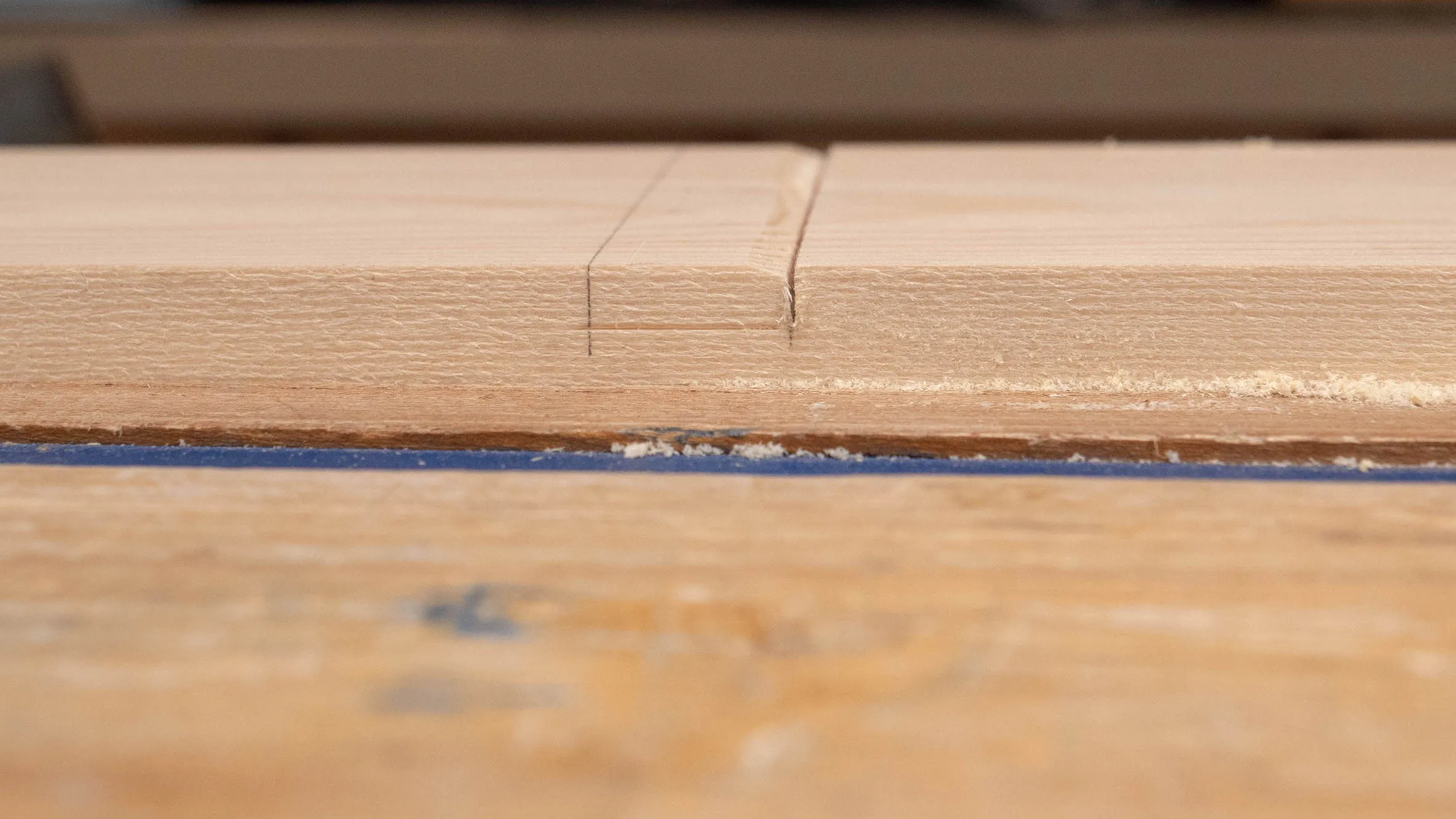
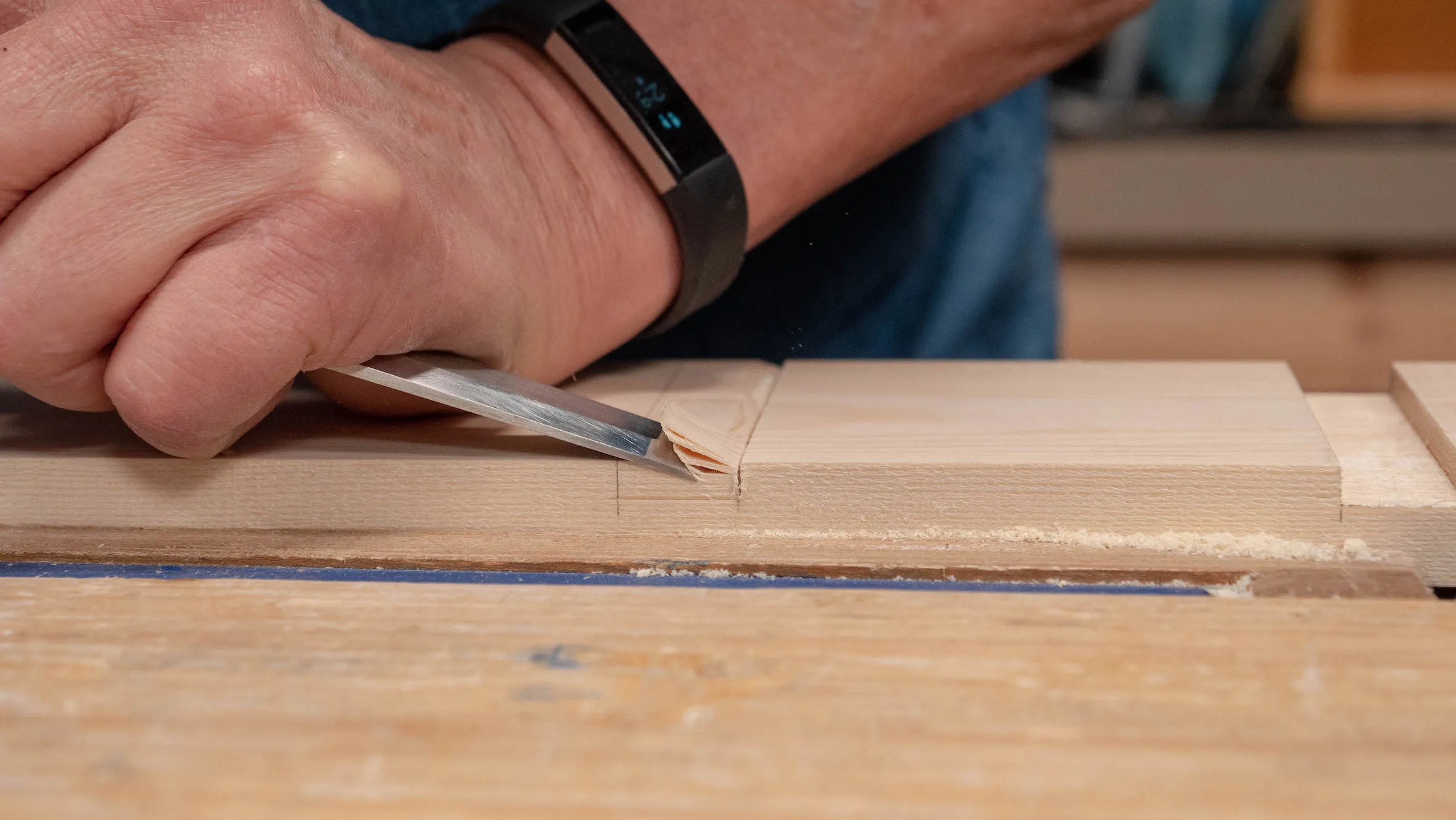
Once you’re close to depth, slow down as it’s easy to get carried away and cut too deep. Check from both sides and continue to saw accordingly, taking controlled strokes. Keep the saw level and stop just shy of the gauge line. Finally, go back in the vice and chop down diagonally to the bottom of the recess. This will be necessary for marking the second wall next.
Considerations when sawing
The saw method may seem a lot more straightforward than using a chisel, but there are a few elements to consider that make it a little more tricky. The main thing to take into account is the saw itself. Even when you’ve sharpened and set a tenon saw so that it will cut in a straight line, it won’t automatically cut across a wide board, nor leave a pristine edge along the knifewall – as a housing dado joint requires, for example. This means you will generally have to pare down the walls with a sharp chisel once the recess is cut.
Another difference is that the saw will never leave the same clean surface that you get on the walls when chopping with a chisel. This is not an issue when you’ve gained experience and you know your cuts are consistently accurate. But when starting out, chopping down the walls has definite added advantages. For one, as long as you follow the steps as described, you’re guaranteed to create clean, square walls. Also, chopping consolidates the end grain fibres, meaning the top edge is just a little less prone to splitting off if your divider/shelf piece is a little tight. Even so, it’s always good to try alternative methods, as this only gives you more experience and contributes to engaging your senses and developing sensitivity in your work.
Sign in to track your progress