Chopping Down the first Wall – (II)
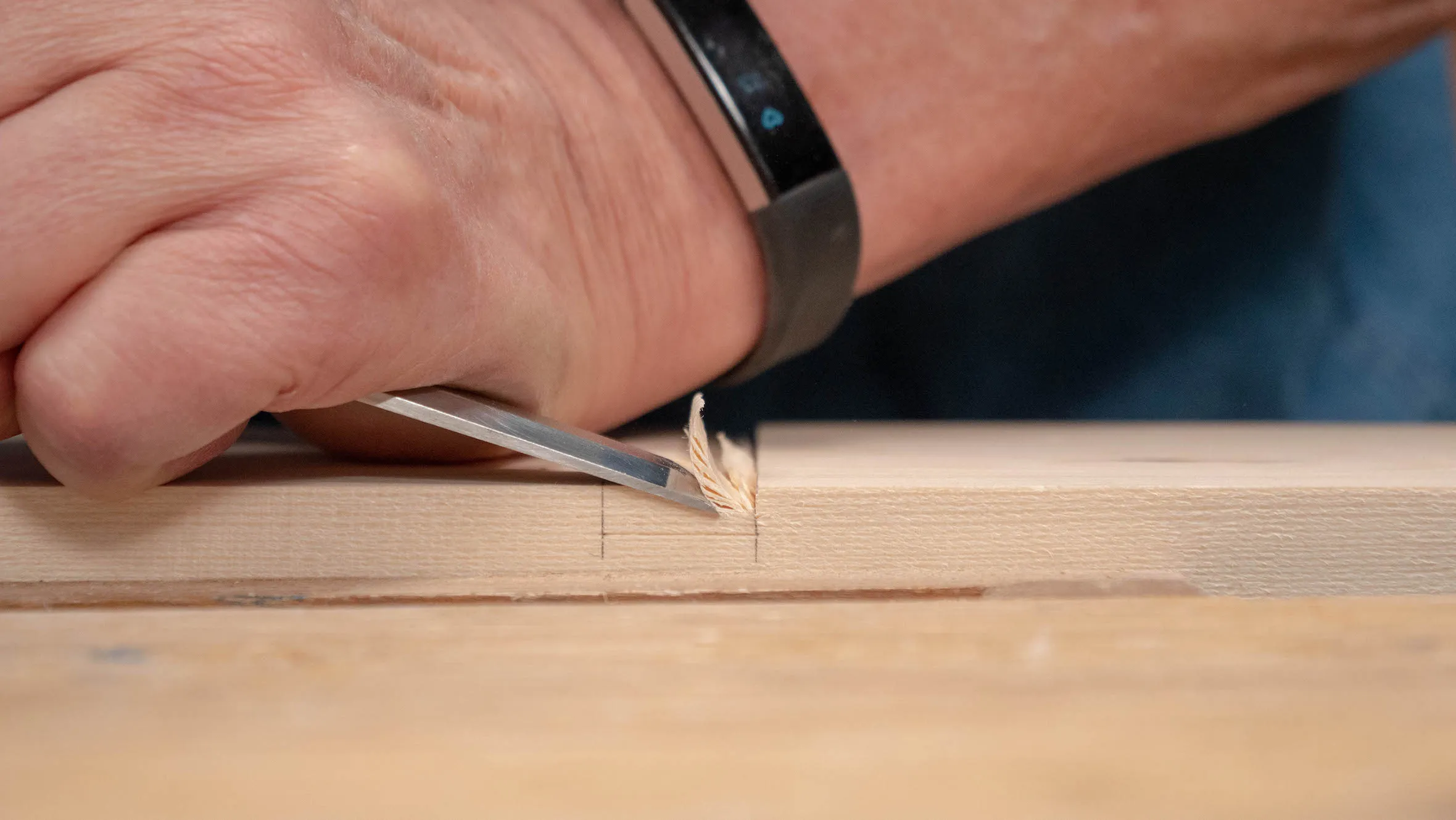
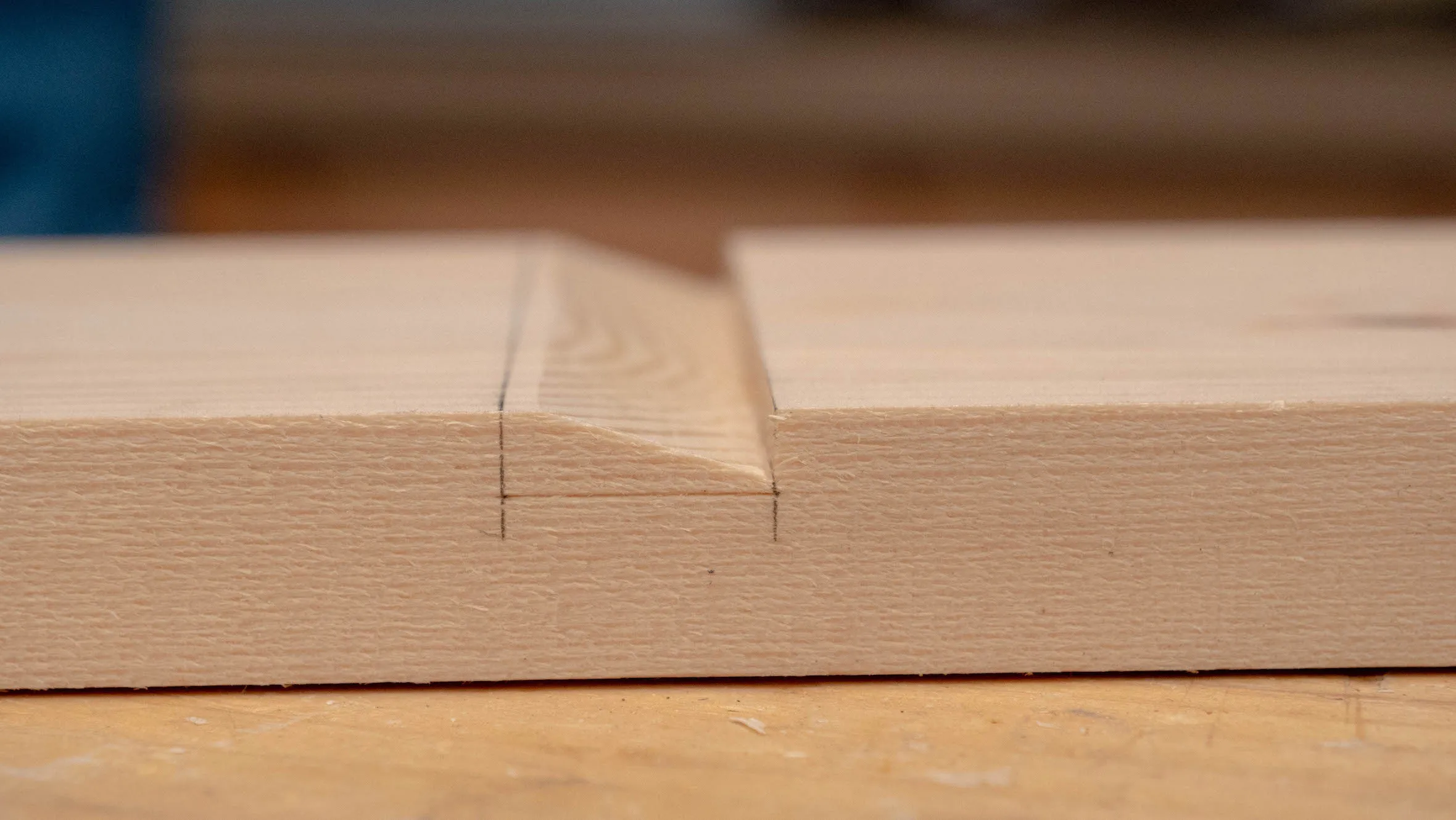
The main function of paring down the waste is not simply to remove wood from the groove, but to do so in a way that allows the bevel of the chisel to travel further in subsequent chops.
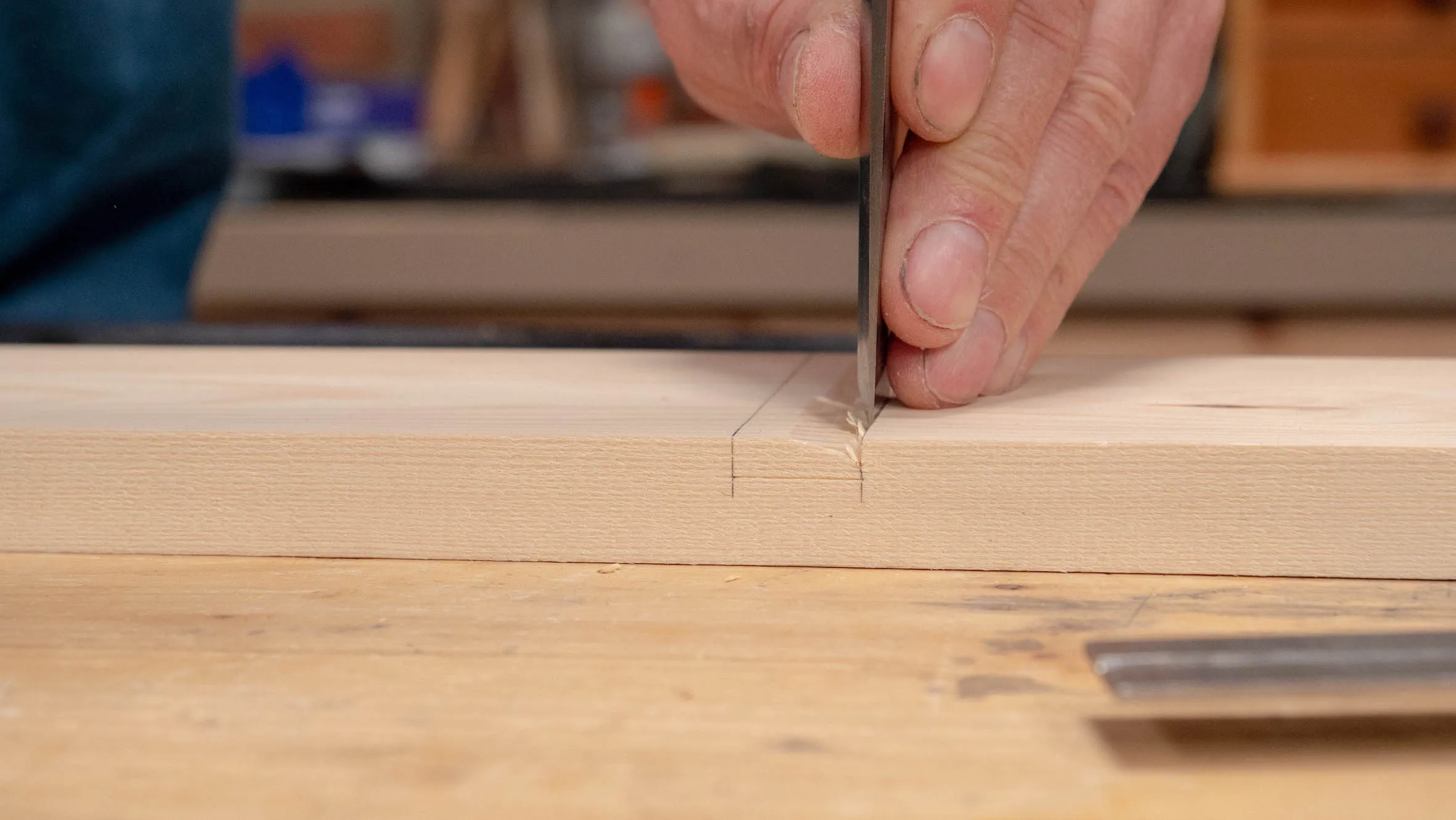
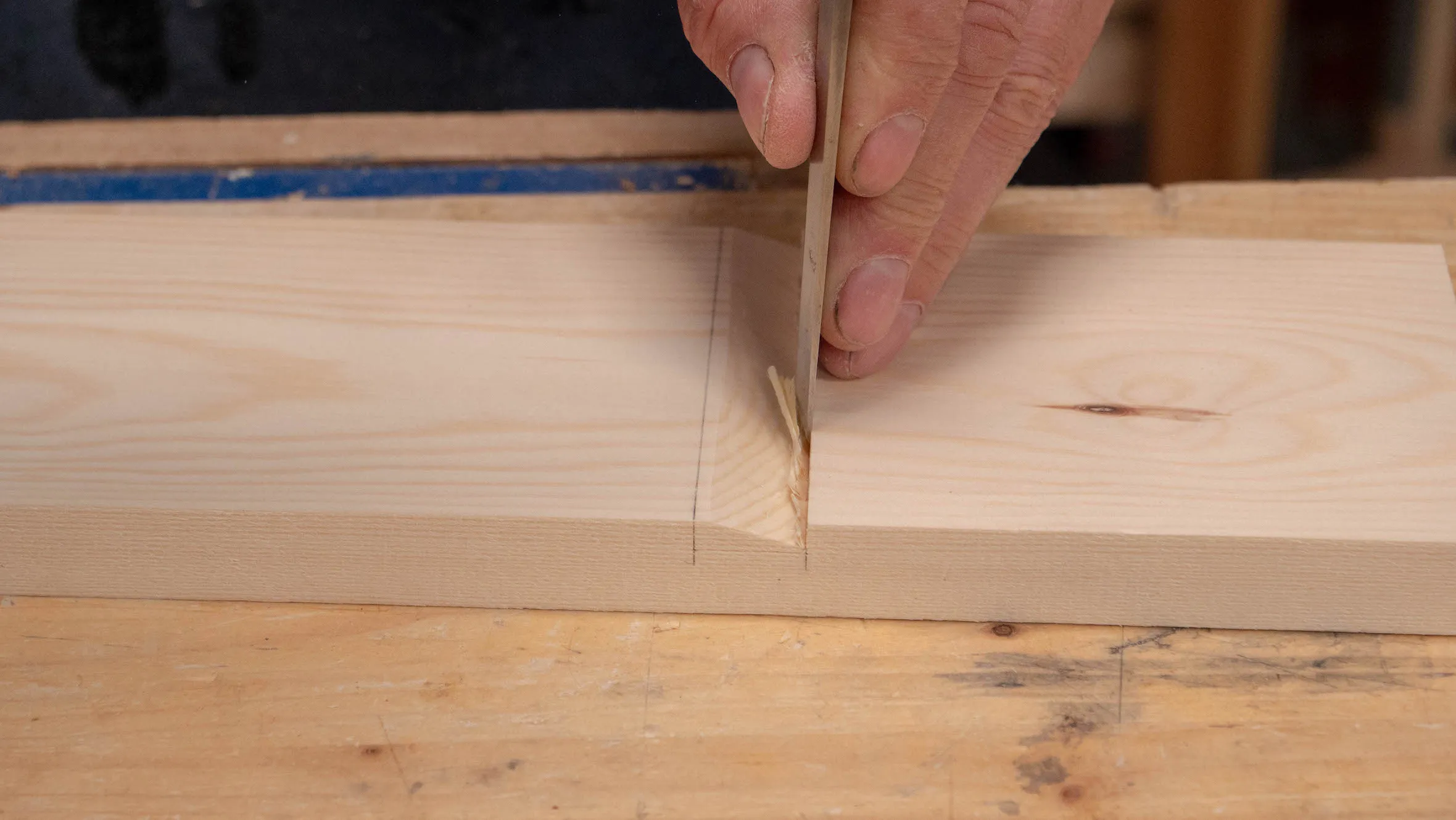
Secure your work in the vice and place the edge of a sharp chisel, bevel up, about ⅛” (3mm) away from the shoulder line. With a firm two-handed grip of the handle, push using your upper body weight aiming diagonally towards the shoulder. The severed fibers will split only to the depth you reached with the chisel chops. This means you can aim a little below that depth to maximise efficiency, as long as you don’t overshoot with your chisel.
If the wood offers too much resistance, use a narrower chisel (maybe ¾” or even ½”), making sure it’s sharp. This will definitely be a lot easier. Using a wide chisel and chisel hammer instead is also very effective, but it’s important to train your body and learn to apply force in a controlled way.
Move over to the side a little and repeat, overlapping with the previous cut by ⅛” or so. When you’ve pared down across the whole board, flick out the loose fibres with your fingers and take the board out of the vise. You can now place it on the bench top again and chop another row of chisel cuts as described before.
Continue sequentially chopping and paring until you reach your final depth, but avoid paring below the gauge line.
Sign in to track your progress