Marking the Shoulders – Pin Piece
As with the tail piece, you must now mark the defining shoulder line on the pin piece with a knifewall. However, unlike on the tail piece, this time the waste wood is on the inside. This means you cannot square a knifewall around the edges without it being seen in the finished joint. Instead, what we do here is make a small knife nick right on the corner. This allows us to transfer shoulder lines to the other side as with a knifewall, but without creating careless looking markings.
Begin by finding the exact distance for the shoulder using the tail piece. Bring in the square from the other side and nudge the tail piece towards the end until you can feel for flush with your fingertips. With the square locked in place, take the tail piece away and create a knifewall between the two saw cuts, making sure to go with a light pass. Whilst in this position, make a very small knife nick on the outside corner with your knife. It really doesn’t need to be deep; the lighter, the better.
Turn your piece on edge, find the knife nick with the edge of your knife and register your square right up against your knife. Now make another nick on the other corner, pressing as light as before with your knife.
Turn your piece again flat on your worktop, flip your square so that you’re registering against the first edge, and find your knife nick again. You may not see it easily, but that’s ok, as long as you hear the knife click inside it when you slide the blade along the corner. Butt up the square against the blade and finally make a knifewall between the two saw cuts on the inside face. You are now ready to remove the tail recess.
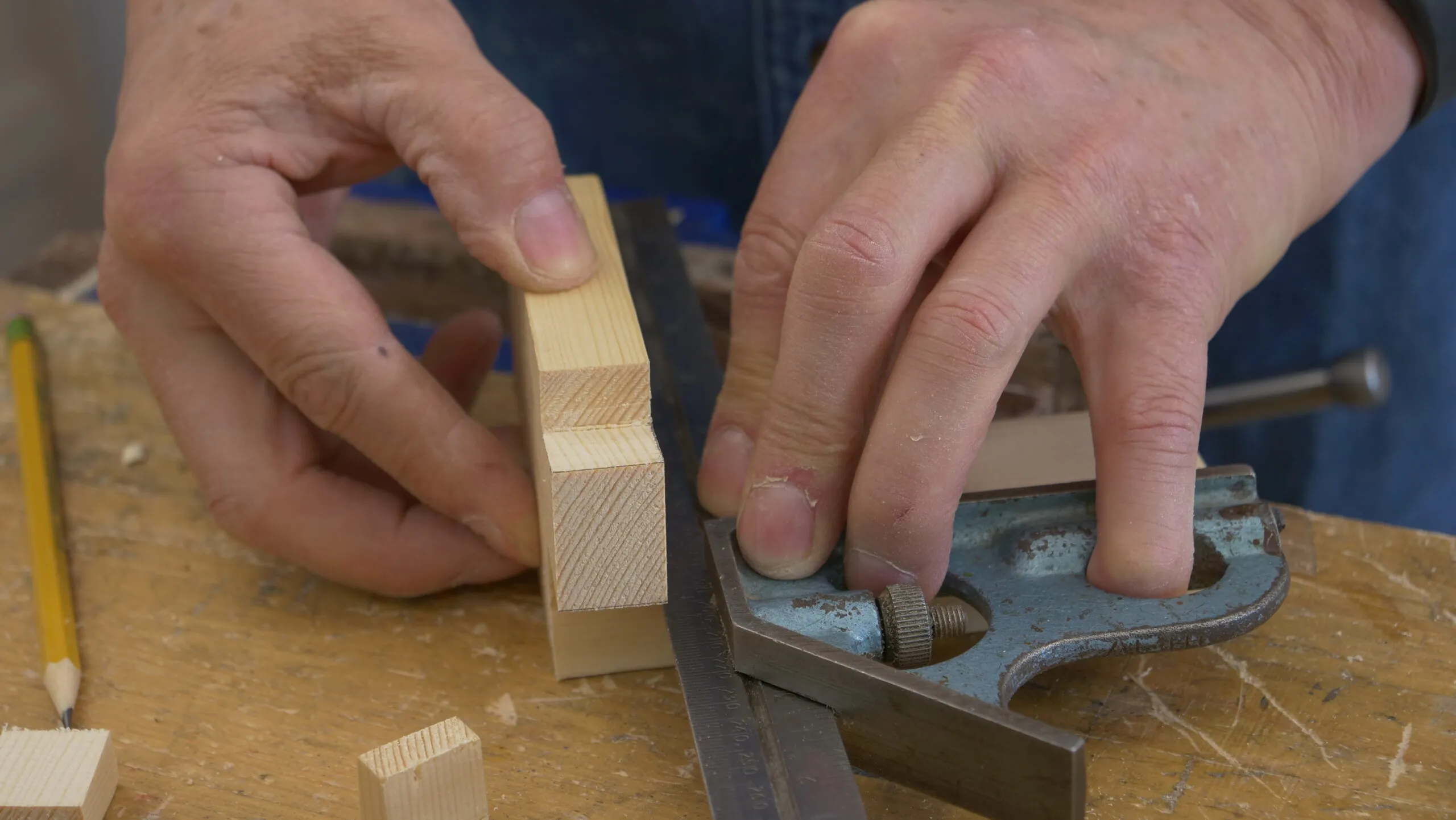
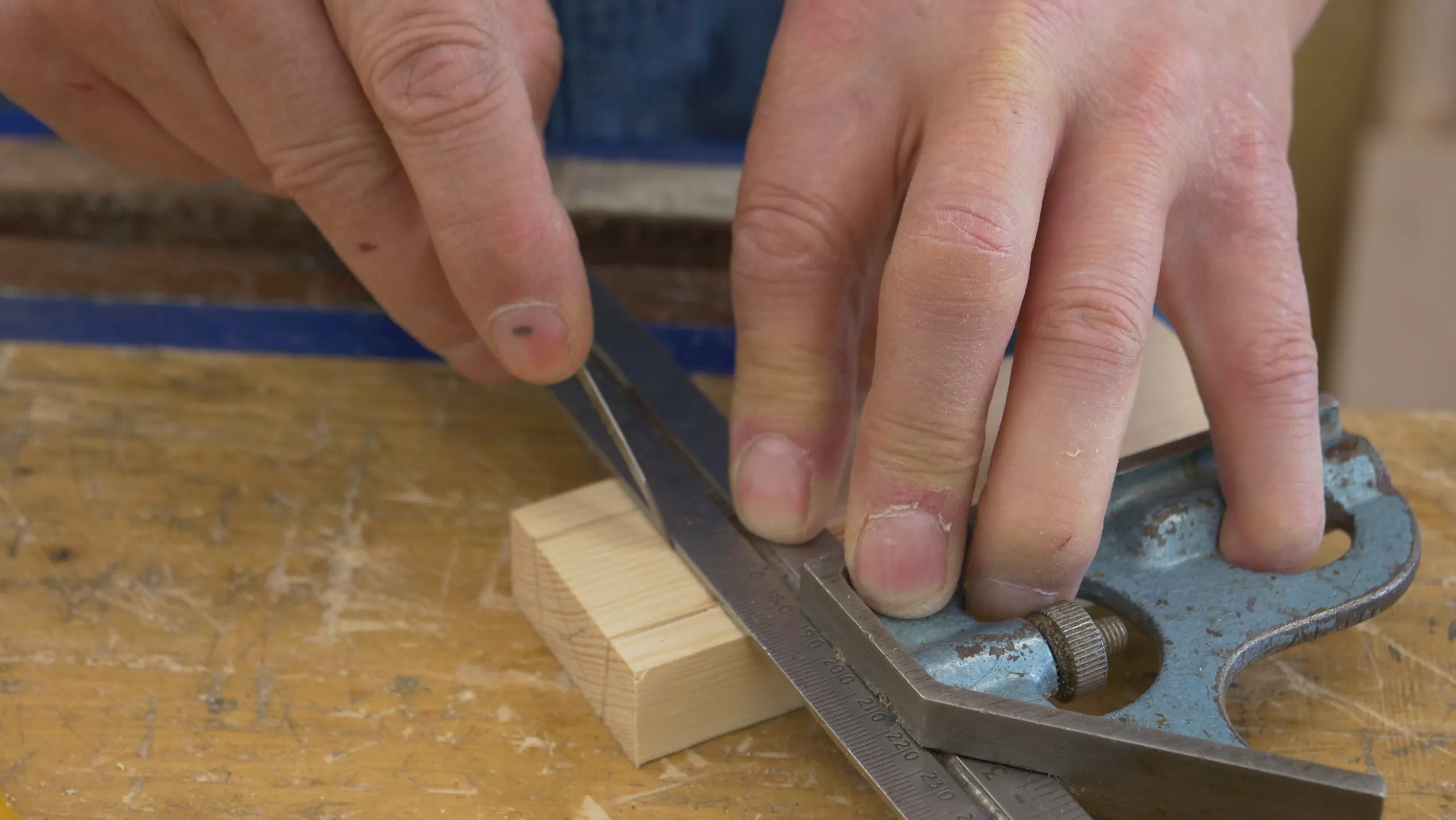
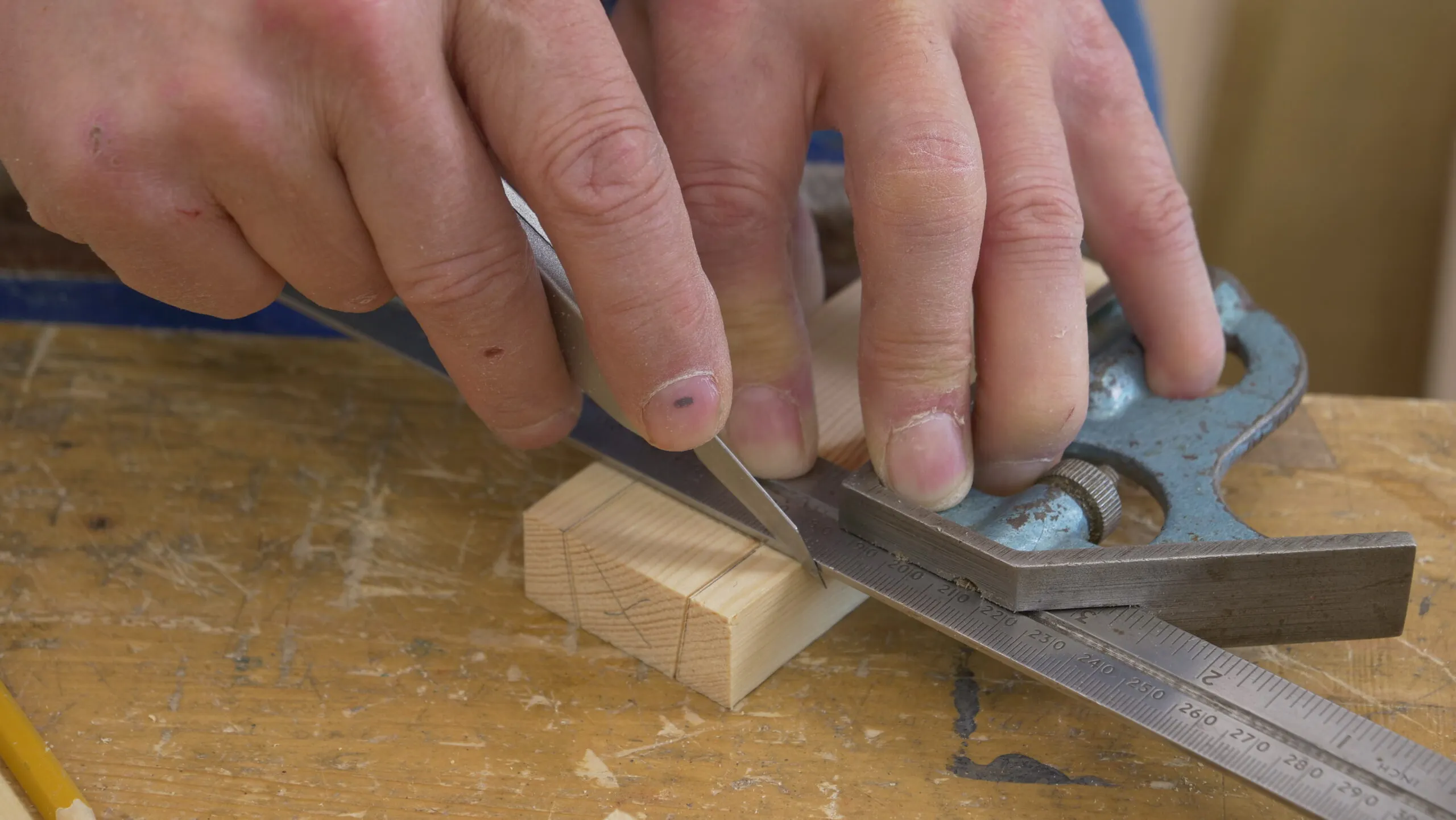
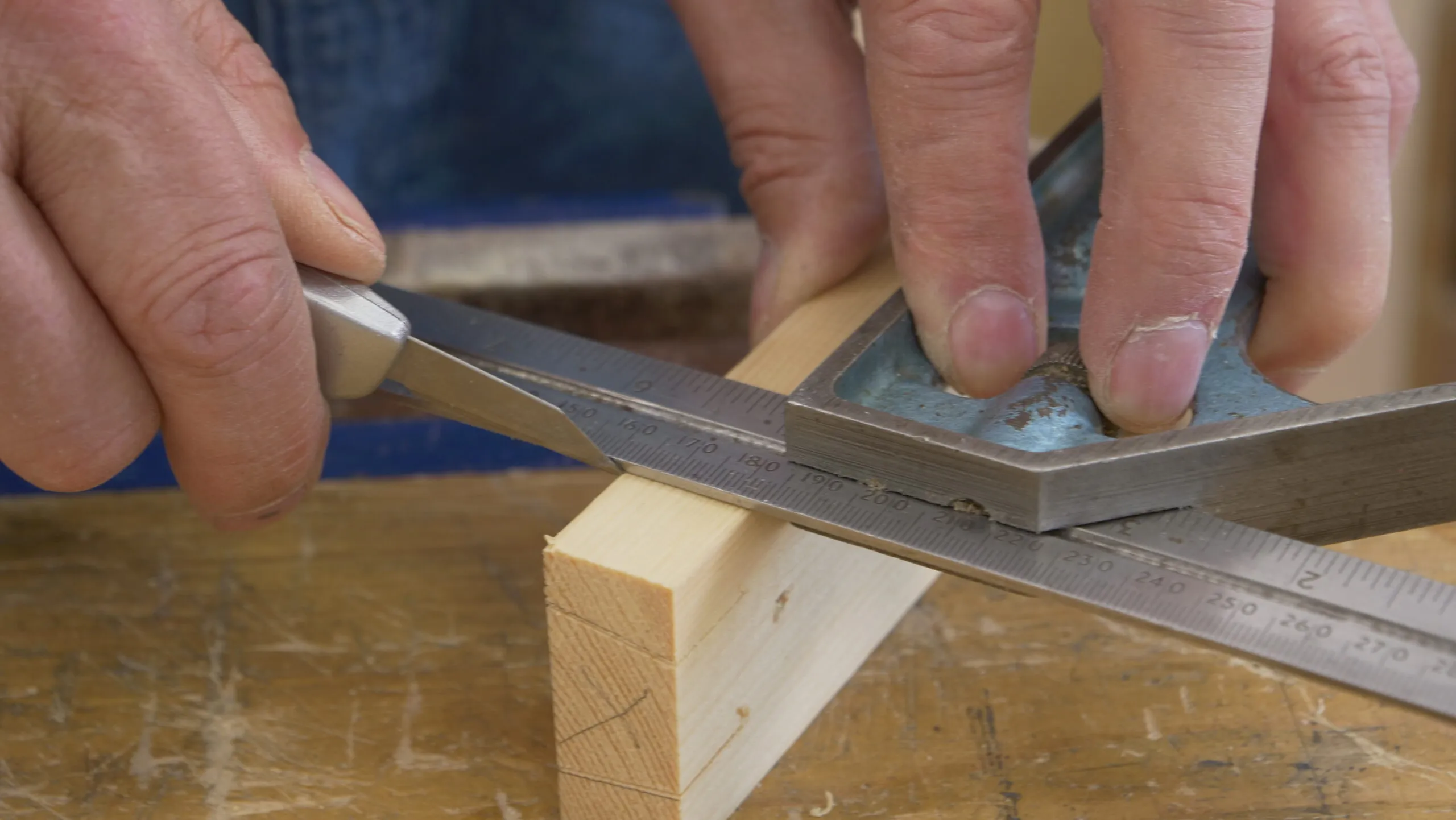
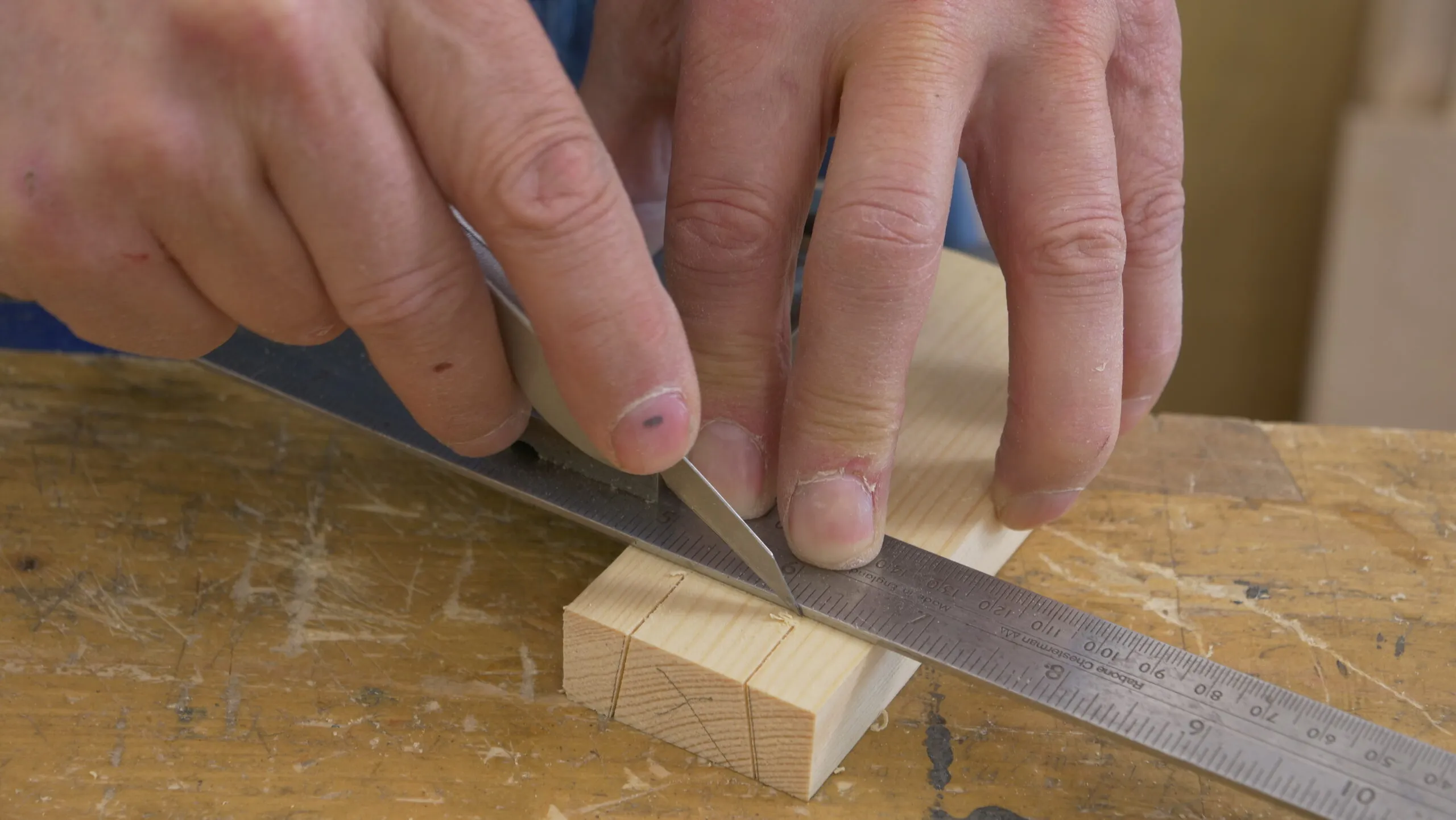
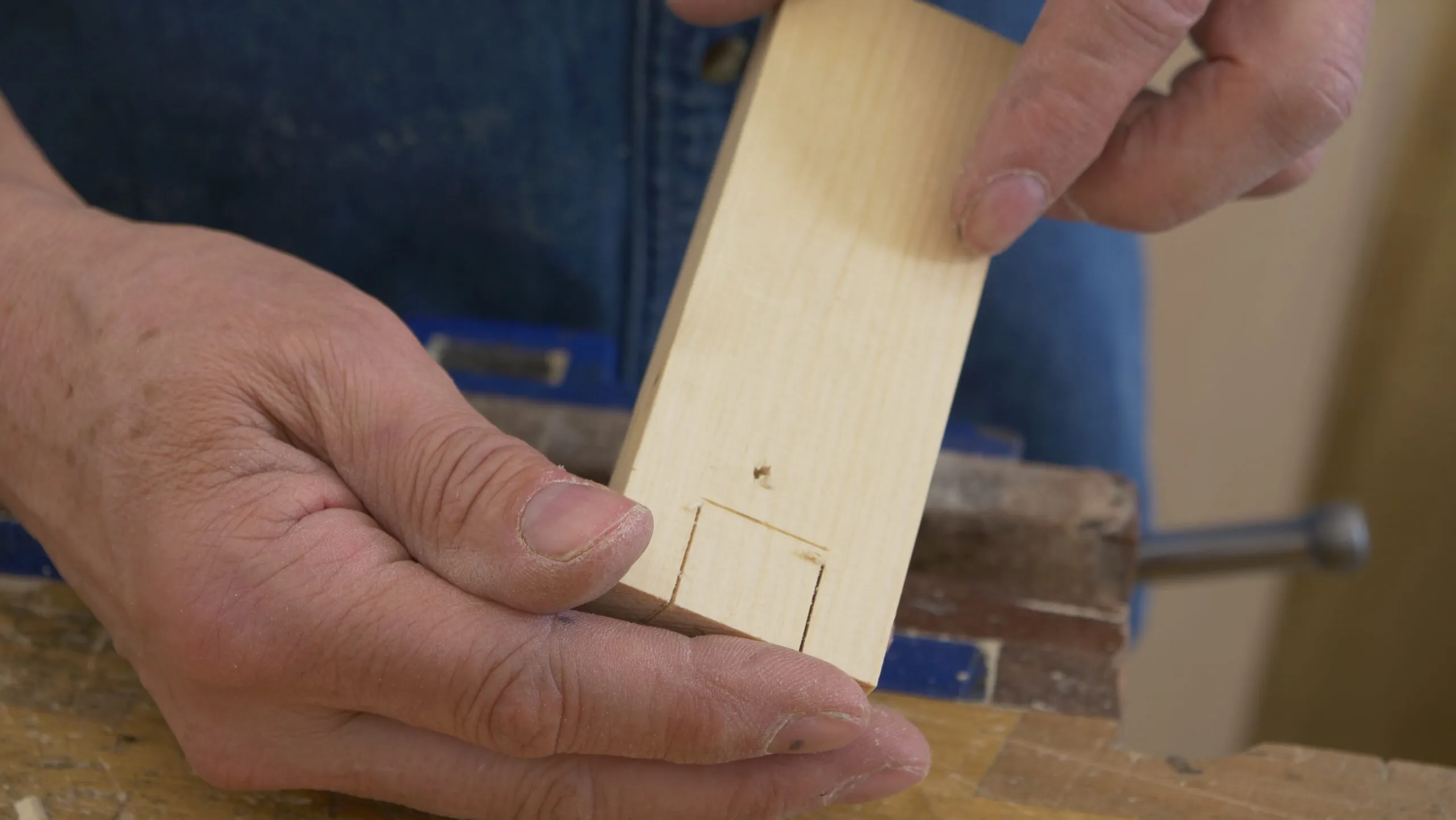
Knife Nick - Further Considerations
The knife nick is really just a very short knifewall, but there are a couple of extra compexities that require watchfulness, especially when done on a corner. One is that you’re using the edge of your knife instead of the tip. Therefore, it can be hard to angle the blade correctly to make the nick right up against the square and not underneath it. Another big difference is that you have no visible lines on both edges to sight down and tell if they’re aligned or not. This means you could easily make the knife nick a fraction away from the square and not notice. One way of double checking for square is to make the knife nicks on both edges. If the two are square to each other when you come to make the knifewall on the other side, the chances are that you’ve transferred the shoulder line accurately.
Sign in to track your progress