Cutting Out The Dovetails
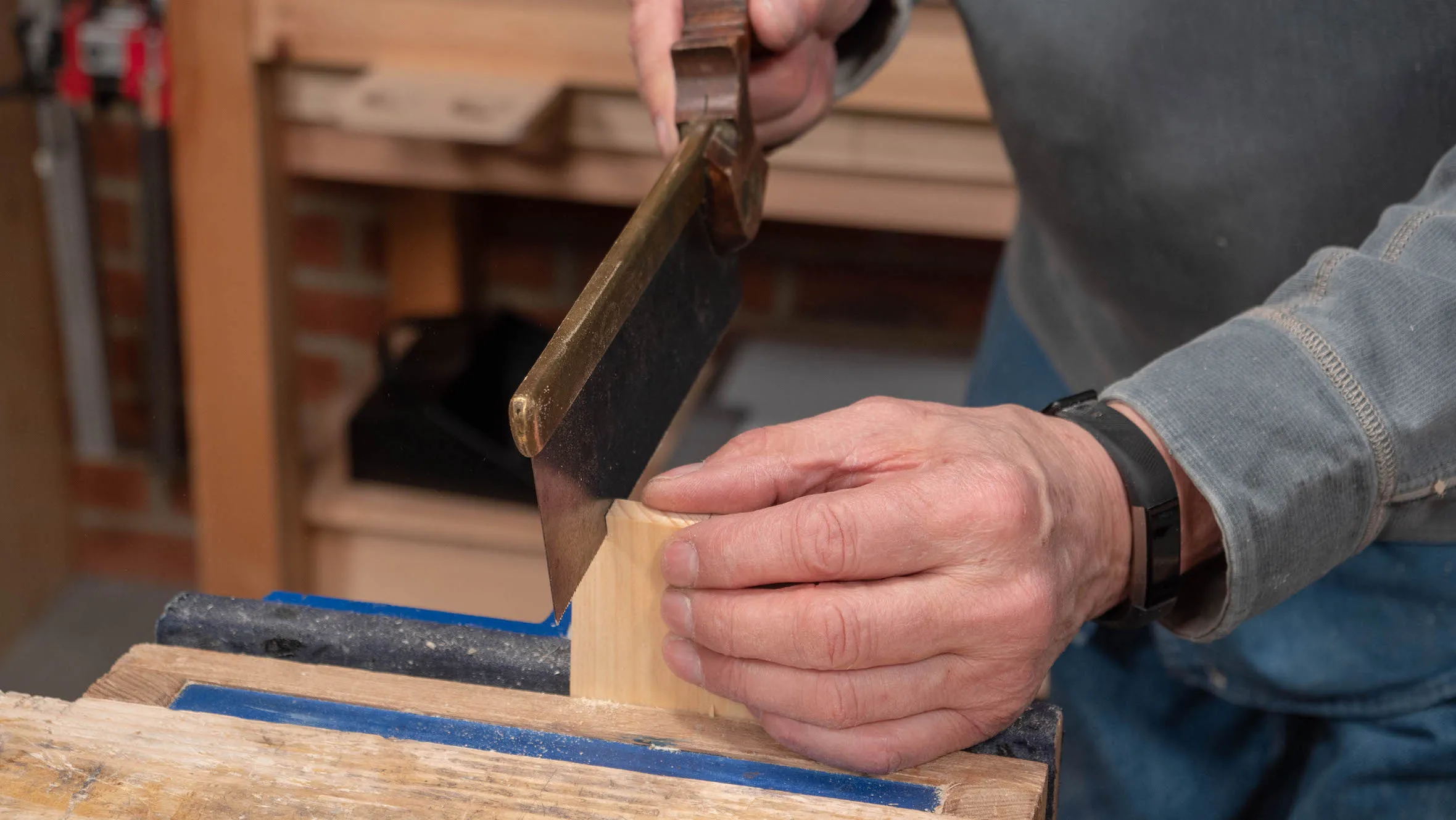
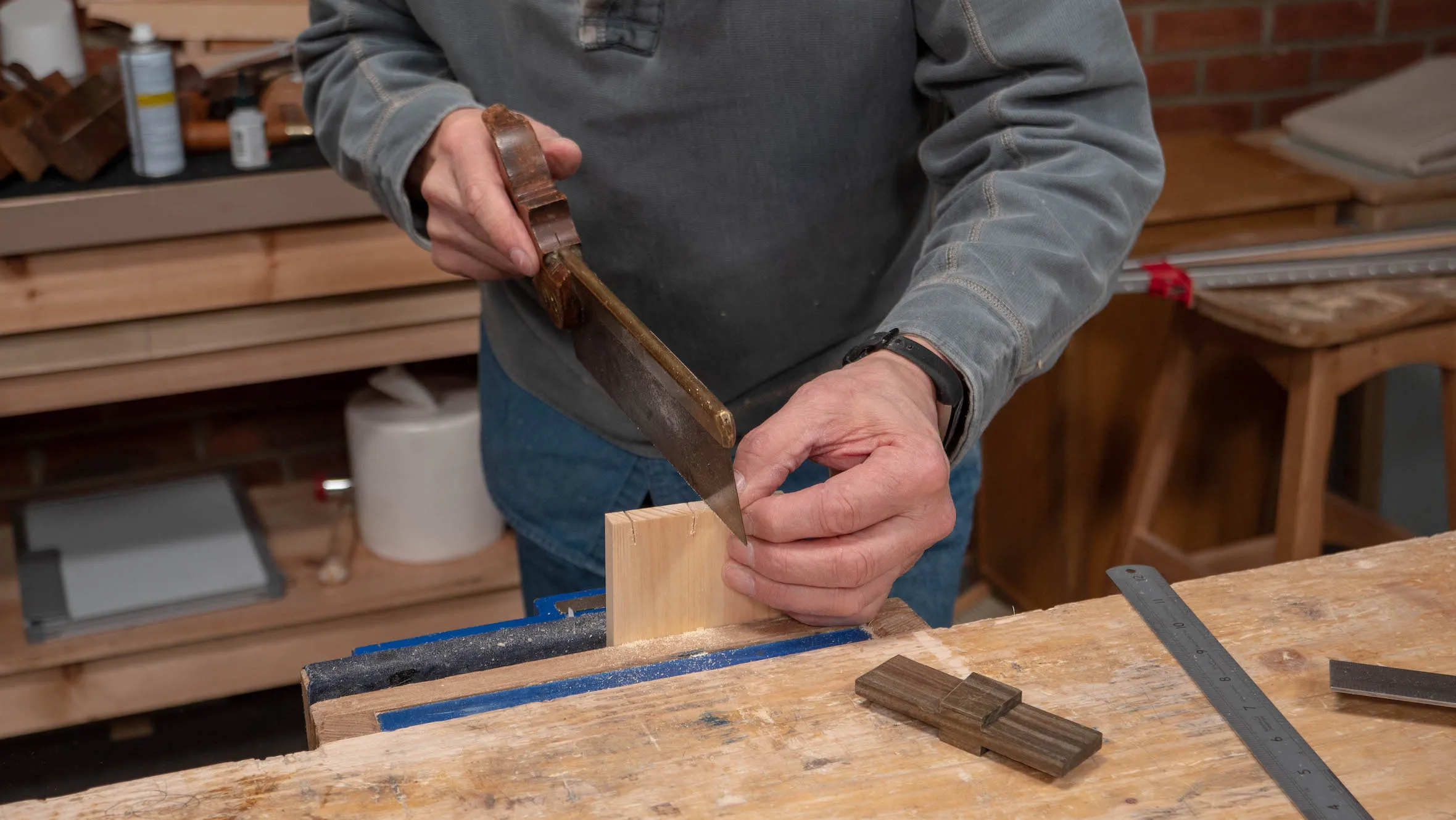
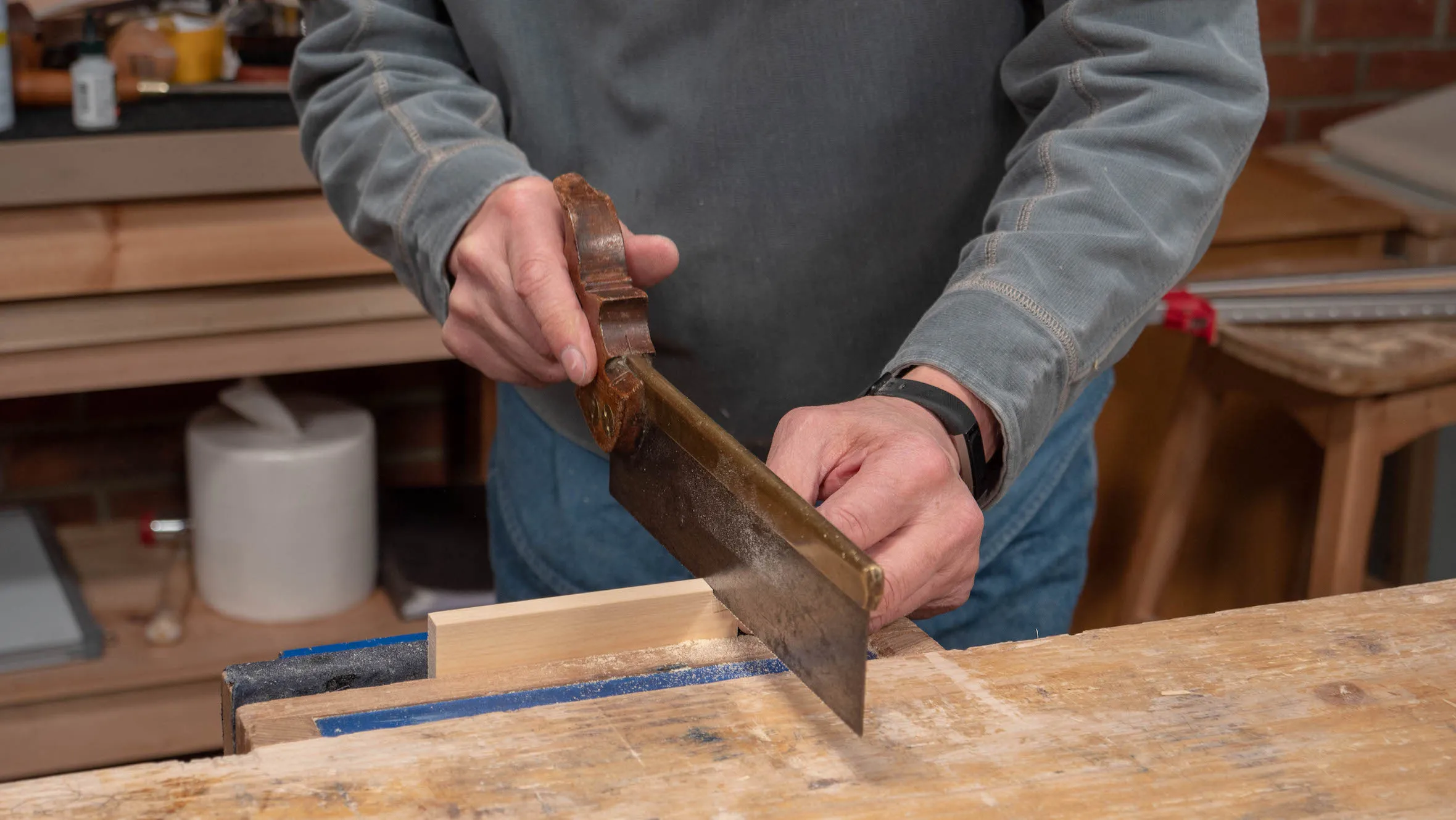
Secure your piece low in the vise and saw down the four sides of the tails, remembering that the critical aspect is the squareness from front to back. If it helps, create your initial saw kerf straight down, and only once it’s well defined, tilt your saw plate to follow the angled layout lines.
You must now mark the definitive shoulder lines using a knife and square. To do so, register your square as before and bring the corresponding piece to find the exact distance from the end. Keeping the square fixed in place, take the pin piece away and run a knifewall to clearly delineate the tails from the waste; that is, on either side and in between the two tails.
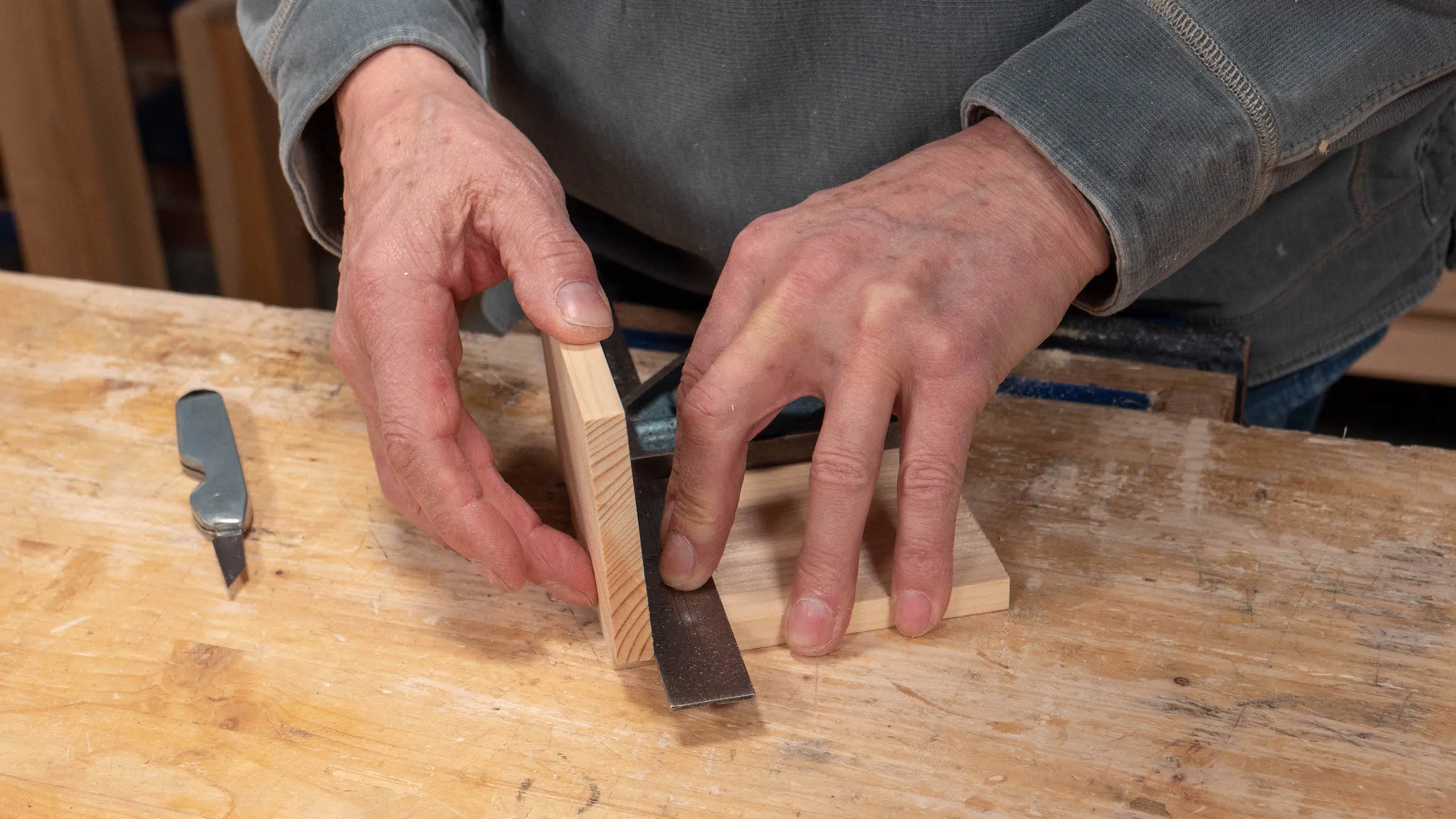
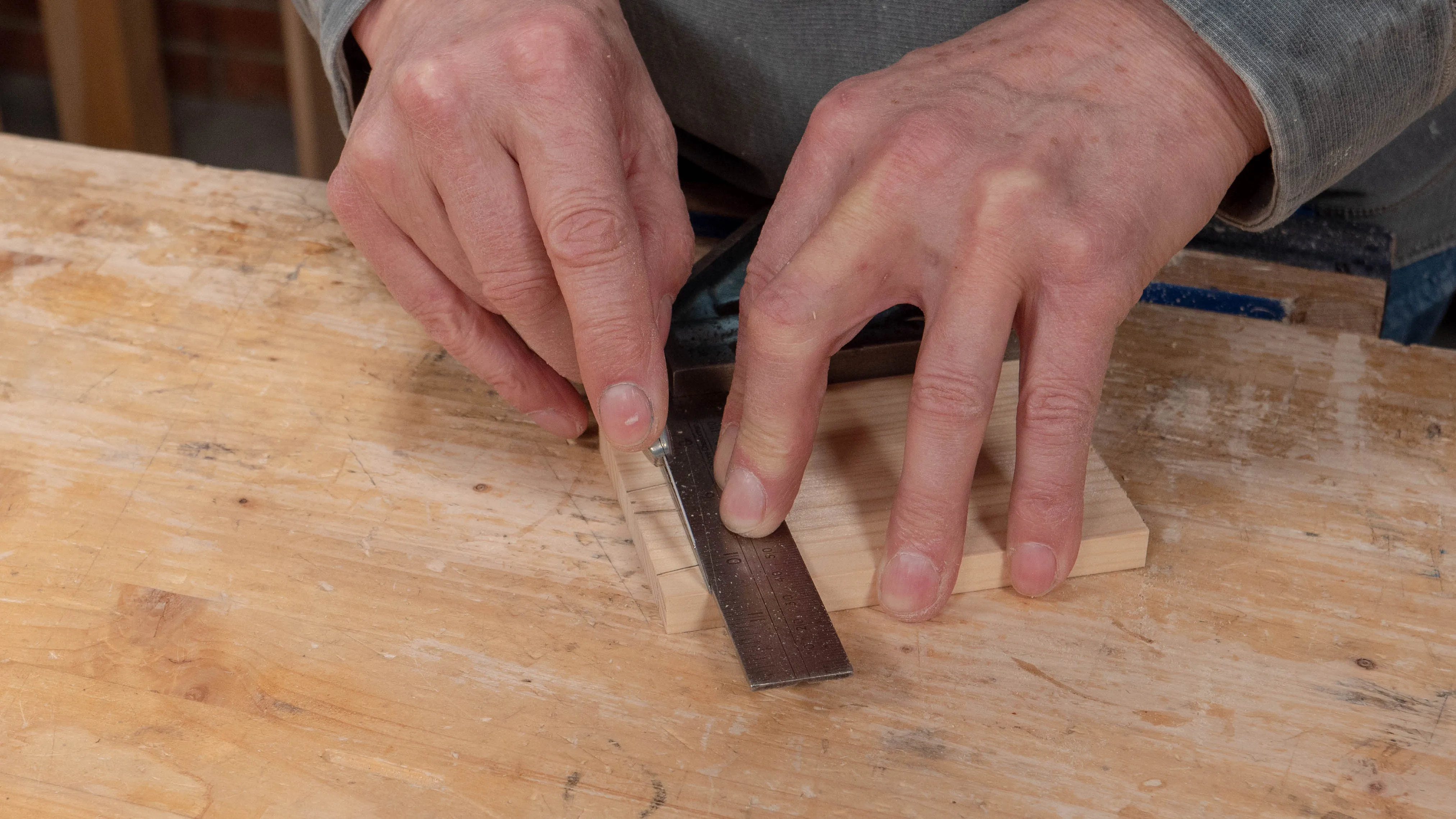
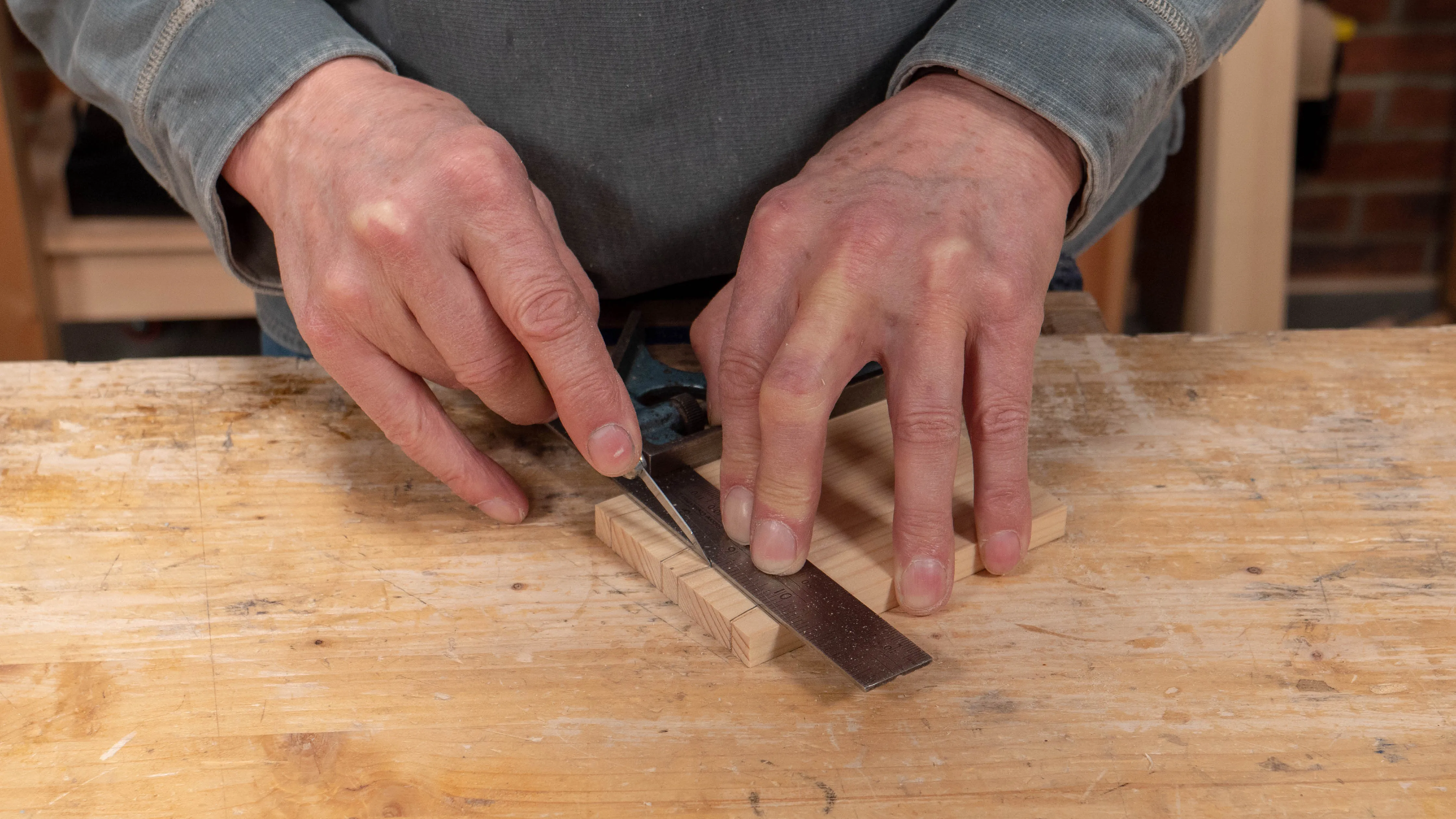
Next, transfer the shoulder line to the two edges and to the inside face by finding the knifewall with the edge of the knife and sliding your square against it to ensure a continuous knifewall all around. (Remember to ‘skip’ the tails with the knife on the inside, even though that edge will never be seen.)
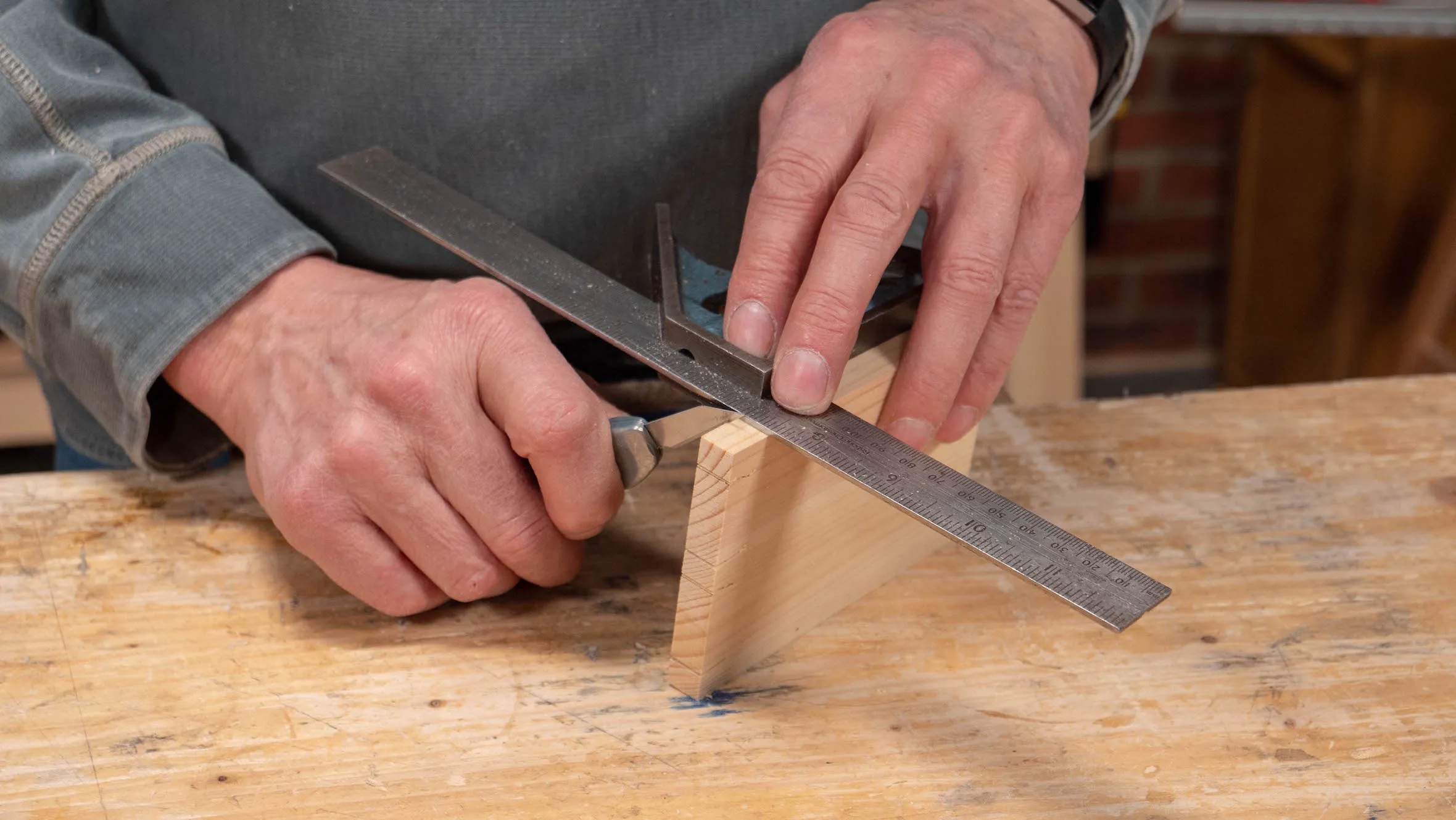
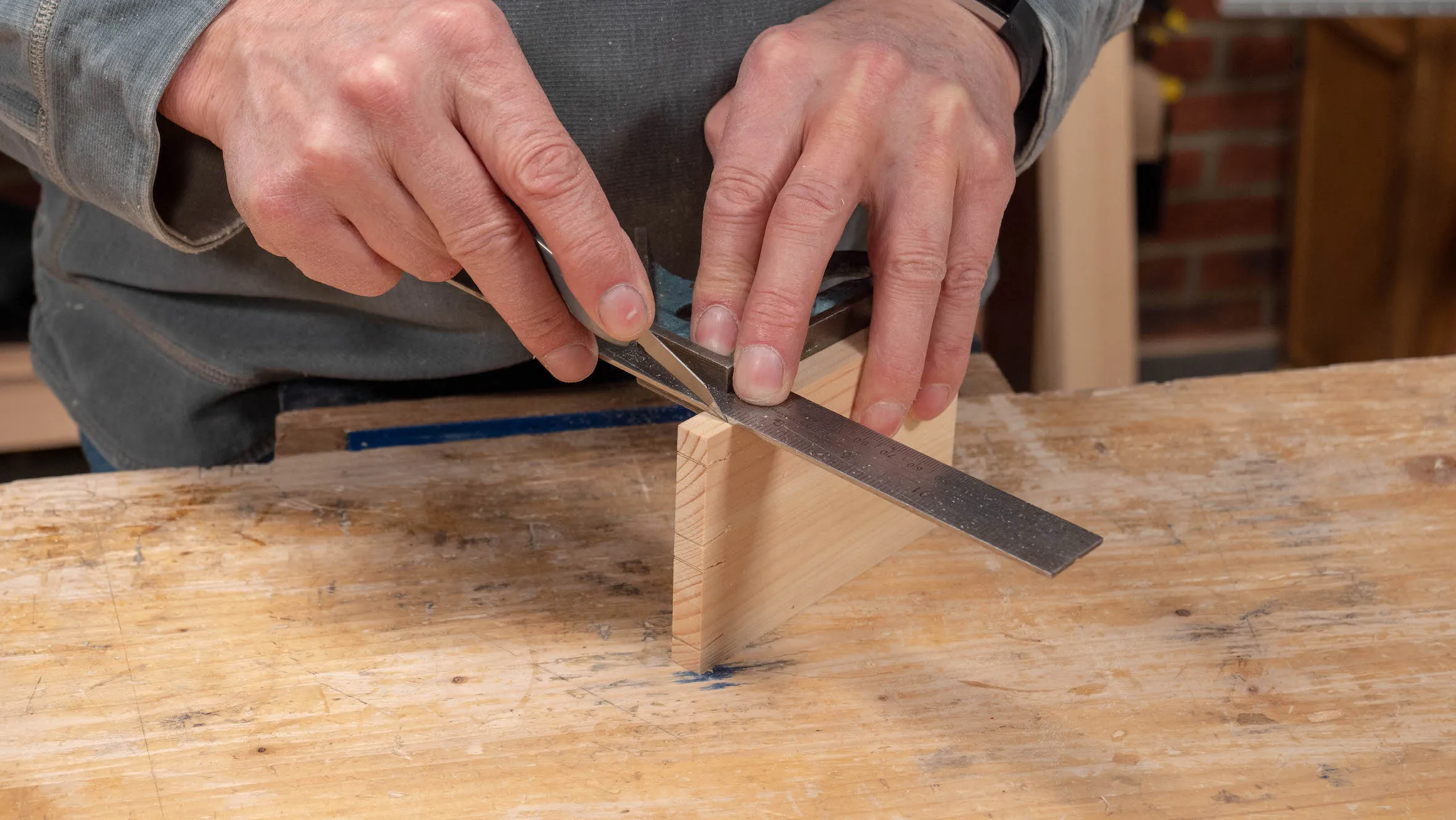
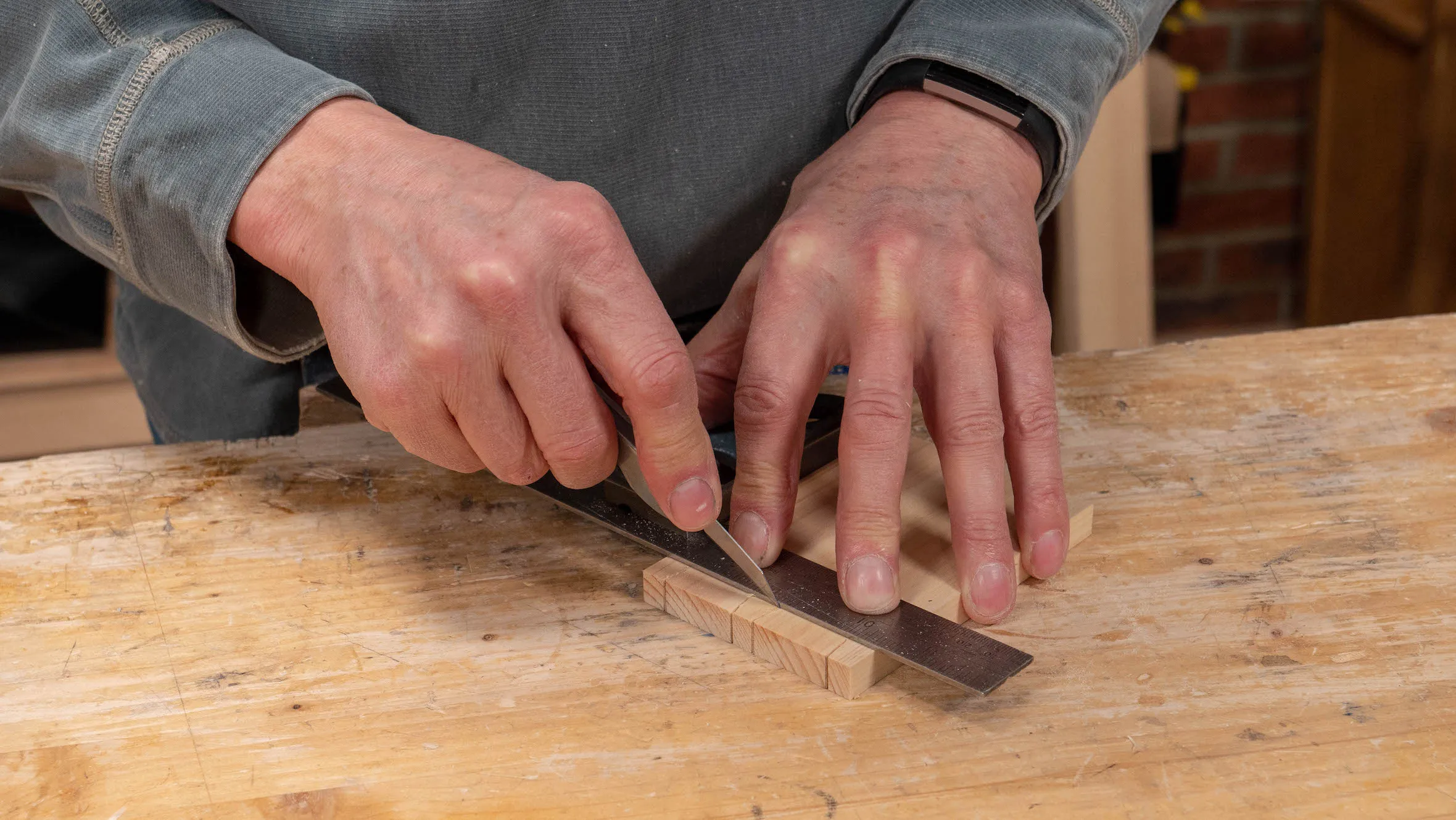
Clamp your workpiece in the vise and create a step-down on the waste side of the knifewall before sawing along the shoulder line. Clean up the shoulder with a sharp chisel, making sure you don’t undercut. Flip over and repeat on the opposite edge.
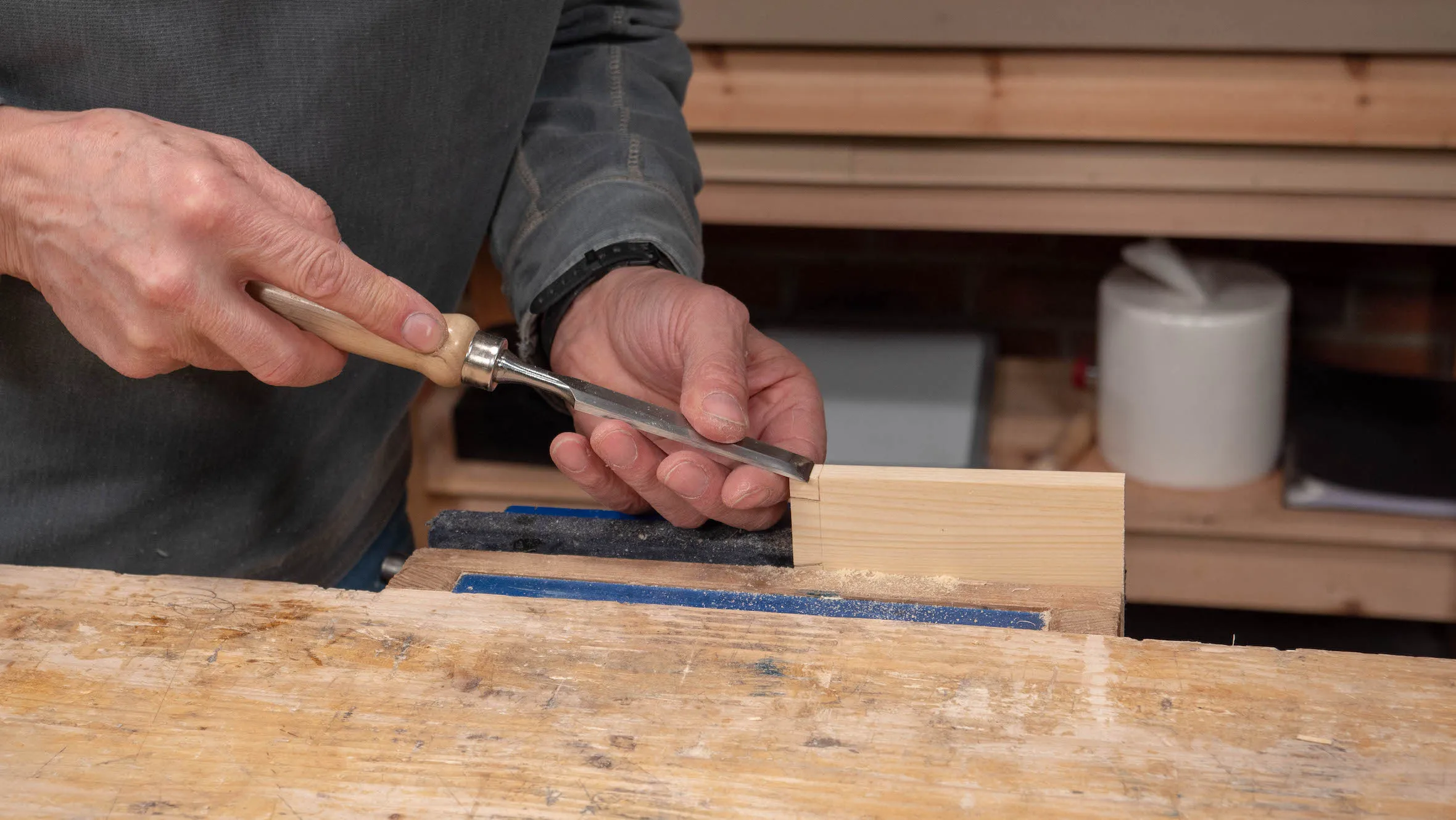
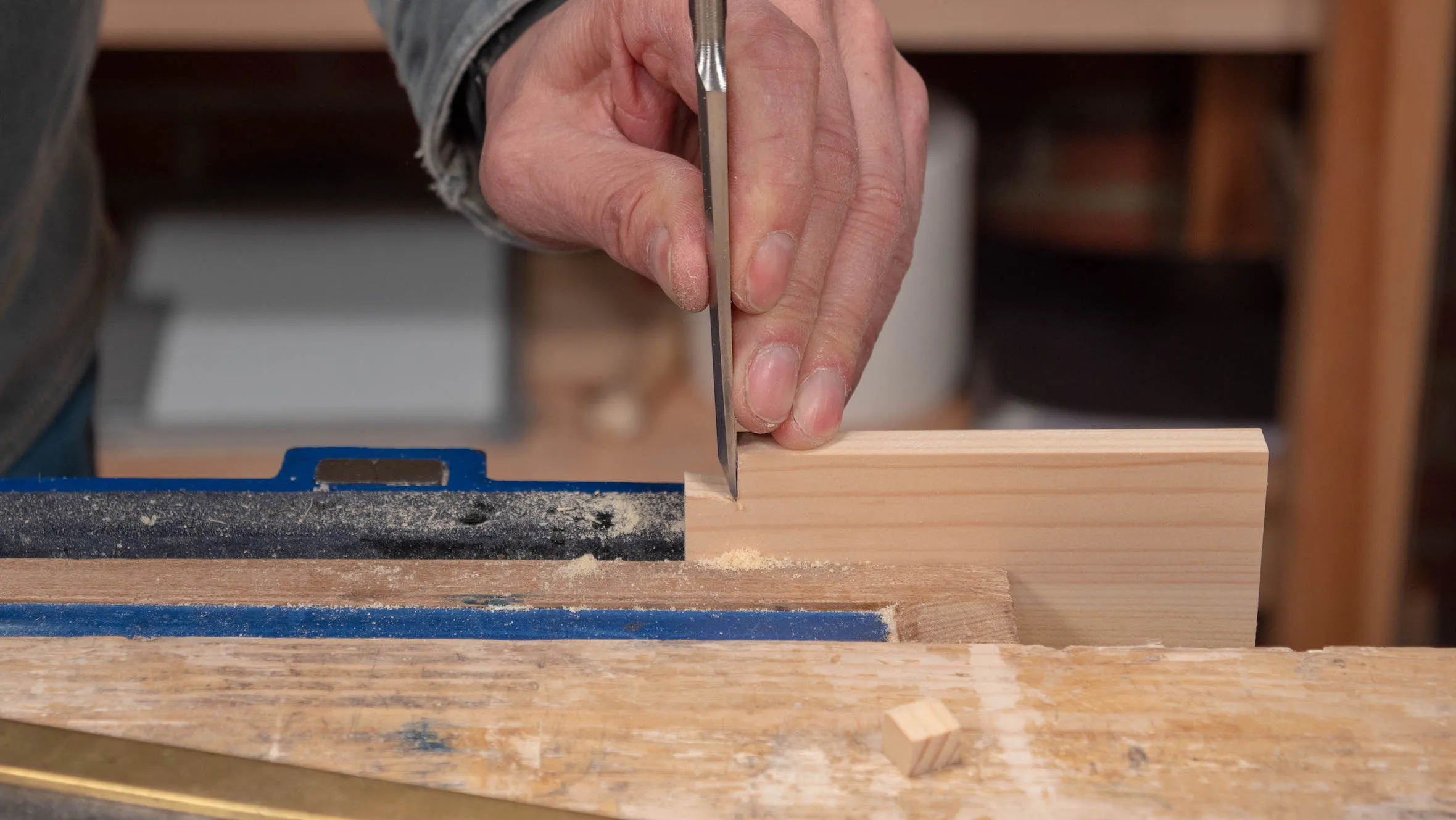
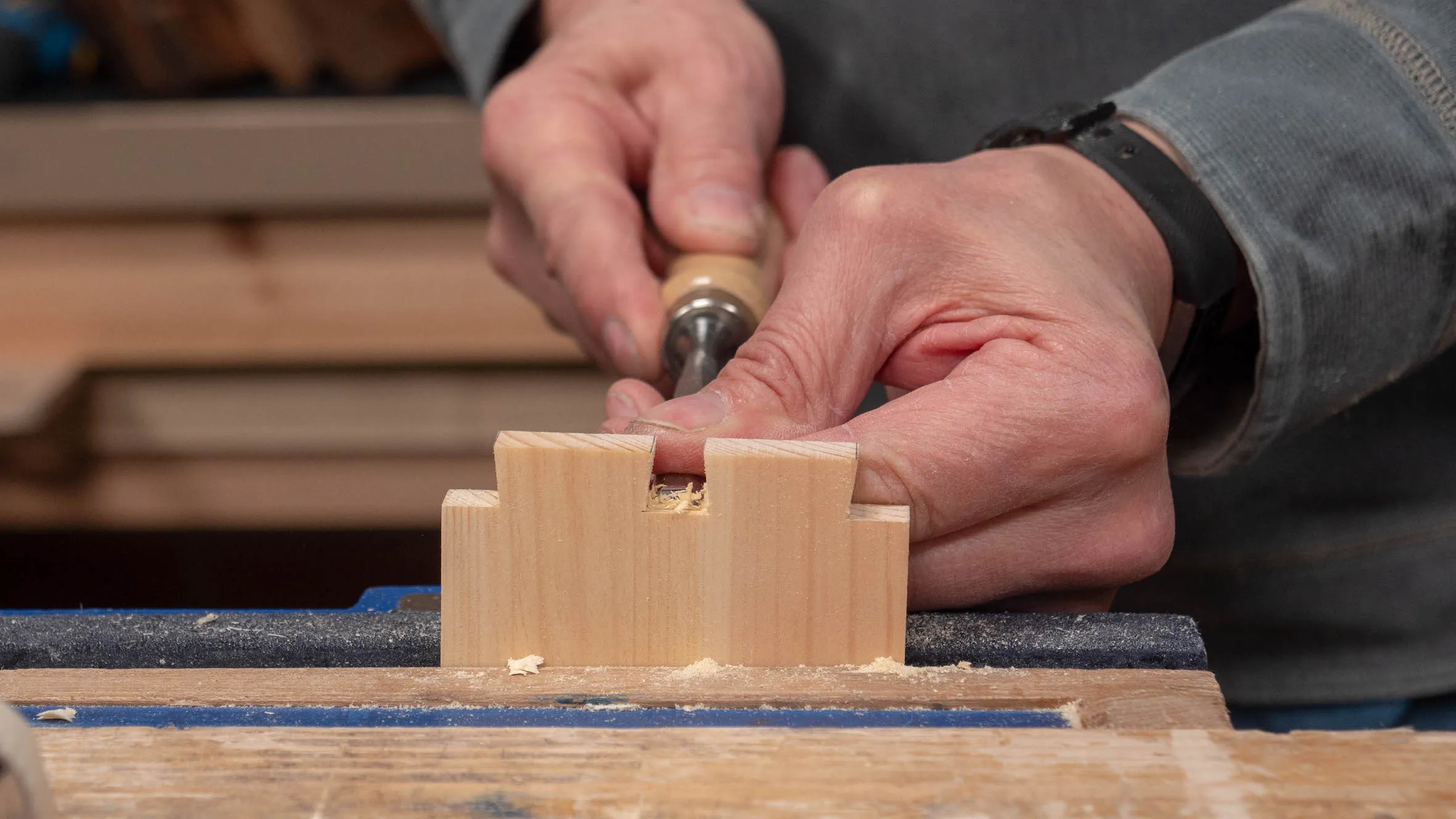
To remove the pin recess from in between the two tails, lay your board on the bench and use a narrow (⅜” or 10mm) chisel to chop down the knifewall. Start with light chops to avoid moving the knifewall over by excess compression.
Go back into the vise with your workpiece and pare down towards the bottom of the cut using the same or a narrower chisel. (A chisel that is too wide will eat into the sides of the tails.)
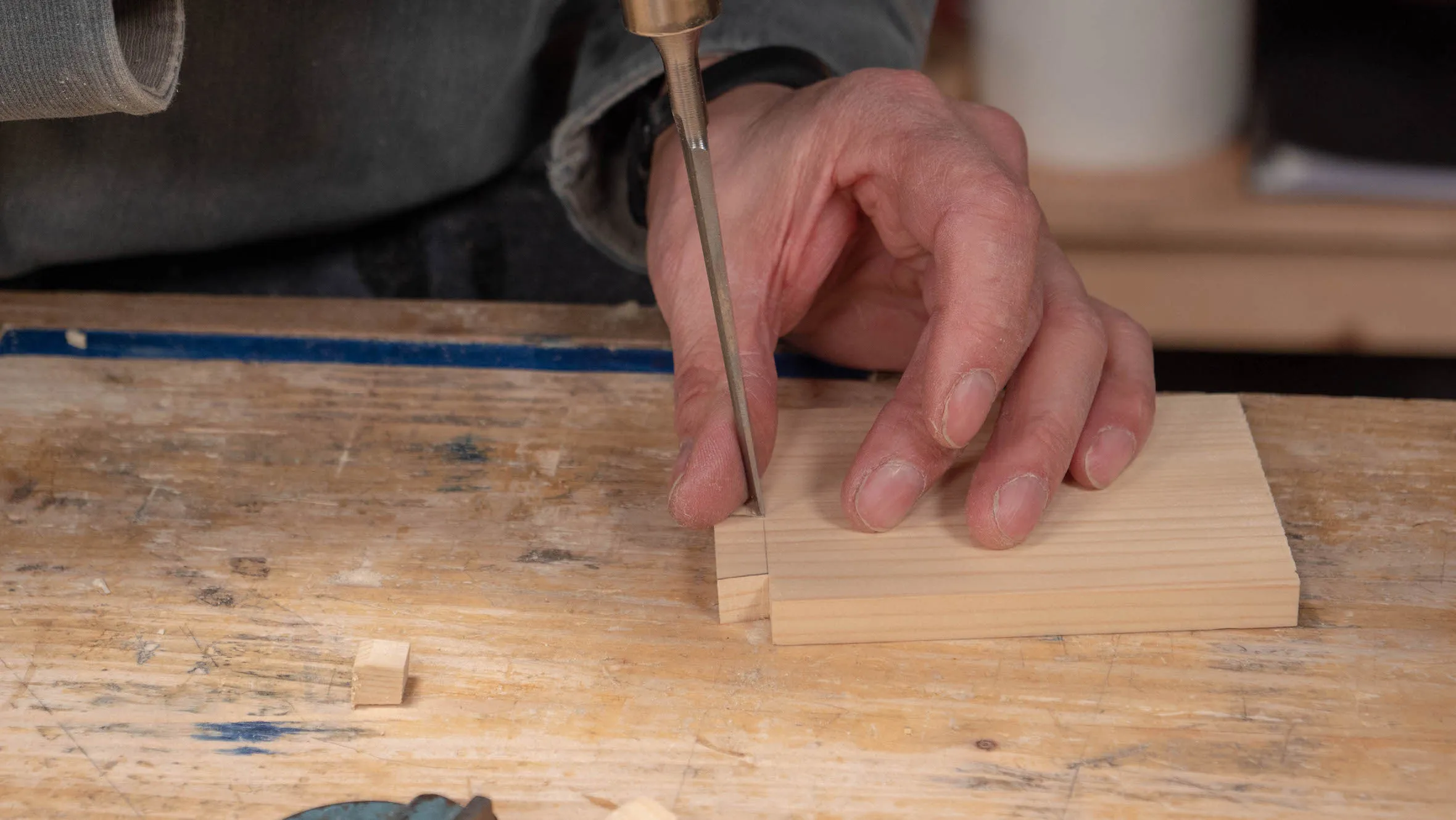
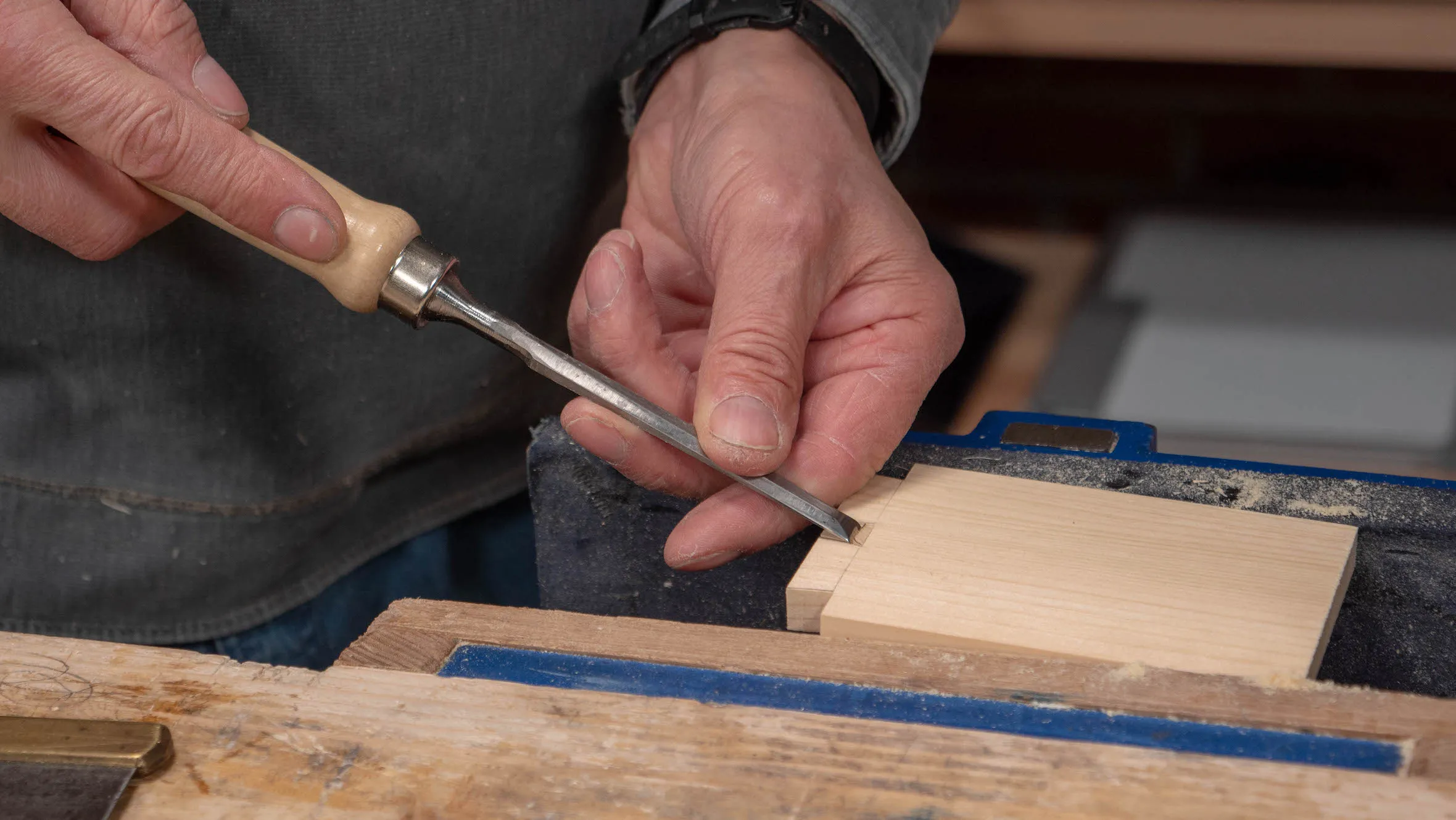
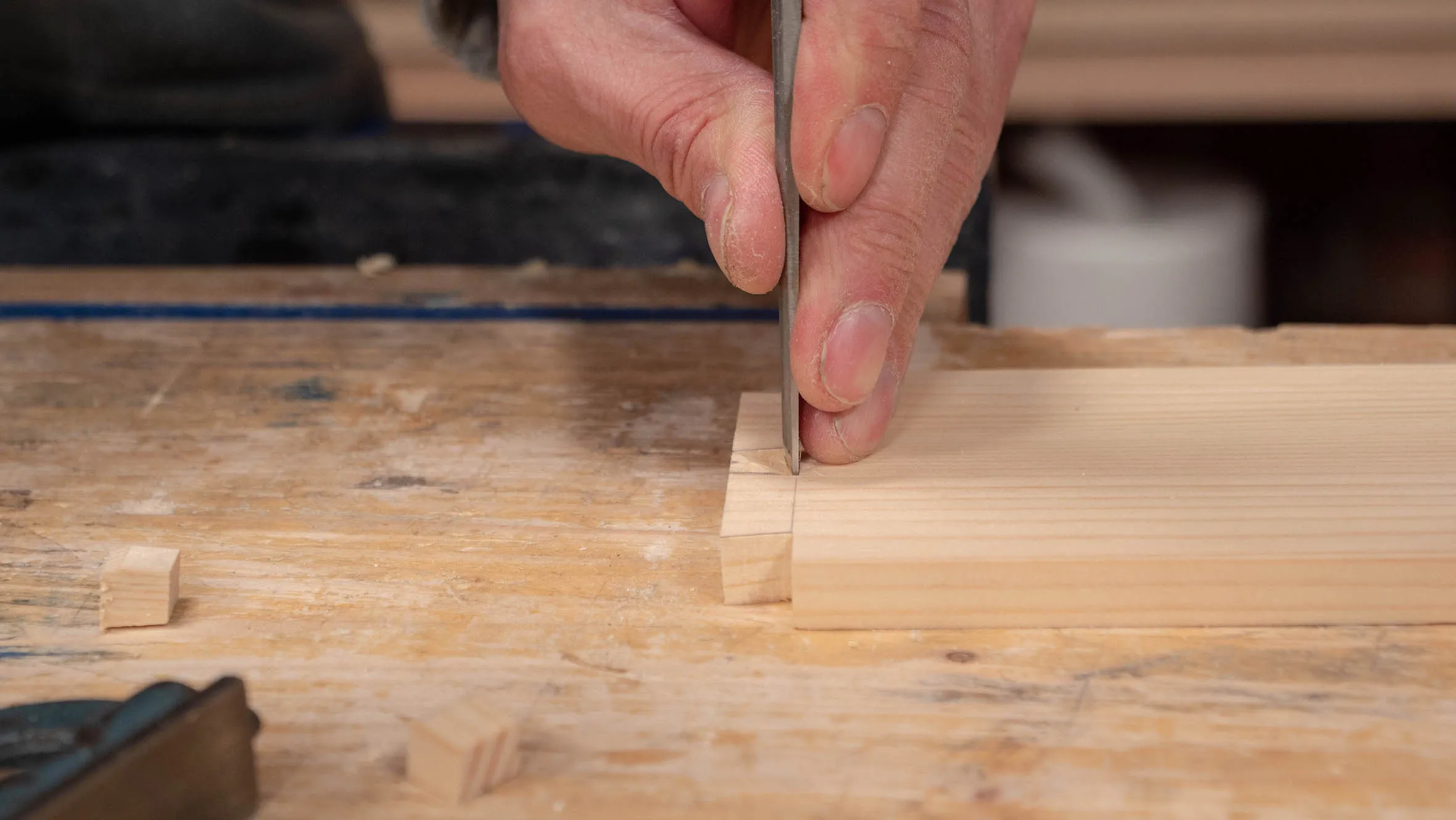
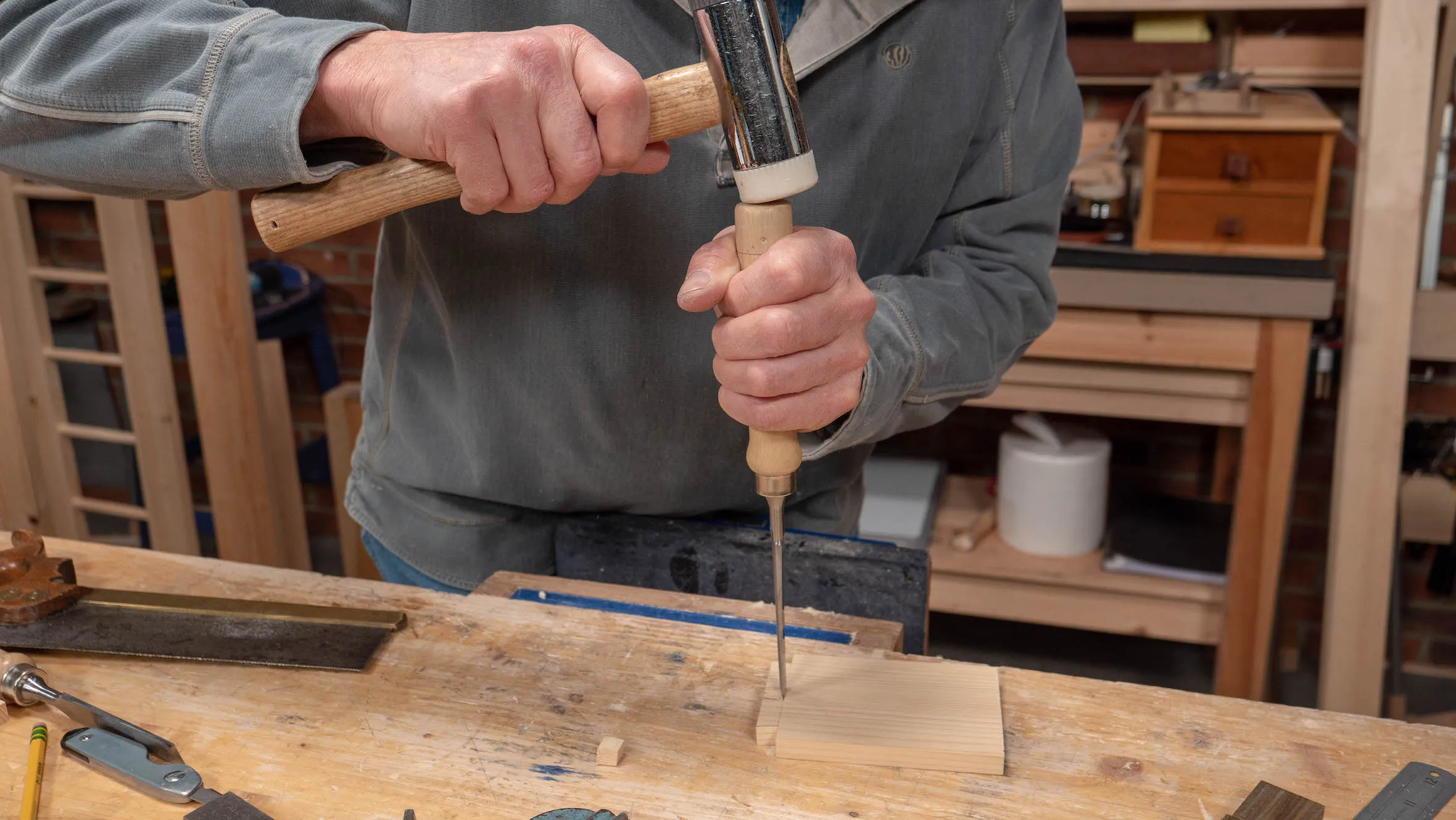
Note: Leave a flat right next to the very end when you are paring down to the knifewall. This rim will support the waste when you come to chop from the other side and will stop the whole piece from fracturing and leaving a big hole on the shoulder.
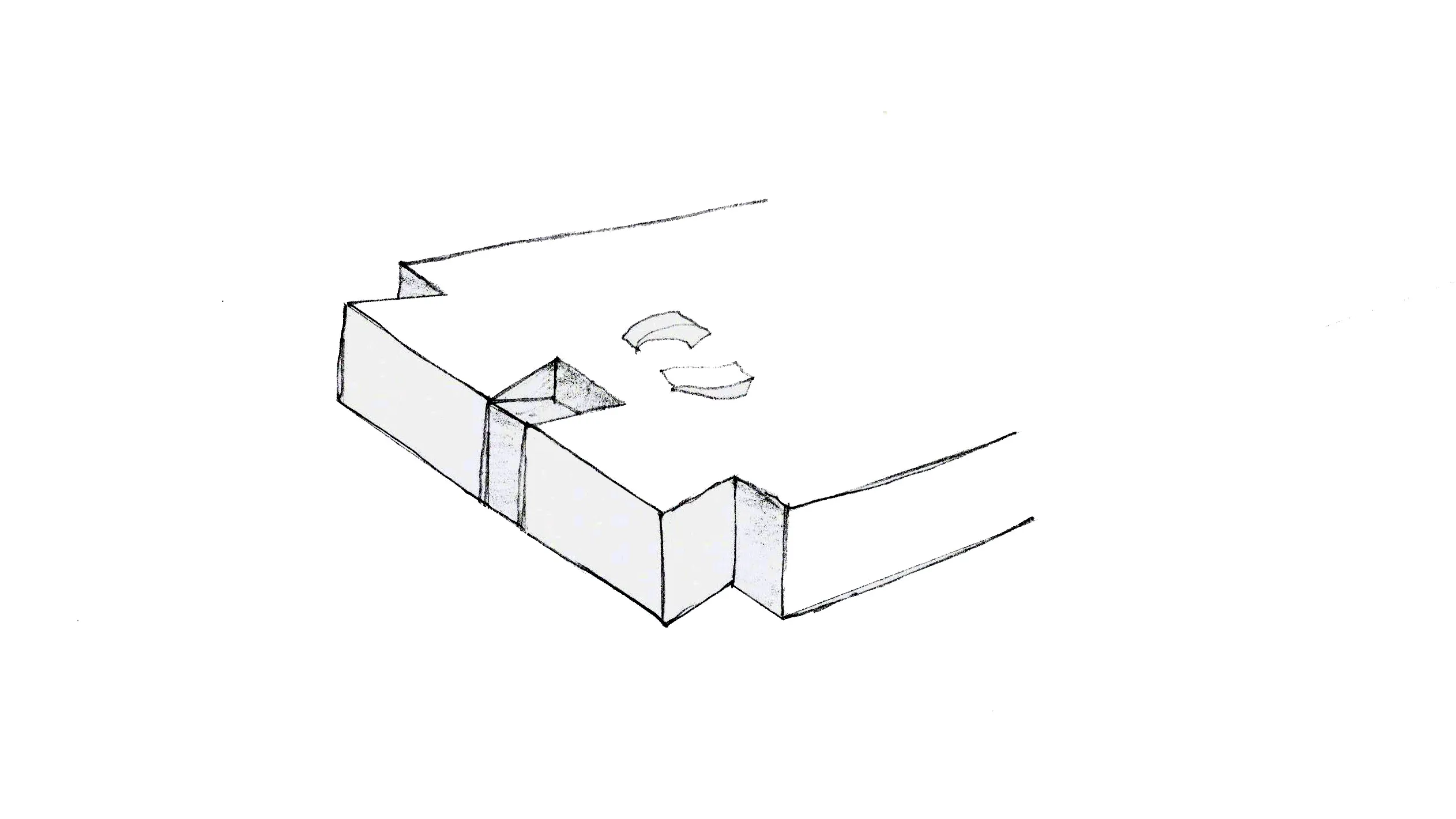
Once you have reached the halfway depth, turn over and repeat from the other side.
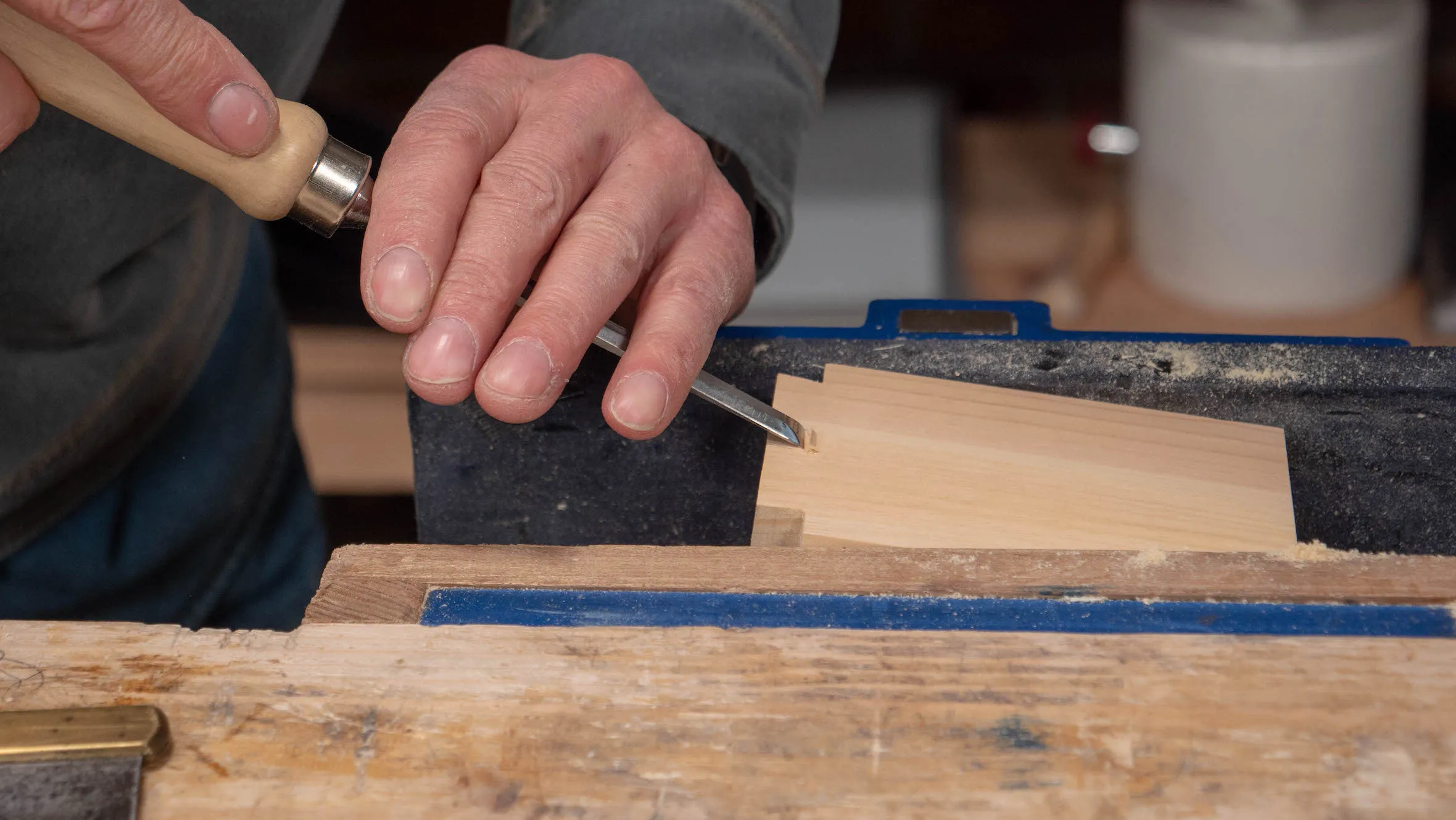
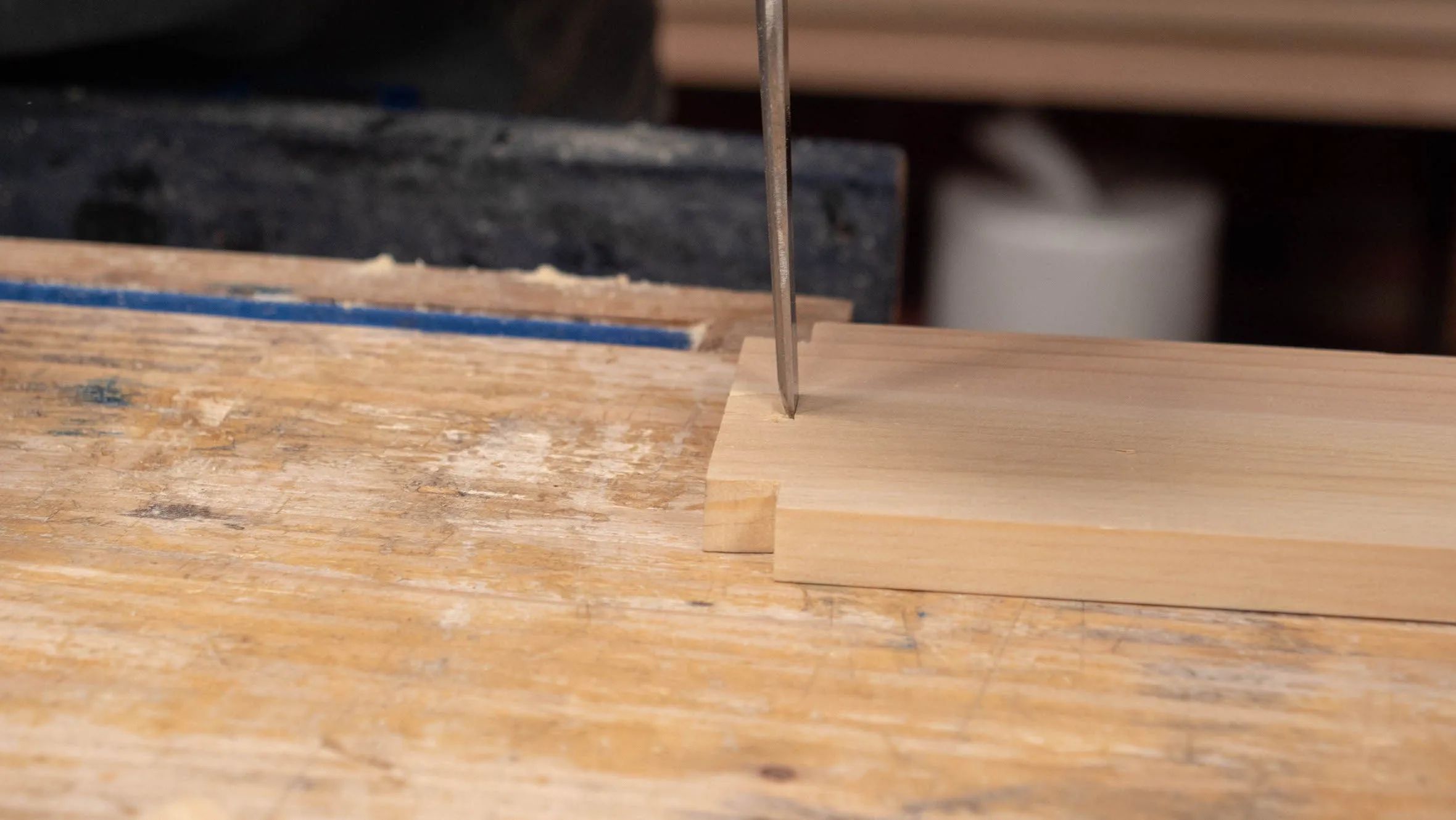
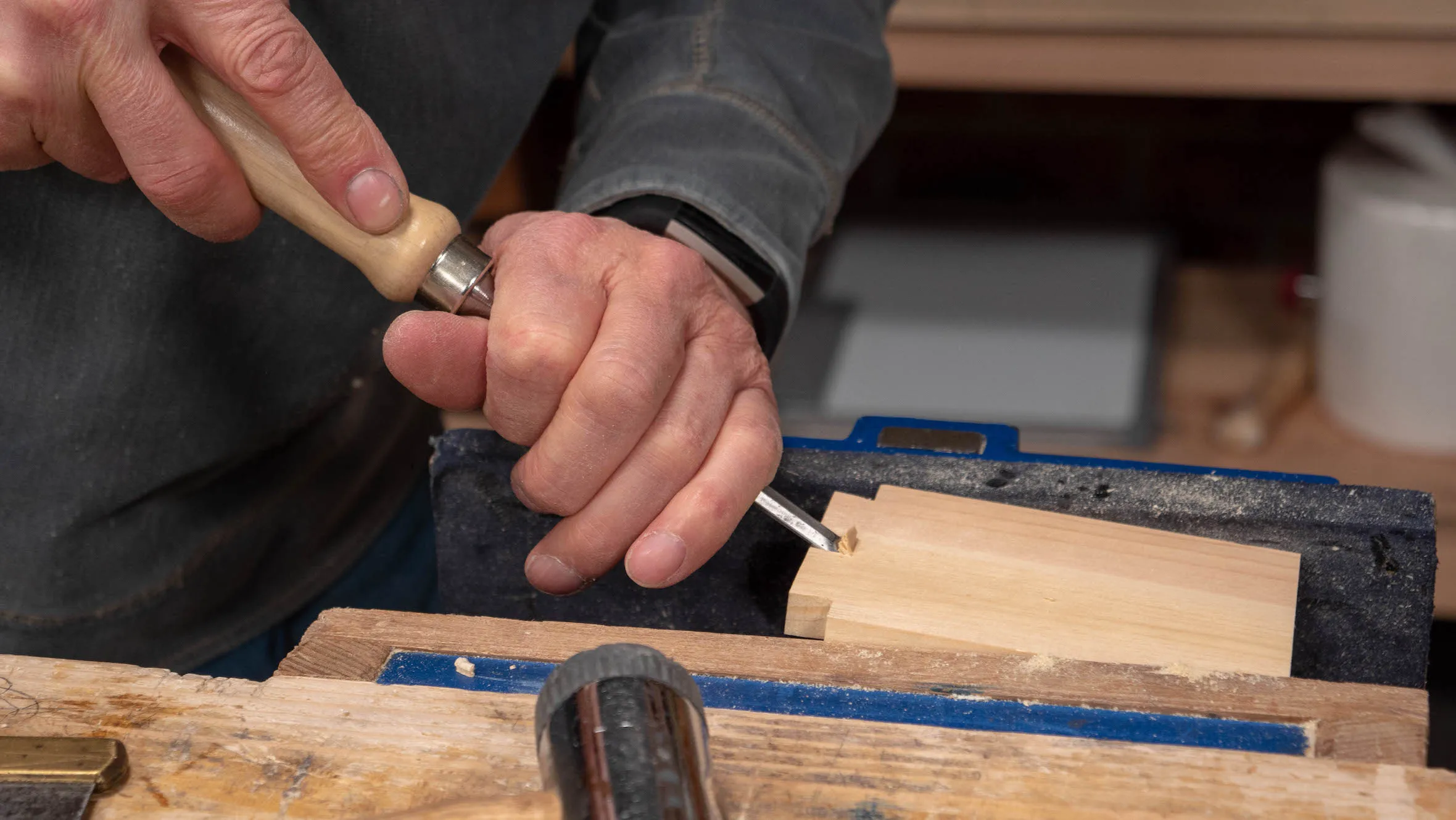
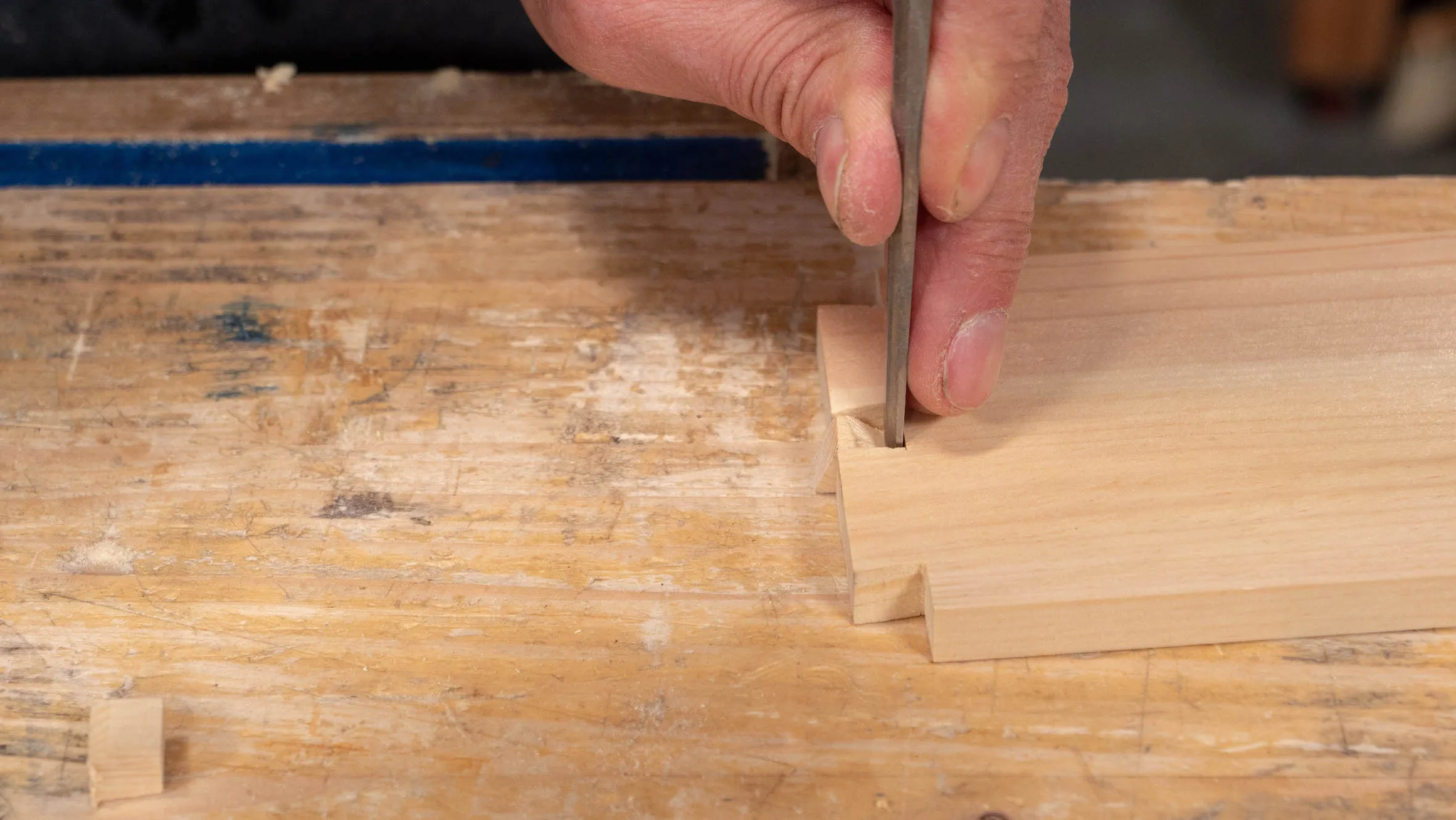
To clean up the pin recess, clamp the board in the vise and pare cut squarely to the face with a sharp, narrow chisel. Choke up on the chisel so that you do not overshoot and accidentally break off the unsupported fibres on the other face.
Sign in to track your progress