Planing the Box Sides
Planing the box sides requires a sharp plane finely set and the box itself to be rigid enough in the vise so that it will not flex as you plane. It’s best to begin with the long sides.
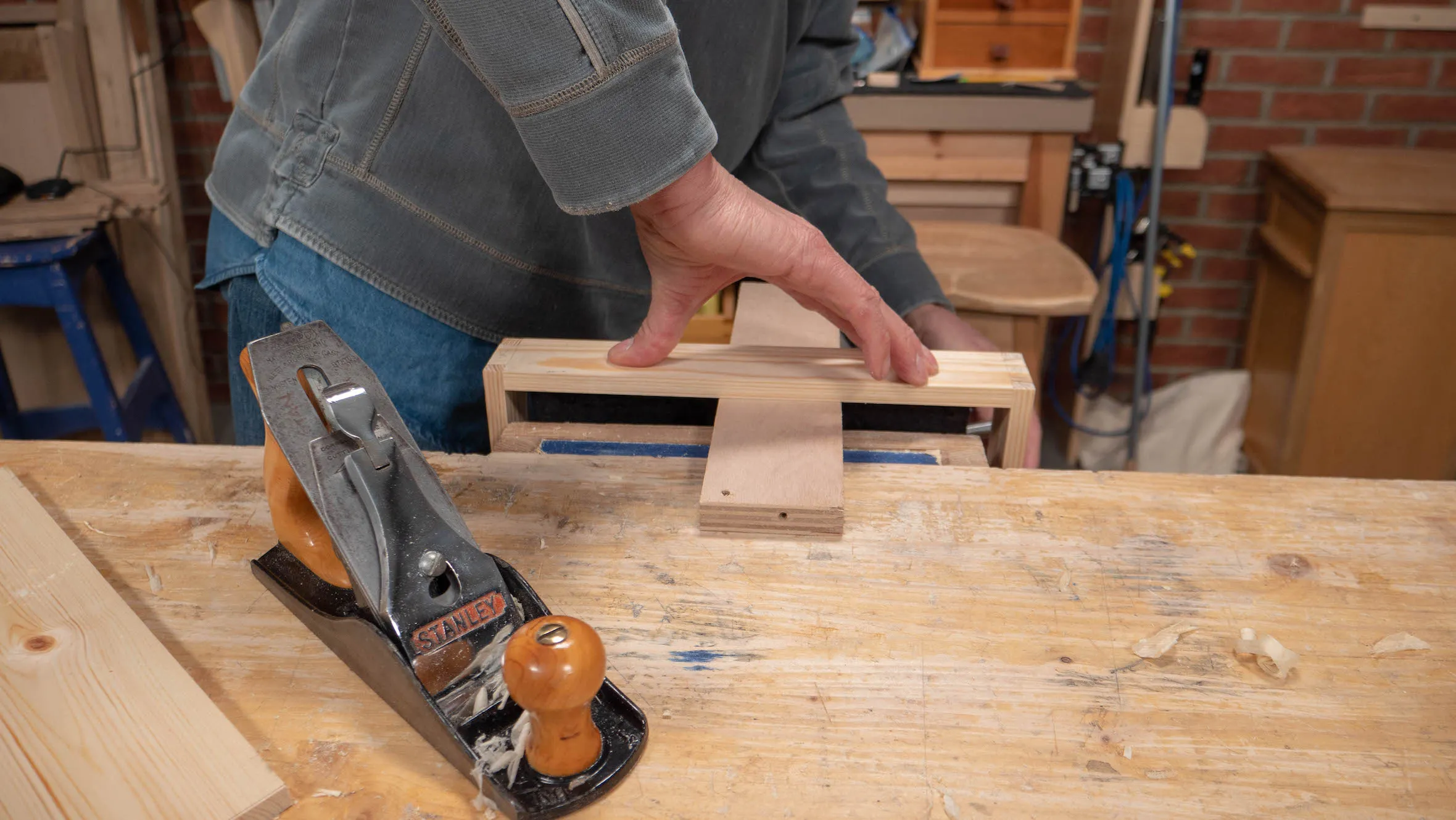
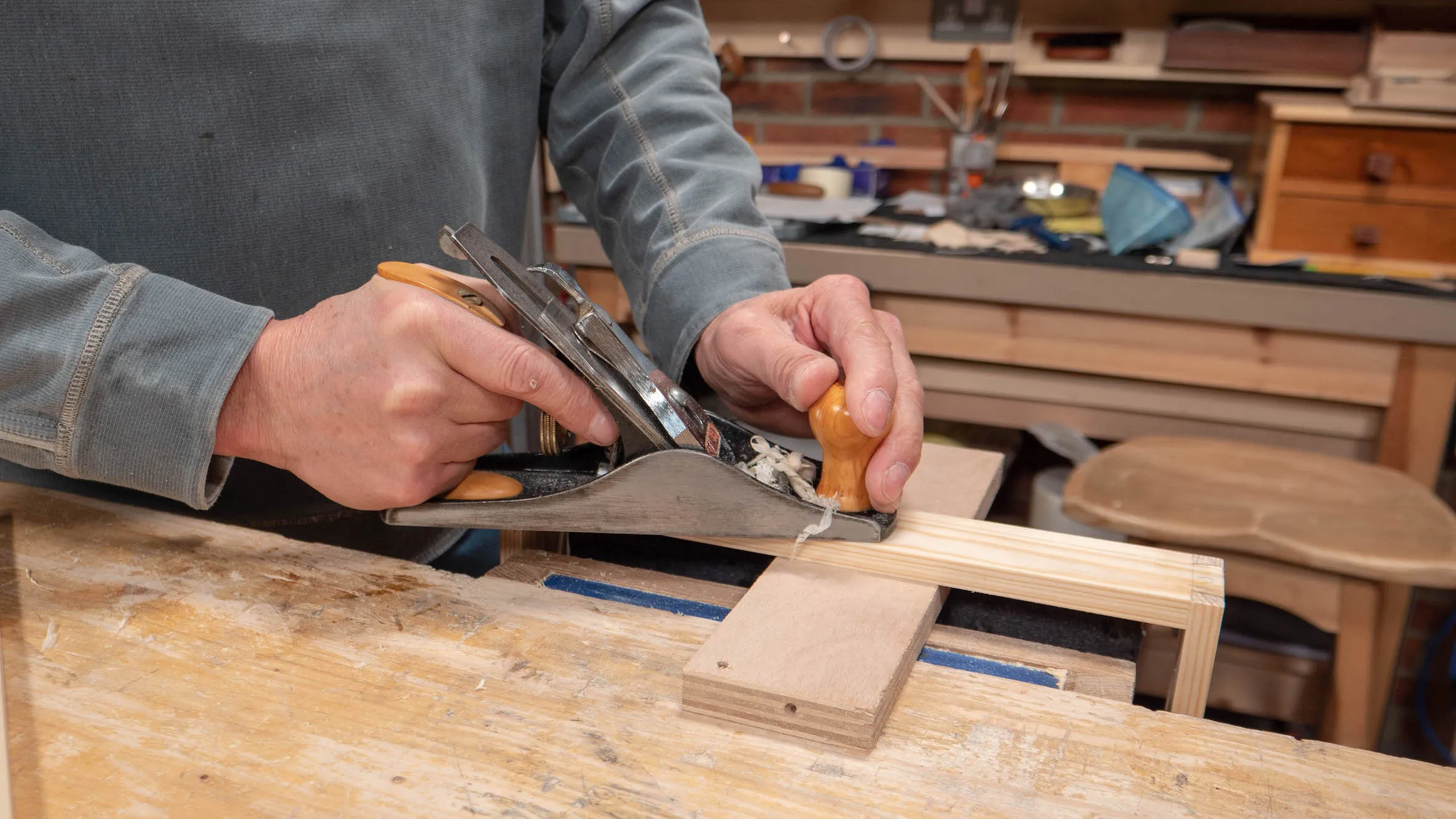
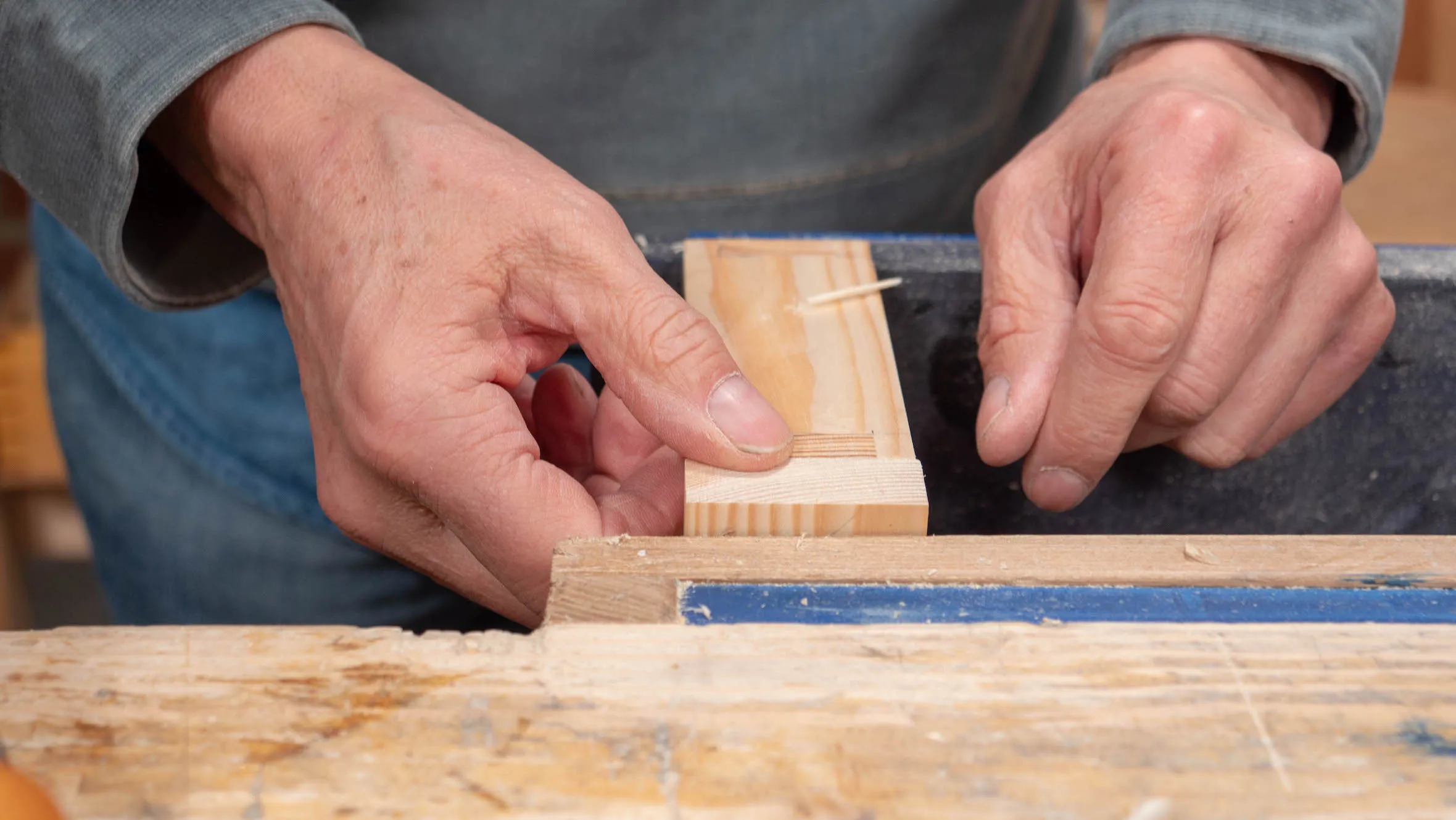
Put the box into the vise and slide a piece of wood across the vise jaws under the face you are going to plane. This will give the box added anchorage when planning, especially if you push down on either side of the added piece before tightening the vise. It will also allow you to plane any hollow areas in the surface.
Begin to plane from one end and lift the heel up as you approach the second dovetail at the opposite end. Take a few even shavings until you have a clean, shiny surface. Then, turn around and plane from the opposite end towards the mid section, again lifting up the heel of the plane as you are ending the cut. This is done to produce a clean surface with no steps by ensuring that the shavings are severed and do not clog in the throat of the plane.
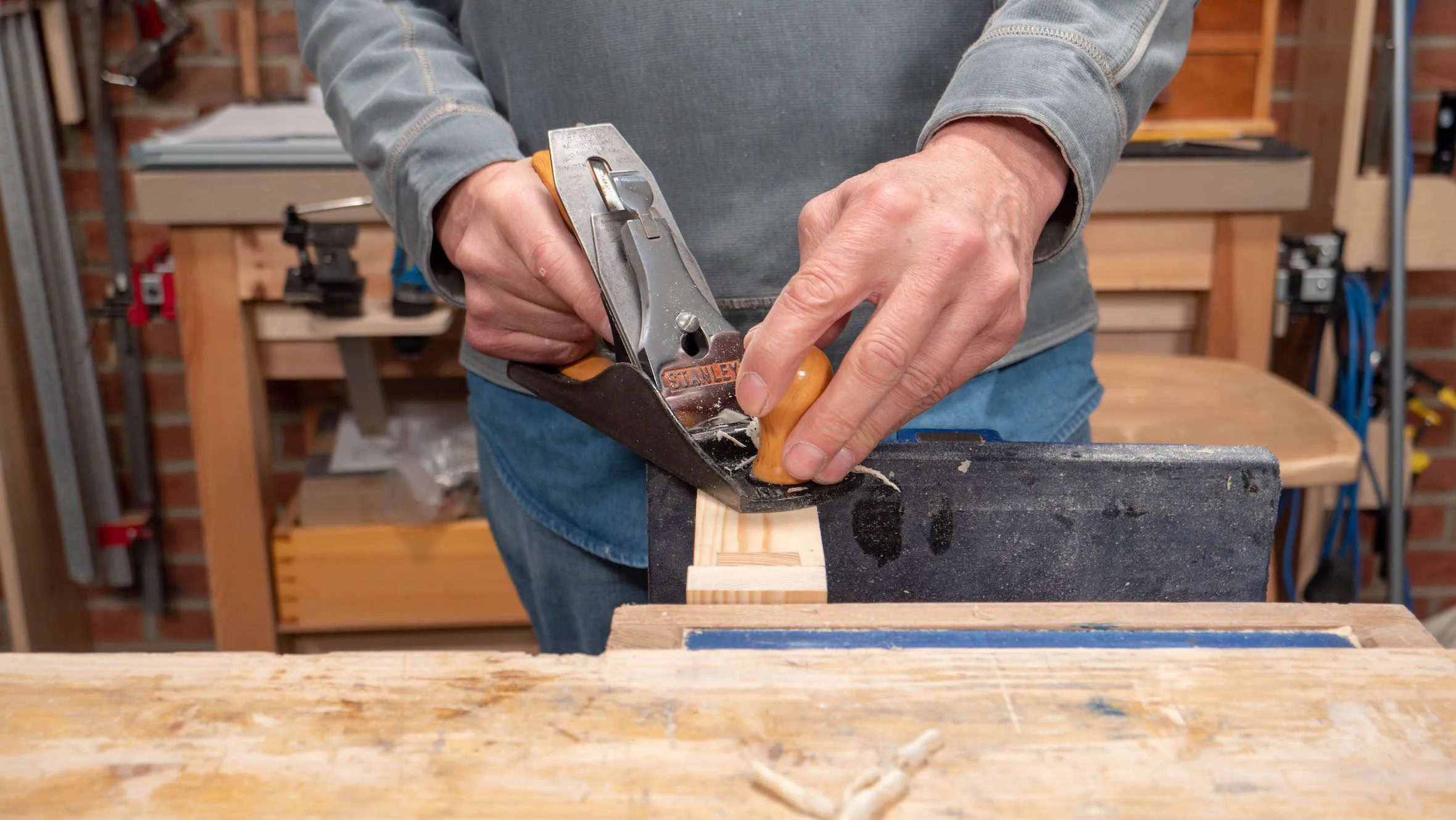
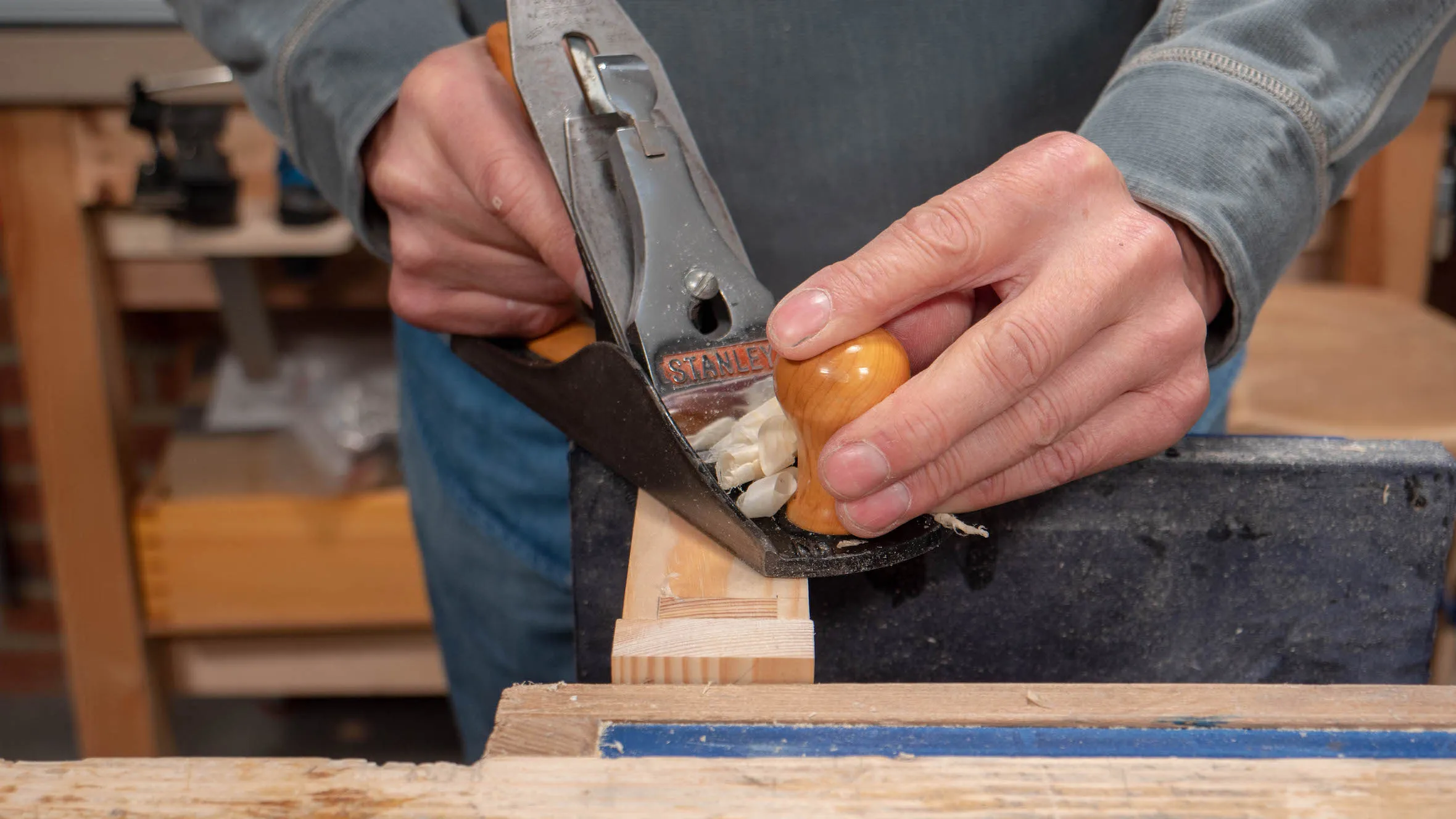
For the short sides, add a scrap piece of wood onto the end and clamp into the vise. This will allow you to plane from one side with full length shavings without splitting unsupported fibres on the outcut. However, you must make sure that your scrap piece of wood is making good contact with the edge it is supposed to be ‘protecting’. Otherwise it will be as though there was no scrap piece.
Note: The scrap piece of wood is used because the side pieces are rather short to plane from both sides. Even so, once you have gained some confidence with your planing, you will be able to plane short distances with great precision without the need to rely on a ‘sacrificial piece’, as Paul calls it.
Sign in to track your progress